Krish Dhokia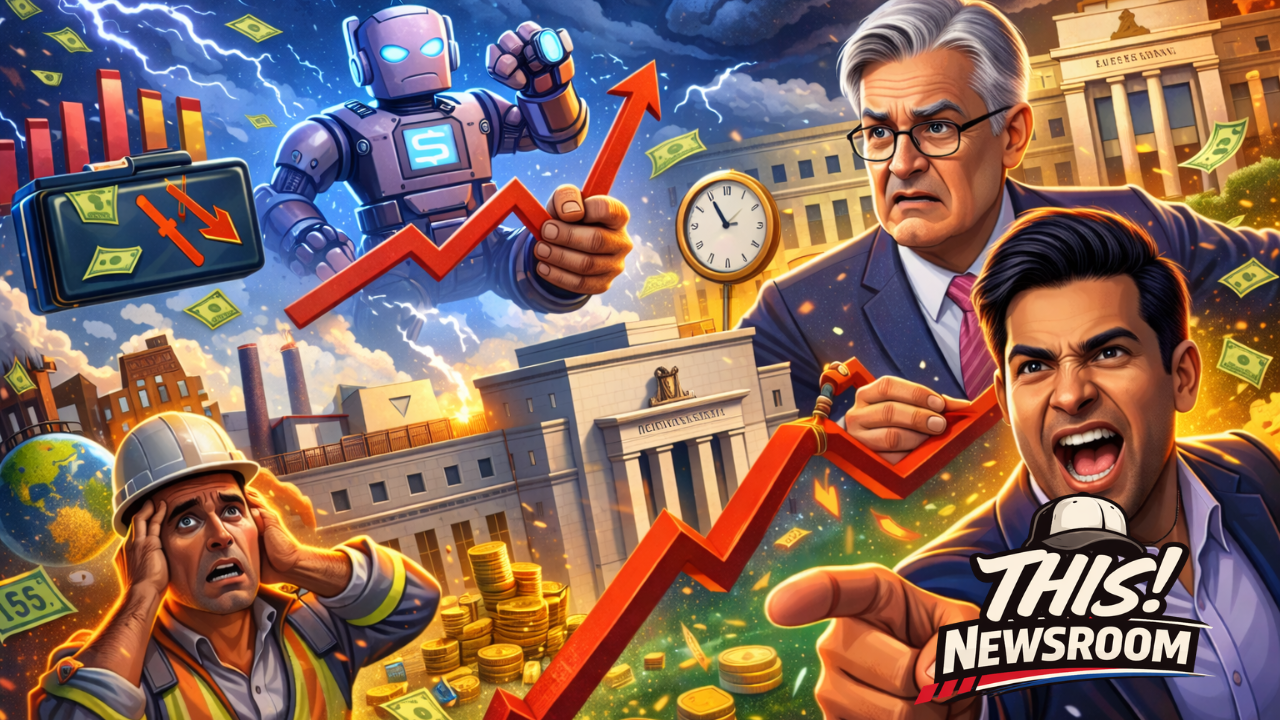
The U.S. economy entered 2026 with cautious optimism. Inflation had cooled from the historic highs of 2022–2023, consumer spending remained resilient, and unemployment hovered near historically low levels. Yet beneath the surface, something troubling has begun to emerge: unexpected job losses across multiple industries, creating a complicated economic puzzle for policymakers.
For the Federal Reserve, this development introduces a scenario economists fear most — stagflation, a combination of weak economic growth, rising unemployment, and persistent inflation.
The Sudden Shift in the Labor Market
Over the past several months, layoffs have begun appearing in sectors that previously seemed insulated from economic turbulence. Technology firms, financial services companies, logistics providers, and even portions of the manufacturing sector have announced workforce reductions.
While unemployment overall remains relatively low by historical standards, economists are increasingly focused on the trend line rather than the headline number.
Unexpected job cuts have been reported in:
- Technology and AI-adjacent companies restructuring around automation
- Retail and e-commerce logistics networks adjusting to post-pandemic consumer behavior
- Finance and fintech firms tightening operations as interest rates remain elevated
- Manufacturing sectors facing weaker global demand
For workers, the sudden layoffs feel confusing. Just months ago, companies were still reporting labor shortages.
Automation and AI Restructuring
One of the most significant contributors to job displacement is artificial intelligence and automation. Businesses are rapidly restructuring operations to integrate AI tools capable of replacing or augmenting human labor.
Recent research from AI leaders has warned that millions of white-collar jobs could face disruption in the coming years. Roles in areas such as customer service, entry-level programming, data processing, marketing analysis, and administrative work are increasingly being augmented by AI systems.
This shift does not necessarily eliminate entire industries, but it often results in fewer employees doing the same work with more automation.
The result: companies quietly reduce headcount even while productivity rises.
Higher Interest Rates Are Still Biting
Another major contributor to job losses is the Federal Reserve’s aggressive interest rate policy over the past two years.
In its effort to bring inflation under control, the Fed raised borrowing costs to levels not seen in decades. While that strategy helped cool price increases, it also slowed investment and corporate expansion.
Higher interest rates impact businesses in several ways:
- Expensive borrowing limits new hiring and expansion
- Venture capital funding becomes harder to secure
- Corporate debt refinancing becomes more costly
- Housing and real estate activity slows
These pressures ripple through the labor market, forcing companies to tighten payroll expenses.
Global Tensions and Energy Costs
Economic uncertainty is also being fueled by geopolitical tensions and rising energy prices.
Conflicts in major energy-producing regions have created volatility in global oil markets. Higher energy costs affect nearly every sector of the economy — from manufacturing and transportation to food production.
When fuel prices rise, companies often respond by cutting costs elsewhere, including staffing.
Consumers also become more cautious with spending, which further slows economic activity.
The Fed’s Stagflation Problem
For the Federal Reserve, these trends present a difficult balancing act.
If job losses continue while inflation remains elevated, the economy could drift into stagflation territory, something policymakers have tried to avoid since the 1970s.
The central bank faces two conflicting challenges:
Lower rates to protect jobs?
That could stimulate economic growth but risks reigniting inflation.
Keep rates high to fight inflation?
That could stabilize prices but potentially accelerate layoffs.
This policy dilemma means the Fed may have limited tools to solve both problems simultaneously.
What Happens Next?
Economists are watching several indicators closely in the coming months:
- Monthly job creation reports
- Wage growth trends
- Energy and commodity prices
- Corporate earnings guidance
- Consumer spending behavior
If layoffs accelerate while inflation remains stubborn, the Fed may face pressure to pivot its strategy.
For now, the U.S. economy remains resilient. But the recent uptick in unexpected job losses signals that the labor market may be entering a new phase of adjustment.
And if that adjustment collides with persistent inflation, the Federal Reserve could soon find itself navigating one of the most complex economic challenges in modern history.
About the Author