YouTube Becomes the World’s Largest Media Company
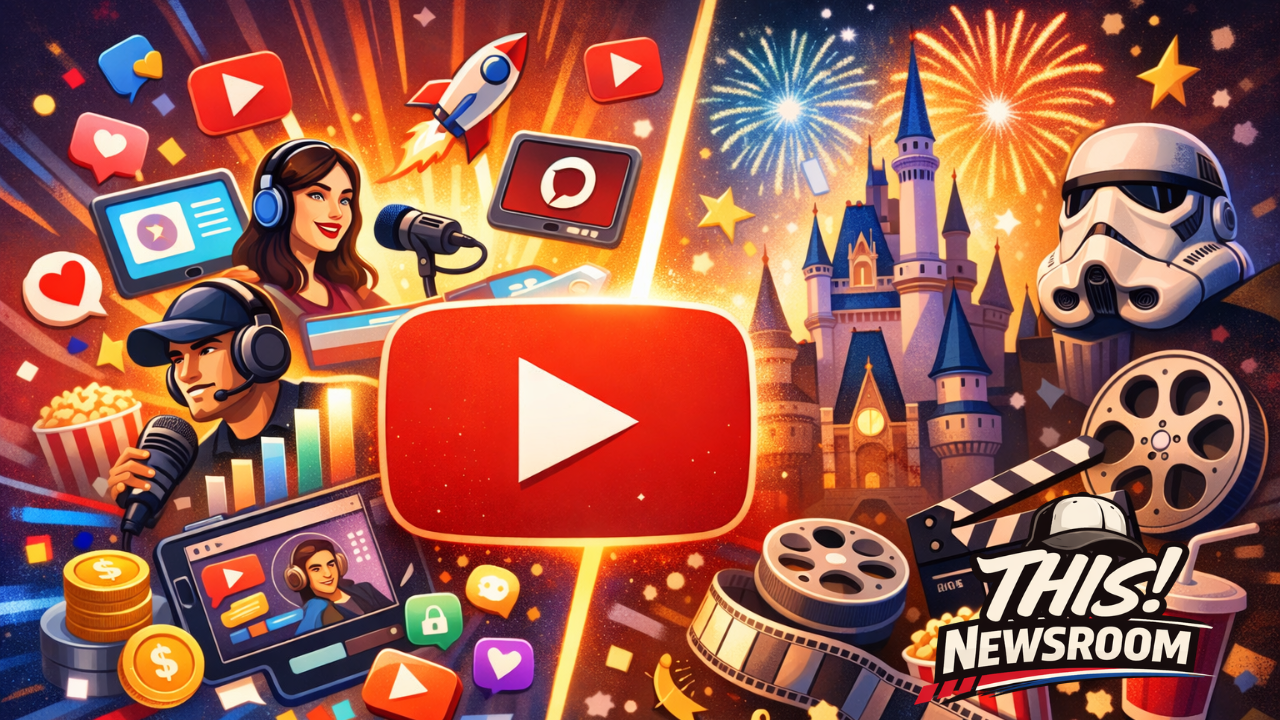
In a major shift for the global media industry, YouTube has officially emerged as the largest media company in the world, surpassing long-standing entertainment giant The Walt Disney Company. The milestone reflects a dramatic transformation in how people consume entertainment, news, sports, and culture.
Once viewed as simply a video-sharing website, YouTube has evolved into a massive entertainment ecosystem. The platform now commands more viewer attention, advertising revenue growth, and creator-driven content production than any traditional media network.
The rise signals a profound shift in the balance of power between legacy studios and digital platforms.
The Numbers Behind YouTube’s Rise
YouTube generated tens of billions of dollars in annual revenue, primarily from advertising and premium subscriptions.
By comparison, The Walt Disney Company—which owns brands like Marvel Studios, Lucasfilm, and the streaming service Disney+—has faced increasing competition from digital-first platforms.
Several factors pushed YouTube into the top spot:
- Massive global audience: Over 2.5 billion monthly users
- Daily watch time dominance: Billions of hours watched every day
- Advertising powerhouse: One of the largest digital ad networks on Earth
- Creator economy growth: Millions of independent creators producing content
Unlike traditional media companies that rely on a limited slate of shows and films, YouTube hosts millions of creators producing content every hour.
The Creator Economy Changed Everything
One of the biggest differences between YouTube and traditional media is its creator-first model.
Instead of relying solely on studio executives and production budgets, the platform empowers individuals—from gamers and educators to podcasters and journalists—to build global audiences.
Many creators now generate seven- and eight-figure businesses directly from their channels through advertising revenue, sponsorships, merchandise, and memberships.
This decentralized content engine has allowed YouTube to scale at a speed that traditional studios simply cannot match.
Streaming Wars Enter a New Phase
While companies like Netflix, Amazon, and Apple compete heavily in subscription streaming, YouTube operates a hybrid model:
- Free ad-supported content
- Premium subscription tiers
- Live streaming and podcasts
- Shorts competing with TikTok and Instagram
That combination allows YouTube to dominate both traditional TV viewing and social media engagement.
In fact, YouTube frequently ranks as the most watched platform on U.S. televisions, beating broadcast networks and cable channels.
What This Means for the Future of Media
The rise of YouTube reflects a broader trend: audiences increasingly trust creators over corporations.
Viewers now turn to YouTube for:
- News analysis
- Podcasts and interviews
- Educational content
- Sports commentary
- Entertainment and documentaries
The platform has effectively become a global television network, podcast platform, and social media hub combined.
For legacy companies like The Walt Disney Company, the challenge is adapting to a world where any creator with a camera and a compelling voice can compete for the same audience.
The Bottom Line
The media landscape has changed permanently.
YouTube’s rise to the top shows that distribution, creators, and community now matter more than traditional studio control. While Hollywood giants still dominate blockbuster filmmaking, the future of everyday media consumption increasingly belongs to digital platforms.
And for millions of creators—and viewers—the message is clear:
The biggest media network in the world isn’t a studio lot in Hollywood.
It’s a platform anyone can upload to.
About the Author