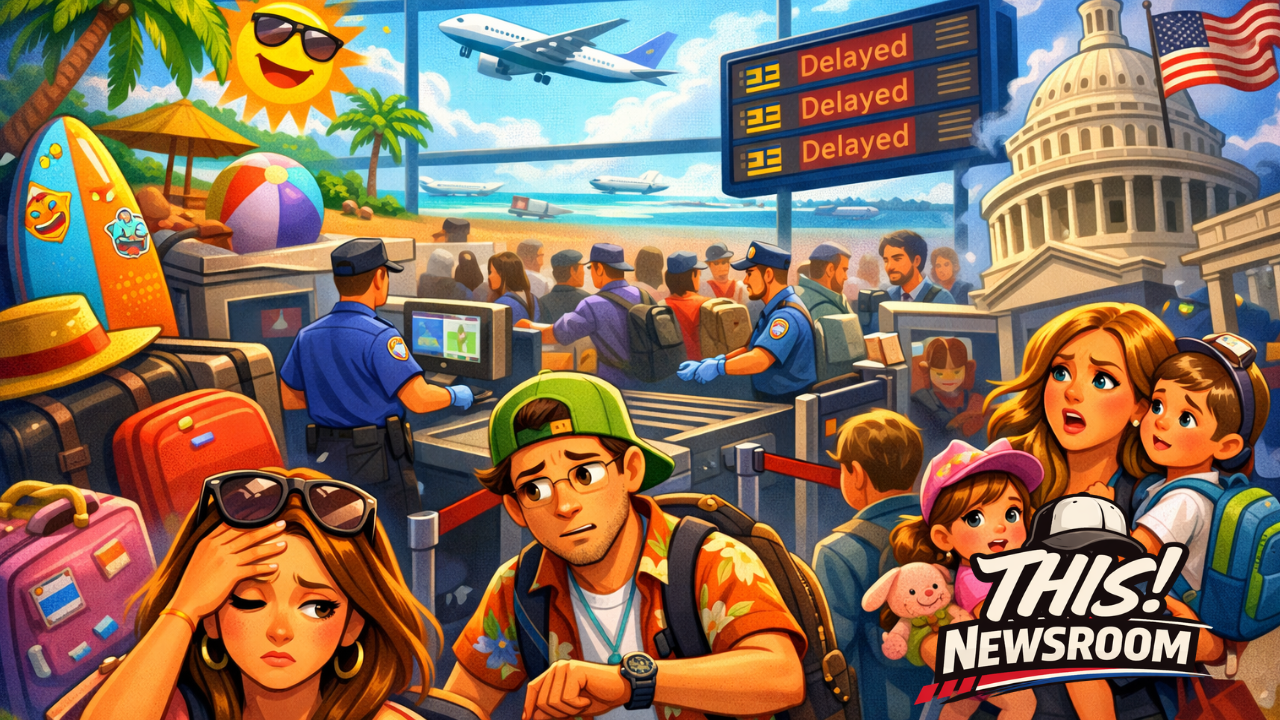
Spring Break 2026 travel may face delays as TSA staffing shortages impact airport security lines.
Spring break is usually one of the busiest travel seasons of the year in the United States. In 2026, however, travelers may face something far more stressful than crowded beaches and packed airports. A potential federal government shutdown is threatening to disrupt operations at airports across the country, raising serious concerns about longer security lines, staffing shortages, and major travel delays.
Millions of Americans are expected to travel between mid-March and early April for spring break vacations. Popular destinations such as Florida, Texas, Arizona, Mexico, and the Caribbean typically see massive spikes in air travel. But if a shutdown continues to affect federal agencies, the Transportation Security Administration (TSA) could face major operational challenges.
Why the Shutdown Matters for TSA
The TSA is a federal agency, which means its workforce is directly affected during a government shutdown. While TSA officers are considered essential workers and must continue working, they often do so without immediate pay during a shutdown period. In past shutdowns, this situation has caused significant stress among federal employees and has sometimes led to increased absenteeism.
When fewer agents report to work, airport security checkpoints slow down dramatically. Even a small reduction in staffing can lead to security lines stretching for hours at major travel hubs.
Travel experts say the timing could not be worse.
Spring break already pushes airports to their limits, and combining peak travel with staffing uncertainty could create the perfect storm.
Airports That Could See the Biggest Delays
Major hubs tend to feel the biggest impact when TSA staffing drops. Airports that could experience the longest wait times include:
- Hartsfield-Jackson Atlanta International Airport
- Dallas/Fort Worth International Airport
- Orlando International Airport
- Los Angeles International Airport
- Denver International Airport
These airports process tens of thousands of passengers daily during peak spring break weeks.
Even smaller regional airports may struggle if TSA staffing levels dip.
What Travelers Might Experience
If the shutdown continues during peak travel days, passengers could see several disruptions:
- Security lines lasting 60–120 minutes or more
- Reduced TSA screening lanes
- Flight delays caused by passenger backlogs
- Increased airport congestion
- Travelers missing flights due to long checkpoint waits
Airlines may also need to adjust boarding times or delay departures if passengers cannot clear security fast enough.
How Travelers Can Prepare
Despite the uncertainty, there are steps travelers can take to reduce stress during spring break travel.
Arrive earlier than usual.
Travelers should consider arriving at least 3 hours before domestic flights if TSA staffing is strained.
Enroll in TSA PreCheck or CLEAR if possible.
These programs allow travelers to move through security faster and avoid some of the longest lines.
Choose earlier flights.
Morning flights often face fewer delays than afternoon departures.
Monitor airport wait times.
Many airports publish live security wait times online or through airline apps.
The Bigger Picture
Travel demand in 2026 remains extremely strong. Airlines have added routes and increased capacity compared with previous years. However, government disruptions can quickly ripple through the entire travel ecosystem.
For families planning beach vacations, college students heading south, or parents traveling with kids on school break, patience may be required.
If the shutdown continues into peak spring break weeks, the combination of record travel demand and TSA workforce strain could make Spring Break 2026 one of the busiest—and potentially most chaotic—travel seasons in years.
Final Thoughts
Spring break is supposed to be about relaxation, sunshine, and a break from everyday routines. But with uncertainty surrounding federal funding and TSA staffing, travelers should prepare for a little extra turbulence before they even reach the runway.
The best advice? Plan ahead, arrive early, and bring a healthy dose of patience to the airport.
Because this spring break, the real adventure might start before the plane even takes off.
About the Author