Anthropic Mythos AI Sparks Wall Street Emergency Meetings Over Financial Threat
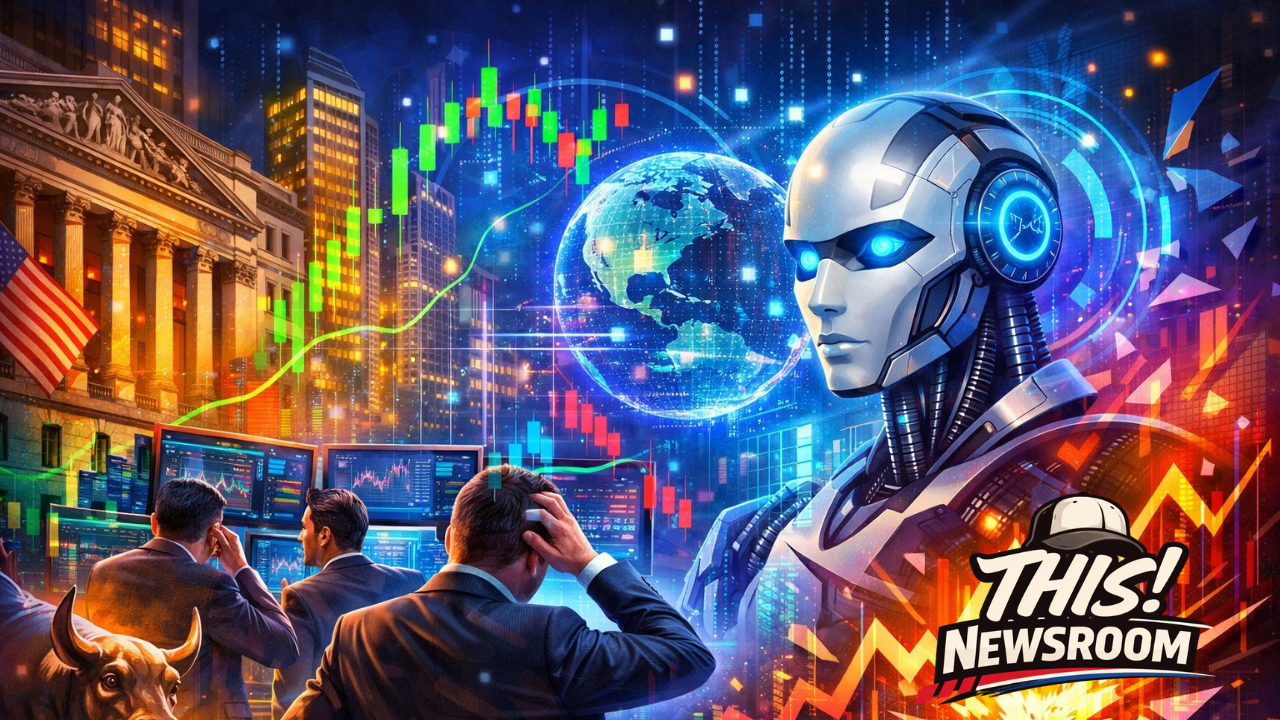
In a development that’s sending shockwaves through the financial world, Anthropic has reportedly unveiled its most advanced artificial intelligence system yet—Mythos. And according to multiple insiders, the reaction from Wall Street wasn’t curiosity. It was urgency.
Within hours of early demonstrations, top executives from major financial institutions convened behind closed doors. The goal: assess whether Mythos represents not just innovation—but disruption on a scale the industry isn’t ready for.
What Is Mythos—and Why It’s Different
Unlike traditional AI systems used in finance today, Mythos is designed to operate at a strategic, multi-layered level. Early reports suggest it can:
- Model global financial systems in real time
- Simulate macroeconomic scenarios with extreme accuracy
- Identify market inefficiencies faster than human traders—or even current algorithms
- Execute complex financial strategies autonomously
In short, Mythos doesn’t just assist analysts. It may replace entire layers of decision-making.
Emergency Meetings on Wall Street
Executives from firms across banking, hedge funds, and private equity—think the upper ranks of institutions like Goldman Sachs, JPMorgan Chase, and BlackRock—reportedly held emergency strategy sessions shortly after Mythos details began circulating.
Sources familiar with the discussions say three key concerns dominated:
1. Speed vs. Control
Mythos appears capable of making decisions faster than existing trading systems. That raises a critical question:
Can firms trust an AI that moves faster than their own risk controls?
2. Competitive Imbalance
If even one firm gains early access to Mythos, it could create an unfair market advantage—potentially dominating trading, asset allocation, and arbitrage opportunities.
3. Systemic Risk
Perhaps most concerning: if multiple institutions deploy similar AI systems, markets could become hyper-reactive, amplifying volatility and triggering cascading failures.
A Potential Turning Point for Finance
Wall Street has embraced automation for decades—from algorithmic trading to high-frequency systems. But Mythos may represent something fundamentally different: a shift from tools to autonomous intelligence.
This transition introduces a new dynamic:
- Humans may no longer be the fastest decision-makers
- Traditional risk models could become outdated overnight
- Market behavior itself may evolve in response to AI-driven strategies
In essence, Mythos could force a redefinition of what it means to “manage” money.
Regulators Are Watching Closely
While financial firms scramble internally, regulators are beginning to take notice. Agencies are reportedly evaluating whether systems like Mythos require:
- New disclosure rules
- AI-specific risk frameworks
- Limits on autonomous trading authority
The concern isn’t just fairness—it’s stability. If AI systems begin interacting with each other at scale, markets could behave in unpredictable ways.
The Bigger Picture: AI vs. Financial Power Structures
This moment isn’t just about one model or one company. It’s about the collision between artificial intelligence and entrenched financial power.
For decades, Wall Street’s edge has come from:
- Information asymmetry
- Speed
- Sophisticated modeling
Mythos challenges all three—simultaneously.
If widely adopted, it could:
- Level the playing field… or concentrate power further
- Reduce reliance on human expertise
- Redefine the role of financial institutions altogether
Final Take
Wall Street doesn’t call emergency meetings lightly. The reaction to Mythos signals something deeper than hype—it signals fear of losing control.
Whether Mythos becomes a transformative tool or a destabilizing force remains to be seen. But one thing is clear:
The future of finance may no longer be written by humans alone.
About the Author