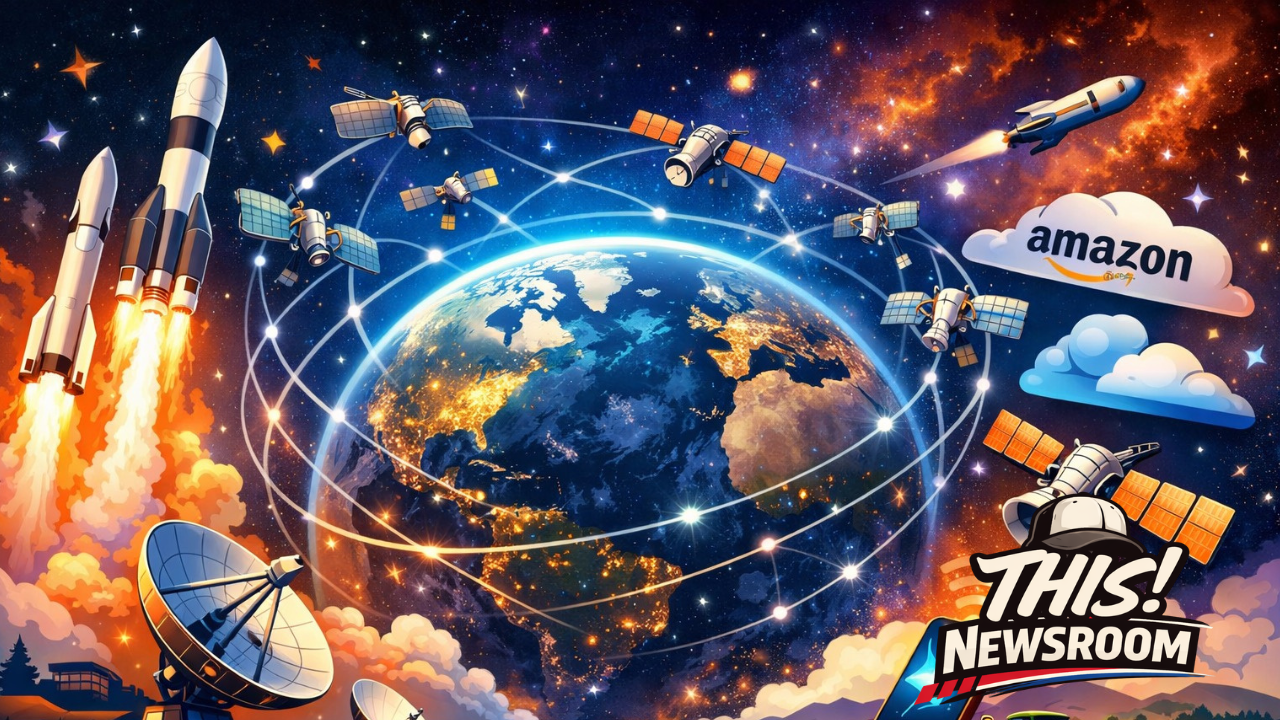
Amazon to Acquire Globalstar for $11.6B: What It Means for Satellite Internet

In a move that signals just how serious Big Tech is about controlling the future of connectivity, Amazon is reportedly set to acquire satellite communications firm Globalstar for a massive $11.6 billion.
This isn’t just another acquisition. It’s a strategic land grab in space—and it could reshape everything from internet access to global communications infrastructure.
The Big Picture: Why Amazon Wants Globalstar
Amazon has already been building its own satellite internet network through Project Kuiper, a direct competitor to SpaceX’s Starlink.
But here’s the problem:
Building a satellite network from scratch is expensive, slow, and heavily regulated.
By acquiring Globalstar, Amazon instantly gets:
- Existing satellite infrastructure
- Licensed spectrum (a HUGE deal)
- Operational ground stations
- Established enterprise and government relationships
In short, Amazon is buying speed.
Why Spectrum Is the Real Prize
If you take one thing away from this deal, it’s this: spectrum is everything.
Globalstar owns valuable wireless spectrum that enables satellite-to-device communication. That’s the same type of capability being explored in partnerships like Apple’s emergency satellite SOS features.
With this acquisition, Amazon could:
- Enable direct-to-phone satellite connectivity
- Expand global IoT (Internet of Things) networks
- Strengthen AWS-powered communication systems
This puts Amazon in a position to control not just infrastructure—but access itself.
The Competitive Landscape Is Heating Up
This deal places Amazon squarely in the middle of a high-stakes space race:
- SpaceX → Starlink dominates consumer satellite internet
- Apple → quietly integrating satellite features into iPhones
- Google → investing in connectivity and AI-driven infrastructure
Now, Amazon isn’t just catching up—it’s accelerating.
And unlike competitors, Amazon brings a powerful combination:
- AWS (cloud dominance)
- Logistics infrastructure
- Consumer ecosystem (Prime, devices, etc.)
That synergy could make Amazon’s satellite ambitions far more scalable.
What This Means for Consumers
At first glance, this sounds like a behind-the-scenes corporate deal. It’s not.
Here’s how it could impact everyday life:
1. Internet Anywhere
Rural and underserved areas could finally get reliable high-speed internet without traditional infrastructure.
2. Phones That Never Lose Signal
Imagine your phone connecting to satellites when towers fail—no dead zones, no outages.
3. Smarter Everything
From agriculture to transportation, satellite-powered IoT could unlock:
- Real-time tracking
- Autonomous systems
- Global connectivity for devices
The Bigger Play: Owning the Future of Connectivity
Amazon isn’t just buying satellites—it’s buying a layer of the internet.
Control over space-based infrastructure means:
- Reduced dependence on telecom providers
- New revenue streams through AWS integrations
- A stronger moat around its ecosystem
This is vertical integration at a planetary scale.
Risks and Challenges
Of course, this isn’t a guaranteed win.
Amazon still faces:
- Regulatory scrutiny (especially around spectrum control)
- High capital costs for launches and maintenance
- Fierce competition from established players like SpaceX
But if Amazon executes well, the upside is enormous.
Final Take
This $11.6 billion move isn’t just about satellites—it’s about who controls how the world connects.
Amazon is betting that the future of the internet isn’t just in data centers or fiber lines…
…it’s in orbit.
And if they’re right, this acquisition could be remembered as the moment the cloud officially moved to space.
About the Author