United & American Airlines Merger: Antitrust Risks, Benefits, Timeline
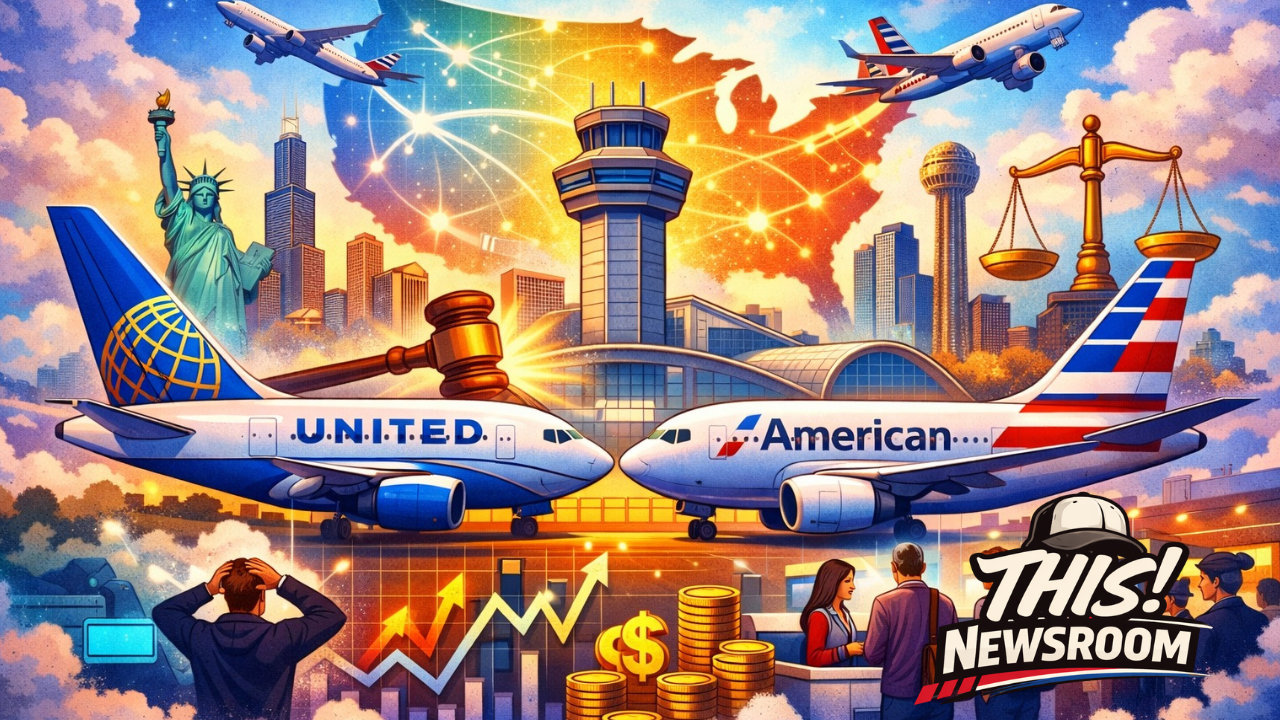
The airline industry is no stranger to consolidation, but the idea of a merger between United Airlines and American Airlines would be on an entirely different level. If such a deal were to materialize, it would create the largest airline in the world by a wide margin—reshaping competition, pricing, and the future of air travel in the United States.
While no official deal has been announced, speculation alone raises critical questions: Would regulators allow it? Who benefits? And what could go wrong?
The Big Picture: A Mega-Merger in the Making?


A merger between United and American would combine two of the “Big Four” U.S. carriers—alongside Delta Air Linesand Southwest Airlines—into a dominant force controlling a massive share of domestic and international routes.
Combined strengths would include:
- Extensive global route networks
- Dominance at major hubs (Chicago, Dallas, Miami, Newark, Charlotte, etc.)
- Increased leverage over pricing, suppliers, and airport access
However, with scale comes scrutiny—and this deal would immediately trigger one of the largest antitrust reviews in modern aviation history.
Why This Merger Would Face Major Antitrust Challenges

The biggest hurdle would come from the U.S. Department of Justice, which has taken a far more aggressive stance on consolidation in recent years.
1. Reduced Competition
A United–American merger would significantly reduce competition on:
- Key domestic routes (e.g., NYC–LA, Dallas–Chicago)
- International long-haul flights
- Business-heavy routes where both airlines currently compete
Fewer competitors often lead to higher fares and fewer choices for consumers—a core concern for regulators.
2. Market Dominance at Key Airports
Both airlines already dominate specific hubs:
- American: Dallas/Fort Worth, Charlotte, Miami
- United: Newark, Chicago O’Hare, Denver
A merger could create near-monopolies at multiple major airports, limiting access for smaller carriers and new entrants.
3. Recent Precedent: JetBlue-Spirit Blocked
The DOJ recently blocked the merger between JetBlue Airways and Spirit Airlines, citing reduced competition—despite those airlines being far smaller than United or American.
That precedent alone signals how difficult approval would be for a deal of this magnitude.
Potential Benefits If the Merger Happens

Despite the regulatory challenges, there are real advantages that supporters would highlight.
1. Expanded Global Connectivity
A combined airline could offer:
- More seamless international travel
- Fewer connections
- Better coordinated schedules
This would particularly benefit business travelers and frequent flyers.
2. Operational Efficiency
Merging fleets, systems, and staff could:
- Reduce operational redundancies
- Improve scheduling and aircraft utilization
- Potentially stabilize profitability in a volatile industry
3. Stronger Competition Globally
While domestic competition may shrink, a larger airline could better compete with global giants like:
- Emirates
- Lufthansa
- Air France-KLM
The Risks and Potential Downfall

Even if approved, airline mega-mergers often come with serious risks.
1. Higher Ticket Prices
With fewer competitors, history suggests:
- Fares could rise
- Fees (bags, seat selection, changes) could increase
2. Integration Challenges
Merging two massive airlines is incredibly complex:
- IT system failures
- Loyalty program disruptions
- Labor union conflicts
Past airline mergers have taken years to stabilize—and some never fully do.
3. Customer Experience Decline
Bigger doesn’t always mean better. Travelers could face:
- Reduced service quality
- Fewer flight options on certain routes
- More crowded planes and longer delays
Timeline: If It Happens, When Could It Happen?
Even under the most optimistic scenario, this would not be a quick deal.
Typical timeline for a merger of this size:
- Rumor/Exploration Phase – Ongoing speculation, no formal filing
- Announcement & Agreement – Could take months to negotiate
- Regulatory Review – 12–24+ months (likely longer given scrutiny)
- Litigation (if challenged) – Could extend timeline another 1–2 years
- Integration Phase – 2–5 years post-approval
Best-case scenario:
- Deal announced: Late 2026 or beyond
- Approval (if granted): 2028–2029
- Full integration: Early 2030s
The Bottom Line
A merger between United Airlines and American Airlines would be a defining moment for the aviation industry. On one hand, it could create a more efficient, globally competitive airline. On the other, it raises serious concerns about reduced competition, higher prices, and diminished consumer choice.
Given the current regulatory environment—and recent aggressive moves by the U.S. Department of Justice—the odds of approval appear low without major concessions, such as:
- Selling off routes
- Giving up airport slots
- Maintaining pricing protections
Still, in an industry driven by scale and survival, the idea of consolidation isn’t going away anytime soon.
If you’re a traveler, the key takeaway is simple:
This is a high-stakes, high-impact possibility—but far from a done deal.
About the Author