Nick Saban Speaks at White House on College Sports Changes: What It Means
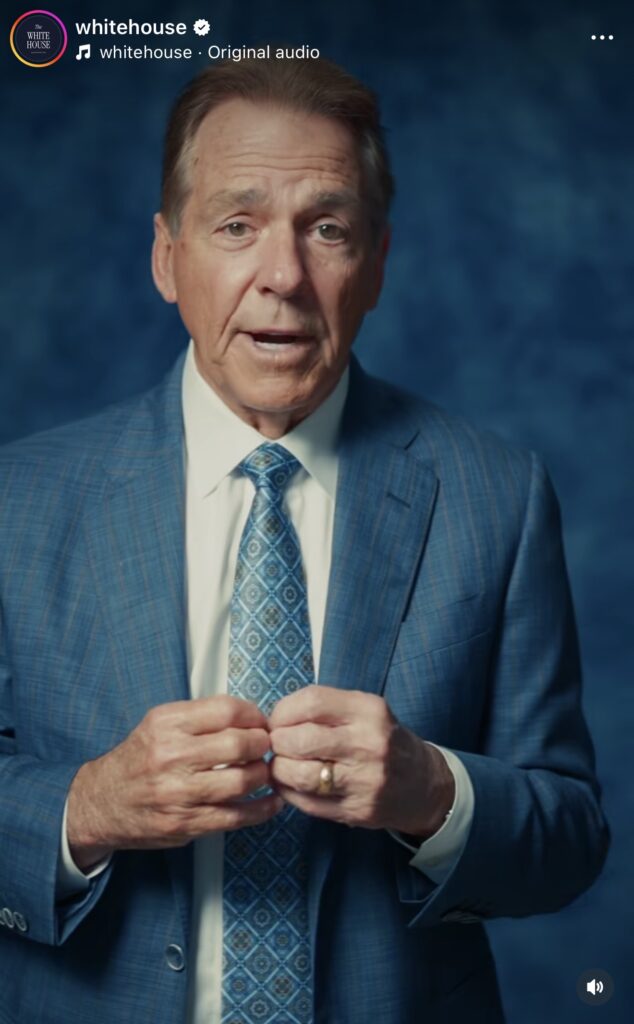
In a moment that signals just how serious the transformation of college athletics has become, legendary former Alabama head coach Nick Saban appeared in a White House–produced message addressing sweeping proposed changes to the college sports landscape.
The video, shared via the official White House Instagram account, places Saban front and center as a trusted voice on one of the most rapidly evolving—and controversial—issues in American sports today.
👉 Watch the full video here:
https://www.instagram.com/reel/DXASYgMksnK/?igsh=dTV2dmMzMW5iY2Q4
Why Nick Saban Is Speaking Out
Saban’s involvement is not random. Over the past few years, he has been one of the most vocal and influential figures pushing for structure, regulation, and fairness in college athletics—especially as changes around NIL (Name, Image, and Likeness) and the transfer portal have reshaped the system.
Now, those conversations have reached Washington.
His appearance aligns with ongoing discussions between lawmakers, the NCAA, conferences, and athletes about creating a national framework for college sports—something many leaders believe is urgently needed.
What Changes Are Being Proposed?
At the core of the conversation are several major shifts that could redefine college athletics:
1. Federal NIL Regulation
Currently, NIL rules vary by state, creating competitive imbalance.
Proposed change:
- A national standard governing how student-athletes can earn money from endorsements
- Increased transparency and oversight of deals
2. Revenue Sharing with Athletes
One of the biggest debates: should athletes be paid directly by schools?
Proposals include:
- Allowing schools to share a portion of revenue (TV deals, ticket sales)
- Creating structured compensation systems beyond NIL
3. Transfer Portal Reform
The transfer portal has made player movement easier—but also chaotic.
Potential updates:
- Limits on transfer frequency
- Defined windows for transfers
- Rules to prevent roster instability
4. Employment Status of Athletes
A major legal question looms: are college athletes employees?
If classified as employees:
- Schools may need to provide salaries, benefits, and protections
- Entire athletic department models could change
5. Competitive Balance & Integrity
Saban has repeatedly emphasized this point.
Without regulation:
- Wealthier programs gain disproportionate advantages
- Recruiting becomes more transactional than developmental
Why the White House Is Involved
College sports is no longer just about games—it’s a multi-billion-dollar industry intertwined with education, labor law, and commerce.
Federal involvement signals:
- A push for uniformity across states
- Concern about legal challenges and athlete rights
- The need to stabilize a system many believe is unsustainable in its current form
What Saban’s Message Really Means
Nick Saban’s appearance carries weight beyond the message itself.
It reflects:
- The urgency of reform
- The influence of coaches in shaping policy
- A shift from internal NCAA governance to national-level decision-making
Saban has long warned that without guardrails, college football could drift too far from its original mission. Now, those warnings are being echoed at the highest levels of government.
What Happens Next?
While no final legislation has passed yet, momentum is building quickly.
Possible timeline:
- Continued negotiations through 2026
- Potential federal legislation or NCAA restructuring
- Gradual rollout of new rules over the next 1–3 years
The Bottom Line
Nick Saban stepping into a White House-backed message marks a turning point.
College sports is entering a new era—one where:
- Athletes gain more power and compensation
- Schools face new financial realities
- And the federal government may play a defining role
What happens next won’t just impact college football—it will reshape the entire ecosystem of college athletics for decades to come.
About the Author