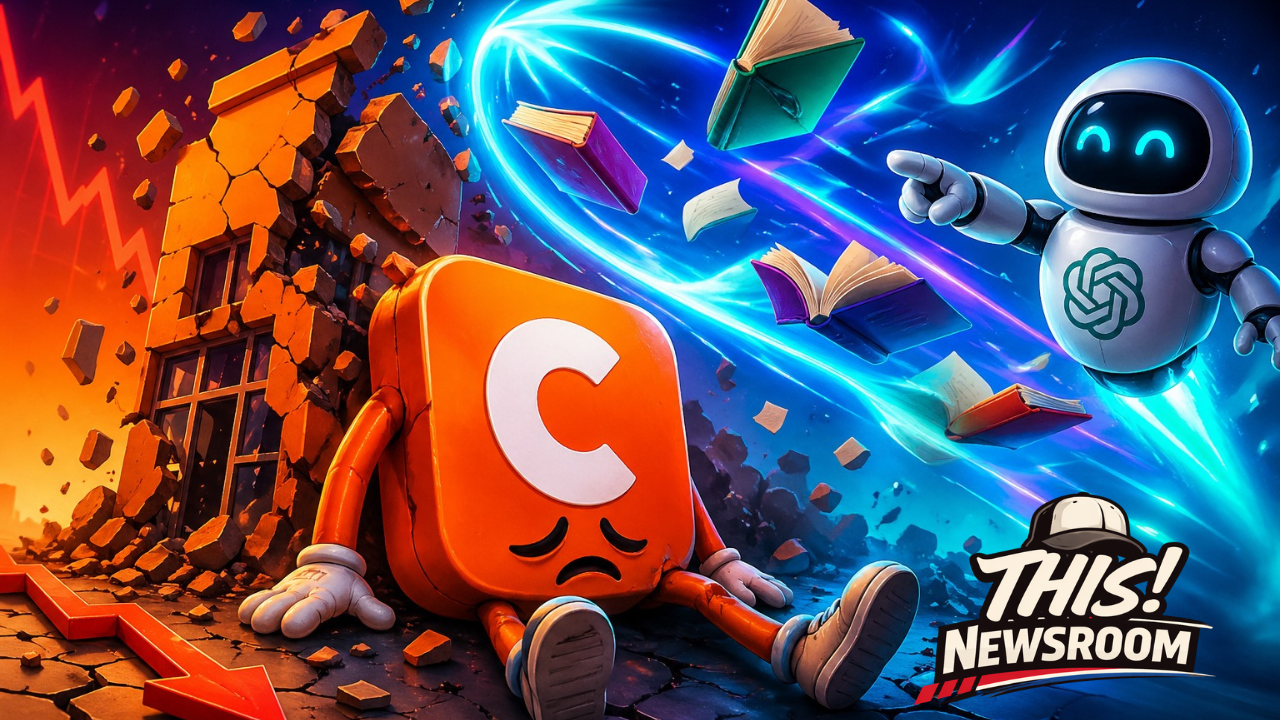
Chegg AI Downfall: How ChatGPT Crushed a Billion-Dollar EdTech Company
For years, Chegg was the go-to lifeline for students. Homework help, textbook rentals, study guides—it owned a massive slice of the education support market. At its peak, the company was thriving, riding the wave of digital learning and subscription-based academic assistance.
Then AI showed up—and everything changed.
From Market Darling to Market Shock
In 2024, Chegg was still trading at significantly higher levels, backed by millions of subscribers and a strong brand in education technology. While the company had already seen volatility post-pandemic, few predicted what would come next.
The real disruption didn’t come from a competitor in the traditional sense. It came from a shift in behavior.
Students didn’t cancel Chegg because another company beat them.
They stopped needing Chegg altogether.
The Rise of ChatGPT
ChatGPT fundamentally changed how students approach learning and problem-solving.
Instead of:
- Searching for pre-written answers
- Waiting for expert responses
- Paying monthly subscription fees
Students could now:
- Ask questions in real time
- Get step-by-step explanations
- Receive personalized tutoring instantly
And most importantly—it felt free, fast, and smarter.
This wasn’t just competition. This was replacement.
A Collapse Fueled by Behavior Change
The numbers began to reflect what was happening in real time:
- Subscriber growth slowed dramatically
- Existing users churned at higher rates
- Revenue projections were cut
- Investor confidence collapsed
What followed was brutal.
Chegg’s stock, once a strong performer in the edtech space, plummeted—eventually hovering around $1 per share, a stunning fall for a once-prominent company.
Layoffs and a Shrinking Future
As revenue declined, the company was forced into survival mode.
Mass layoffs followed.
Cost-cutting measures intensified.
Leadership acknowledged what many already knew: AI had fundamentally disrupted their core business model.
This wasn’t a cyclical downturn.
This was structural.
Why Chegg Became the First True AI Casualty
There have been plenty of industries “impacted” by AI. But Chegg represents something different.
It may be the first large, publicly traded company whose primary value proposition was directly replaced by AI at scale.
Here’s why:
1. AI Didn’t Improve the Industry—It Eliminated the Middleman
Chegg’s value was access to answers. AI made access infinite and immediate.
2. Switching Costs Were Zero
Students didn’t need onboarding, contracts, or training. They simply opened a new tab.
3. AI Delivered a Better Experience
Personalized, conversational, and always available beats static answer databases every time.
This Is Bigger Than Chegg
Chegg isn’t just a story about one company.
It’s a warning.
Any business built on:
- Information retrieval
- Static knowledge libraries
- Paid access to answers
is now vulnerable.
Because AI doesn’t just compete on price.
It competes on experience, speed, and intelligence.
What Comes Next?
The companies that survive—and win—will be the ones that:
- Integrate AI into their core offering
- Shift from content to context
- Focus on outcomes, not just information
Chegg’s story may feel extreme, but it’s likely just the beginning.
Final Thought
The fall of Chegg may go down as the first major, visible example of AI disruption at scale.
Not because AI existed.
But because people changed their behavior overnight.
And when behavior changes that fast, even billion-dollar companies can collapse just as quickly.
If Chegg was the first domino…
Who’s next?
About the Author