Elon Musk’s $7.5 Trillion SpaceX Plan: 1 Million People on Mars

The Headline That Stopped Everyone
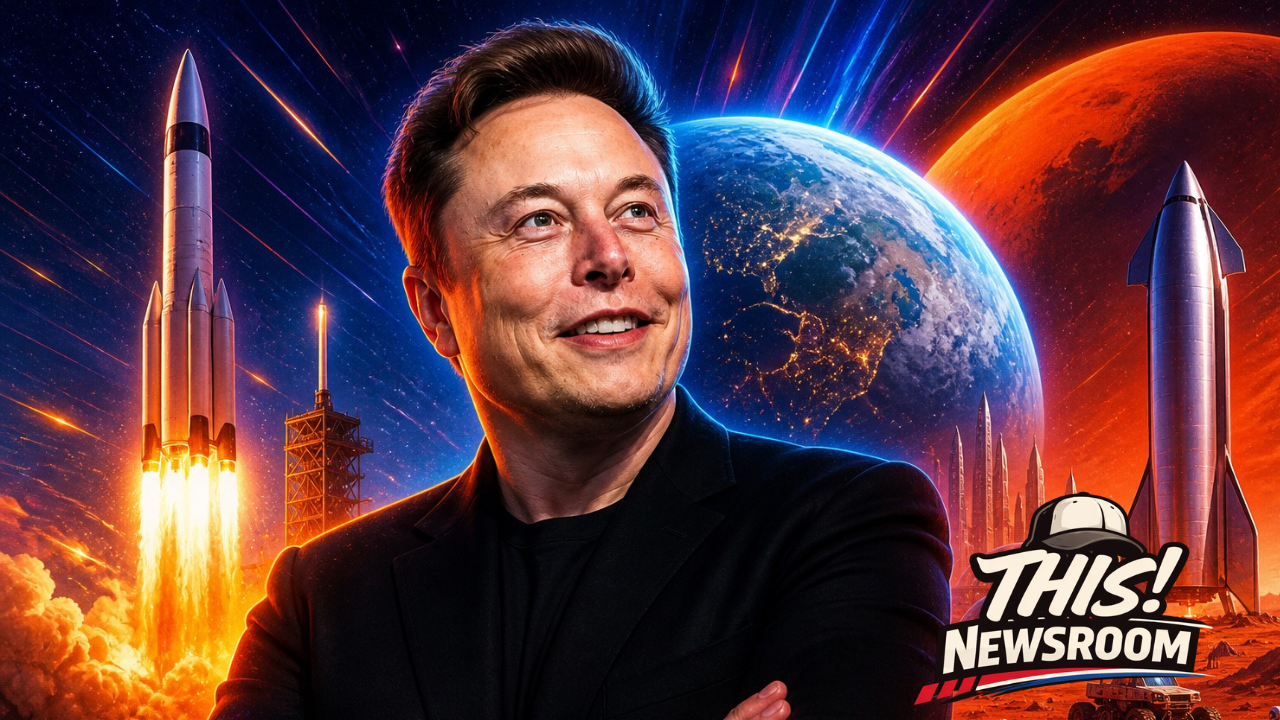
A bold claim is making waves: to unlock 200 million shares, Elon Musk must push SpaceX to a staggering $7.5 trillion valuation—and, in the process, help put 1 million people on Mars.
That’s not just a compensation milestone. That’s a civilization-level goal.
And whether you see it as visionary or wildly ambitious, one thing is clear: this isn’t business as usual.
What Does “200 Million Shares” Actually Mean?
At the core of this headline is a performance-based incentive structure—similar in spirit to Musk’s controversial pay packages at Tesla.
Instead of traditional compensation, Musk’s upside is tied to extreme long-term outcomes:
- Massive company valuation growth
- Breakthrough technological milestones
- Real-world execution at a scale never attempted
In short: no results, no reward.
The $7.5 Trillion Question
Let’s put this into perspective.
A $7.5 trillion valuation would make SpaceX:
- Larger than any company in history
- Bigger than most national economies
- A dominant force not just in aerospace—but across global infrastructure
For comparison:
- Apple has hovered around $3T
- Microsoft and NVIDIA are in similar elite territory
SpaceX hitting $7.5T would mean it evolves from a rocket company into something far bigger:
- Global internet backbone (Starlink)
- Interplanetary transportation network
- Space-based logistics and manufacturing
The Mars Mandate: 1 Million People
This is where things shift from ambitious… to historic.
Musk’s long-stated vision is to make humanity multi-planetary—with Mars as the first step.
The goal:
- Build a self-sustaining city on Mars
- Transport 1 million people
- Create a backup for human civilization
To do that, SpaceX is developing:
- Starship – fully reusable, ultra-heavy launch system
- Rapid launch cadence (think airline-like frequency)
- Cost reductions that make space travel economically viable
If successful, this wouldn’t just change space exploration—it would redefine human existence.
Is This Even Possible?
Let’s be real—this is insanely difficult.
Challenges include:
- Engineering: Reusable rockets at scale, life-support systems, planetary infrastructure
- Economics: Funding a trillion-dollar expansion with uncertain ROI
- Human factors: Radiation, psychology, survival on a hostile planet
But here’s the counterpoint:
People said reusable rockets wouldn’t work.
People said electric cars wouldn’t scale.
And yet, here we are.
Why This Matters Right Now
This isn’t just about Musk.
It signals a broader shift:
- Private companies are driving the future of space
- Governments are no longer the sole gatekeepers
- The next economic frontier may not be on Earth
If SpaceX even gets halfway there, it could:
- Reshape global communications
- Redefine transportation
- Create entirely new industries
The Bottom Line
A $7.5 trillion valuation.
1 million people on Mars.
200 million shares on the line.
It sounds like science fiction—but it’s being treated like a business plan.
And if there’s one thing we’ve learned about Elon Musk…
it’s that betting against impossible timelines has historically been a risky move.
About the Author