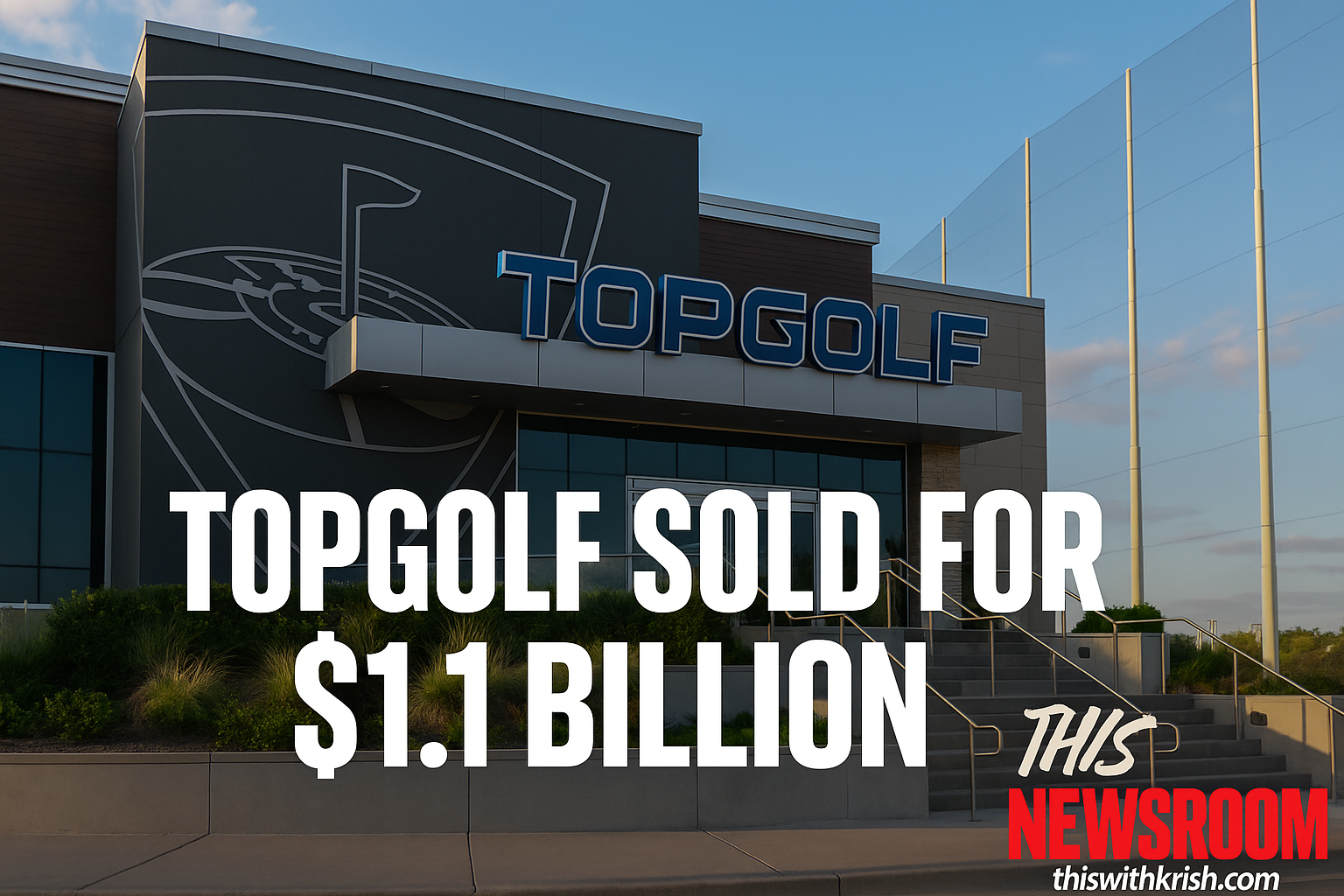
In one of the biggest sports-entertainment shakeups of the year, Dallas-based Topgolf — the global giant that turned a simple golf swing into a full-blown social experience — has officially been sold in a massive $1.1 billion deal.
The buyer? Leonard Green & Partners, a California private-equity powerhouse tied to Callaway Golf, which originally merged with Topgolf several years ago.
This is more than just a headline. It’s a real-time case study in brand evolution, the economics of experiential entertainment, and the pressures facing modern sports-tech companies.
Let’s break it down — the real numbers, the motivations, and what comes next.
The Deal: A $1.1 Billion Power Shift
According to filings and reporting from Reuters and the Financial Times, Callaway (now returning to the legacy name Callaway Golf Company) is offloading a 60% majority stake in Topgolf, valuing the company at $1.1 billion.
Callaway walks away with roughly $770 million in net proceeds, and Leonard Green gains controlling influence over one of the most recognizable entertainment real-estate brands in America.
Expected closing: Q1 2026
Expected impact: Immediate strategic reset
Why Sell Now? The Story Behind the Numbers
Topgolf isn’t your typical golf company. It’s part-restaurant, part-sports arena, part-tech company, and part-entertainment venue. That means:
- Huge real-estate footprints
- High construction and operating costs
- Technology and data infrastructure to support Toptracer
- Staffing that looks more like a hospitality business than a golf brand
During the pandemic recovery years, Topgolf grew fast — but so did debt, costs, and expectations.
Callaway originally acquired Topgolf at valuations nearly double today’s number. Fast forward to 2025, and macro pressure — interest rates, construction inflation, and tighter consumer spending — has forced a recalibration.
This sale isn’t a fire-sale. It’s a strategic unbundling.
What Leonard Green Gets: A Global Entertainment Engine
Let’s be clear: this is still one of the hottest entertainment brands in the world.
Topgolf has:
- 100+ venues worldwide
- A built-in youth audience
- Dominance in the “social golf” category
- Strong F&B revenue
- A massive brand moat — nobody else really competes at this scale
Leonard Green specializes in scaling consumer businesses, tightening operations, and improving margins. Expect them to:
- Optimize food & beverage profitability
- Expand internationally
- Add more data-driven revenue channels
- Streamline venue buildouts
- Possibly spin out additional tech products
In other words — they didn’t buy a golf range. They bought an experience empire.
What This Means for Dallas — and Golf
Topgolf started as a UK concept, but Dallas is where it hit escape velocity. The brand is woven into the city’s sports and entertainment DNA.
This sale signals:
1. Dallas remains a hub for sports-tech innovation.
Even under new ownership, the culture and creative engine that built Topgolf isn’t moving anywhere.
2. The golf world is splitting into two tracks.
- Traditional golf (Callaway, Titleist, the equipment wars)
- Social/experiential golf (Topgolf, simulator leagues, youth formats)
Both are growing — but differently.
3. Experiences are becoming the new “clubs.”
You don’t need a 6-iron to get someone interested in golf… you need a good slider, a cold drink, and a glowing bullseye lit up at 9 p.m.
Callaway’s Next Move: Back to Basics
By shedding the Topgolf majority stake, Callaway can:
- Reduce debt
- Refocus on equipment innovation
- Rebuild shareholder confidence
- Simplify its corporate structure
- Return to its historic brand identity
Callaway is now essentially saying:
“We’re a golf company again — not an entertainment conglomerate.”
The Bigger Story: The Future of Experience-Based Businesses
Topgolf’s sale is part of a wider trend:
- Consumers still want experiences
- But investors want profitability
- And companies need focus, not sprawling complexity
The brands that win going forward will be the ones that can balance:
Experience + Efficiency + Scalability
Topgolf has the demand.
Leonard Green may have the discipline.
And Dallas still has the heartbeat.
Final Takeaway
This sale doesn’t mark the end of Topgolf’s era — it marks the next era.
A $1.1 billion valuation tells us one thing loud and clear:
Experiential entertainment isn’t fading — it’s evolving.
Dallas built a global category.
California now steers the ship.
And the golf world watches what happens next.
About the Author