
NASA Artemis II Launch: First Crewed Moon Mission Since Apollo Era
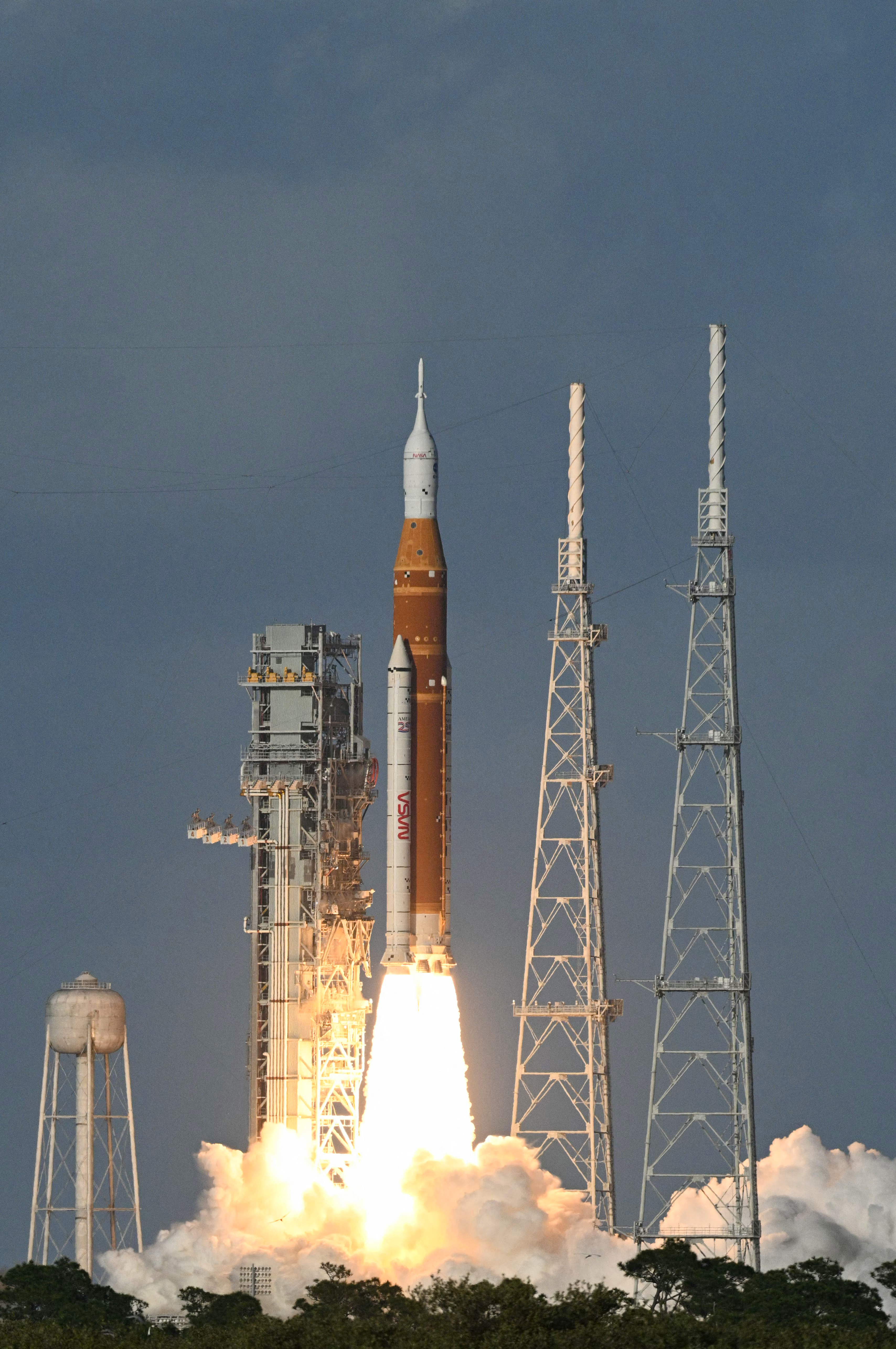
The next chapter of human space exploration is officially underway. NASA has launched the highly anticipated Artemis II mission from Kennedy Space Center in Florida, marking the first crewed journey of the Artemis program—and the first time humans have ventured beyond low-Earth orbit since the Apollo 17 mission more than five decades ago.
This isn’t just a launch. It’s a signal. A signal that the United States is serious about returning to the Moon—and eventually going even further.
A Historic Liftoff
Shortly after ignition, NASA’s powerful Space Launch System (SLS) roared to life, sending the Orion spacecraft and its crew on a trajectory around the Moon. The launch lit up the Florida sky, drawing crowds, cameras, and global attention.
Unlike Artemis I, which flew uncrewed, Artemis II carries astronauts on a 10-day mission that will loop around the Moon and return safely to Earth. This flight serves as a critical test of life-support systems, navigation, and deep-space communication.
Meet the Artemis II Crew
The Artemis II crew represents experience, diversity, and a global partnership:
- Reid Wiseman (Commander)
- Victor Glover (Pilot)
- Christina Koch (Mission Specialist)
- Jeremy Hansen (Mission Specialist, representing the Canadian Space Agency)
This marks several milestones, including the first woman and first person of color to travel to the Moon’s vicinity.
Why Artemis II Matters
Artemis II is more than a symbolic mission—it’s a proving ground for the future of space exploration.
Here’s why it matters:
1. Preparing for a Moon Landing
NASA plans to follow Artemis II with Artemis III, which aims to land astronauts near the lunar south pole—a region believed to contain water ice.
2. Testing Deep-Space Systems
From radiation exposure to long-duration flight systems, Artemis II validates technology needed for sustained human presence beyond Earth.
3. Building Toward Mars
NASA’s long-term vision extends beyond the Moon. Artemis missions will help lay the foundation for future human missions to Mars.
A New Space Race Era
While NASA leads the Artemis program, global competition is heating up. China has accelerated its lunar ambitions, while private companies like SpaceX continue to push innovation at record speed.
This moment feels different from the Cold War-era space race. Today, it’s a blend of collaboration and competition—government agencies working alongside private industry to achieve what once seemed impossible.
What Comes Next
If Artemis II proves successful, the roadmap is clear:
- Artemis III: Human lunar landing
- Artemis IV+: Building a sustainable lunar presence
- Long-term: Human missions to Mars
The Artemis program isn’t just about flags and footprints—it’s about permanence.
The Bigger Picture
Space exploration has always captured imagination. However, Artemis II represents something deeper. It shows what’s possible when innovation, ambition, and global collaboration align.
For a generation that grew up after the Apollo era, this mission feels like a reawakening. A reminder that humanity still looks up—and still pushes forward.
And this time, we’re not just visiting the Moon.
We’re planning to stay.
About the Author