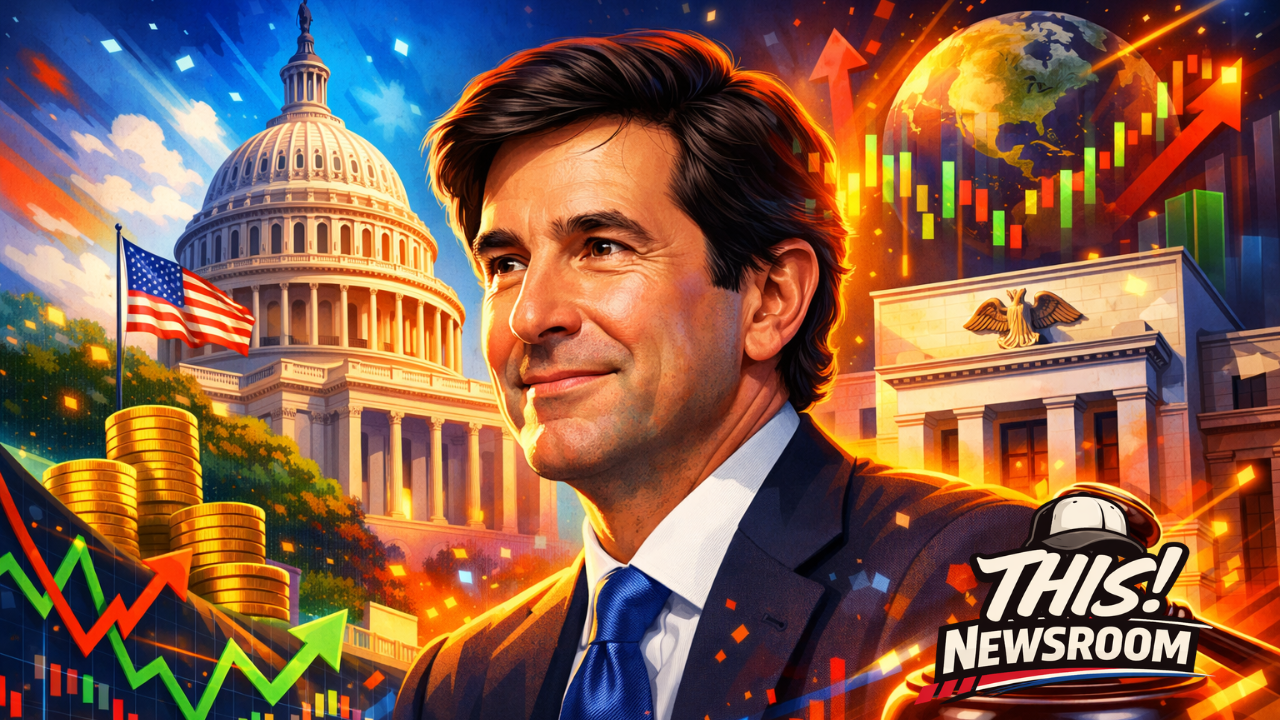
The spotlight in Washington turns to Kevin Warsh this week. He is meeting with U.S. senators as he seeks approval to become the next chairman of the Federal Reserve.
These meetings are an early step in the confirmation process. The role is one of the most powerful economic positions in the world. The Federal Reserve chairman helps shape interest rates, inflation policy, and financial stability.
If confirmed, Warsh would step into the job during a period of economic uncertainty. Inflation concerns remain. Meanwhile, labor markets continue to shift. Global tensions also affect energy prices and supply chains.
A Critical Moment for the U.S. Economy
The timing of Warsh’s bid is significant. Over the past several years, the Federal Reserve has tried to balance inflation control with economic growth.
Interest rate decisions influence nearly every part of the economy. Mortgage rates respond quickly. Auto loans and credit cards also change. In addition, stock markets often react to signals from the Fed.
Because of this, senators are expected to question Warsh closely about several topics:
- Inflation management
- Interest rate strategy
- Labor market strength
- Banking regulation
- Financial stability
Lawmakers from both parties want clarity. They want to know whether Warsh will maintain the current approach to interest rates. They also want to know if he plans to adjust policy to support growth.
Who Is Kevin Warsh?
Kevin Warsh is well known in economic policy circles. He served as a Federal Reserve Governor from 2006 to 2011. During that time, he helped guide policy during the 2008 financial crisis.
Before joining the Federal Reserve, Warsh worked in finance. Later, he became a special assistant to President George W. Bush for economic policy.
His career includes roles in both government and financial markets. As a result, supporters believe he understands monetary policy and market behavior.
Supporters say Warsh brings experience and institutional knowledge. Critics, however, want clearer answers about his policy priorities. In particular, they want details about inflation control and interest rate decisions.
Senators Prepare for Tough Questions
Warsh’s meetings with senators will test his political support. These discussions often shape the tone of the confirmation process.
Members of the Senate Banking Committee are expected to raise several concerns. They may ask how he would respond if inflation rises again. They may also ask how he would handle an economic slowdown.
In addition, lawmakers will likely discuss banking regulation and financial oversight. Some senators want strong safeguards for the financial system. Others want policies that encourage economic growth.
Warsh must also address a key issue: the Federal Reserve’s independence. Many lawmakers believe the central bank must remain free from political pressure.
His responses could determine how smoothly the confirmation process moves forward.
Why the Federal Reserve Chair Matters
The chairman of the Federal Reserve influences the entire U.S. economy. The role also carries global importance.
Federal Reserve decisions affect:
- Borrowing costs for households
- Business investment and lending
- Global financial markets
- The strength of the U.S. dollar
These decisions also shape everyday life. Mortgage payments may rise or fall. Credit card interest can change. Job growth may accelerate or slow.
Because of this, the next Fed chair will face immediate pressure to deliver stability.
What Happens Next
After these meetings, Warsh will likely appear before the Senate Banking Committee for formal confirmation hearings.
If the committee approves his nomination, the process moves to a full Senate vote.
Financial markets will watch closely. Investors often react quickly to signals about future monetary policy.
For now, attention remains on Capitol Hill. Kevin Warsh must convince lawmakers he is ready to guide the Federal Reserve through a complex economic moment.
About the Author