Public opinion on artificial intelligence continues to divide Americans as concerns about jobs and privacy grow.
Artificial intelligence may be advancing rapidly, but public sentiment toward the technology appears to be cooling. A new national poll released in March 2026 found that a significant share of Americans now view AI negatively—ranking it less favorably than even some of the country’s most controversial government agencies.
The survey, conducted by NBC News, revealed that 46% of Americans hold negative views about artificial intelligence, reflecting growing unease about how quickly the technology is reshaping work, privacy, and daily life.
AI Faces Rising Skepticism
According to the polling data, only about 26% of respondents expressed a positive opinion of AI, while the rest reported either negative or uncertain views. The findings highlight a widening gap between the rapid adoption of AI tools and the public’s comfort with the technology behind them.
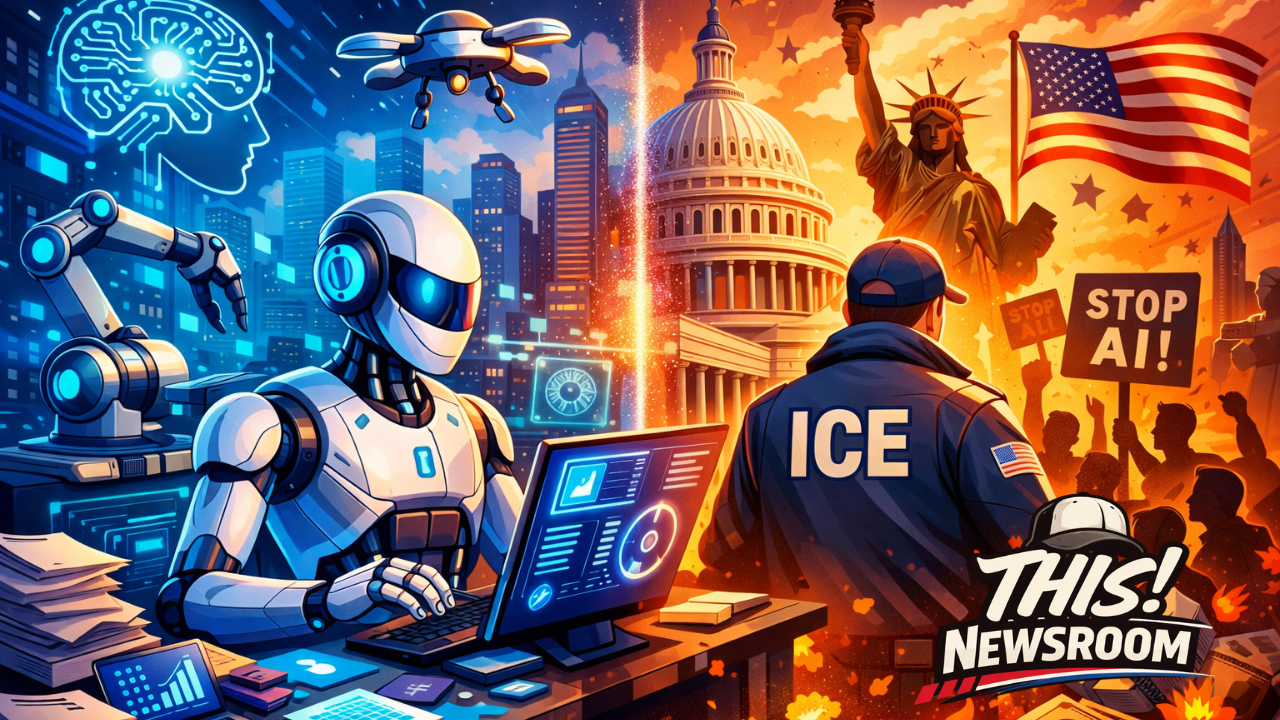
In fact, the NBC poll showed that AI ranked less popular than U.S. Immigration and Customs Enforcement (ICE) in terms of public favorability—an outcome that surprised many observers given the political controversies surrounding the agency.
The results also placed AI among the least-liked institutions measured in the survey, with only Iran and the Democratic Party receiving more negative sentiment from respondents.
Job Loss Concerns Driving Anxiety
One of the biggest factors fueling public skepticism is fear about the impact of AI on employment—particularly among white-collar workers.
Many Americans worry that AI systems could automate tasks traditionally performed by professionals such as accountants, lawyers, writers, software developers, and analysts. Some researchers and economists have warned about the possibility of large-scale white-collar job displacement, a scenario that could reshape the workforce in the coming decade.
For some respondents, the concern goes beyond job losses. Polling and research groups report that people increasingly fear AI could lead to:
- Mass white-collar unemployment
- Political and economic instability
- Erosion of personal privacy
- Technology replacing human decision-making
These fears reflect broader uncertainty about how governments and companies will manage AI’s rapid expansion.
Americans Are Using AI Anyway
Despite these concerns, AI adoption continues to grow across the United States.
Research from YouGov indicates that about 56% of Americans say they have used an AI tool, whether for writing assistance, image creation, research, or workplace productivity. Around 28% report using AI tools at least once per week, showing how quickly the technology has become embedded in everyday life.
This creates an interesting paradox: many Americans are actively using AI while simultaneously expressing distrust toward it.
Concern Still Outweighs Excitement
The same polling also suggests the public mood remains cautious rather than optimistic.
Approximately half of Americans say they feel more concerned than excited about the increasing role of AI in society. While enthusiasm exists among technology professionals and early adopters, the broader population appears to be taking a more skeptical stance.
Experts say that sentiment could evolve depending on how governments regulate AI and how companies deploy it.
The Future of AI’s Public Image
Artificial intelligence is widely expected to transform industries ranging from healthcare and finance to transportation and education. However, public opinion will likely play a critical role in shaping how quickly those changes occur.
If concerns about jobs, privacy, and societal impact continue to grow, policymakers may face increasing pressure to introduce stronger oversight and safeguards around AI technologies.
For now, the polling reveals a complicated reality: Americans are embracing AI’s convenience—but they remain deeply uncertain about its long-term consequences.
About the Author