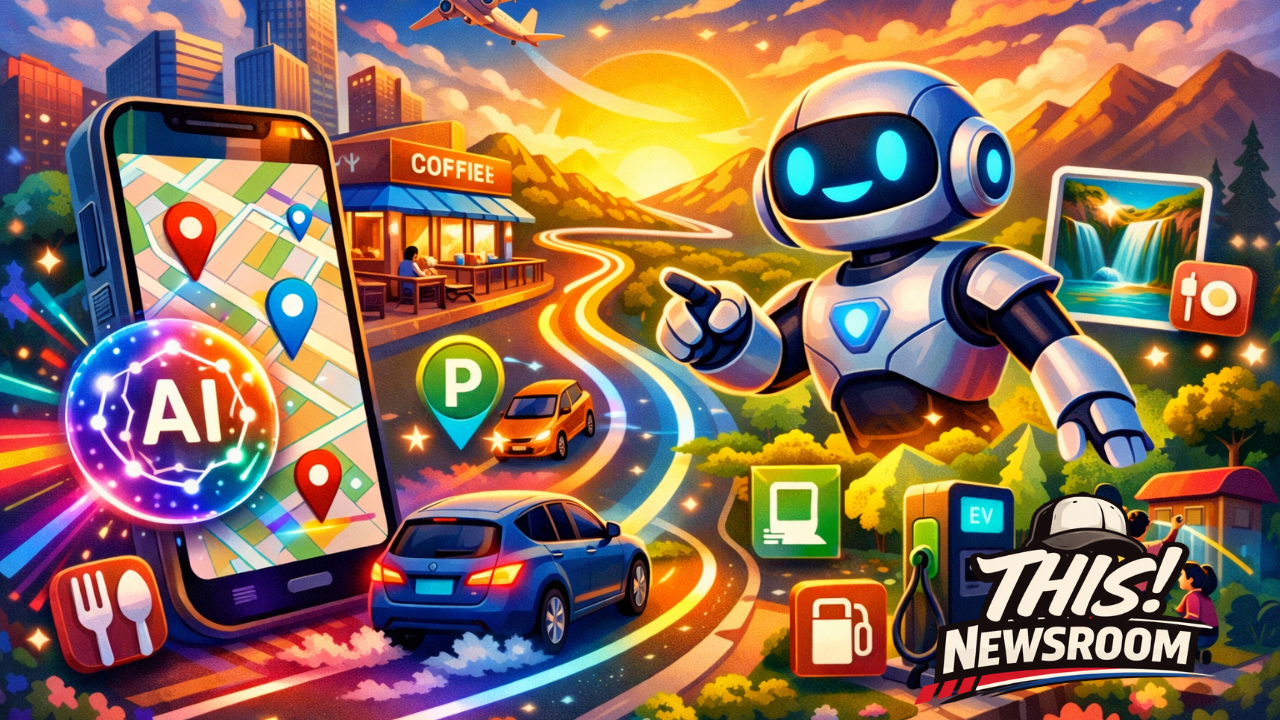
Google Maps has long been the go-to navigation app for millions of people around the globe. Now, Google is taking the platform to an entirely new level with the integration of Gemini Plus, its advanced artificial intelligence system. The update marks one of the most significant upgrades to Google Maps in years, promising smarter navigation, personalized recommendations, and a far more conversational experience.
With Gemini Plus built directly into Google Maps, users are no longer just typing in destinations—they’re interacting with an intelligent assistant that understands context, preferences, and real-time data.
A Smarter Way to Search
Traditionally, searching in Google Maps meant typing in a business name, address, or category like “coffee near me.” With Gemini Plus, the search experience becomes far more natural.
Users can now ask detailed questions such as:
- “Find a quiet coffee shop with outdoor seating nearby.”
- “Where can I take my kids for dinner that’s under $30?”
- “Show me the best scenic drive around here for sunset.”
Gemini Plus analyzes millions of data points—from reviews and photos to real-time traffic and popular times—to deliver highly relevant suggestions. Instead of returning a simple list of locations, the AI provides context-aware recommendations tailored to the user’s needs.
AI-Powered Trip Planning
One of the most exciting upgrades involves trip planning. Gemini Plus can help users build entire travel plans directly within Google Maps.
For example, users could ask:
“Plan a half-day trip in Dallas with lunch, a museum, and a park.”
Within seconds, Gemini Plus generates a suggested itinerary, complete with directions, estimated travel times, and top-rated destinations.
This feature turns Google Maps into something more than navigation—it becomes a personal travel planner powered by AI.
Real-Time Intelligence on the Road
Navigation is also getting smarter. Gemini Plus enhances route planning by combining traditional traffic data with predictive insights.
The system can now:
- Anticipate traffic patterns before they form
- Suggest alternative routes based on real-time events
- Identify parking availability near destinations
- Recommend gas stations, EV chargers, or food stops along the route
Drivers may even receive suggestions like:
“Traffic is building ahead. Taking this alternate route could save you 12 minutes.”
The goal is simple: reduce friction and make travel more efficient.
A More Conversational Maps Experience
Another major shift is how users interact with Google Maps. Instead of tapping through menus, people can simply talk to the app.
Gemini Plus brings conversational AI into Maps, allowing users to ask follow-up questions and refine results in real time.
For instance:
- “Show me Italian restaurants.”
- “Which one has the best reviews?”
- “Does it have parking?”
The AI keeps track of the conversation and adjusts recommendations instantly.
Discovering Places Like Never Before
Exploration is another area where Gemini Plus shines. The AI can analyze trends, reviews, and photos to highlight experiences users might otherwise miss.
Instead of generic lists, Maps might recommend:
- Hidden local favorites
- Trending restaurants
- Seasonal attractions
- Highly rated small businesses
The system even learns from past searches and visits, helping deliver hyper-personalized suggestions over time.
What This Means for the Future of Maps
The integration of Gemini Plus signals a major shift in how navigation platforms evolve. Google Maps is no longer just about getting from point A to point B—it’s becoming an AI-powered discovery engine.
For businesses, this change could mean greater visibility if they maintain strong reviews, photos, and engagement on Google listings. For users, it means smarter travel, better recommendations, and fewer frustrating searches.
As artificial intelligence continues to evolve, tools like Google Maps may become true digital companions, capable of understanding our habits, preferences, and destinations before we even ask.
The Bottom Line
Google’s integration of Gemini Plus into Maps represents a massive leap forward for everyday navigation. By blending real-time data, natural language understanding, and predictive AI, Google is transforming a simple mapping app into an intelligent assistant for exploring the world.
And if this is just the beginning, the future of navigation may look a lot less like a map—and a lot more like a conversation.
About the Author