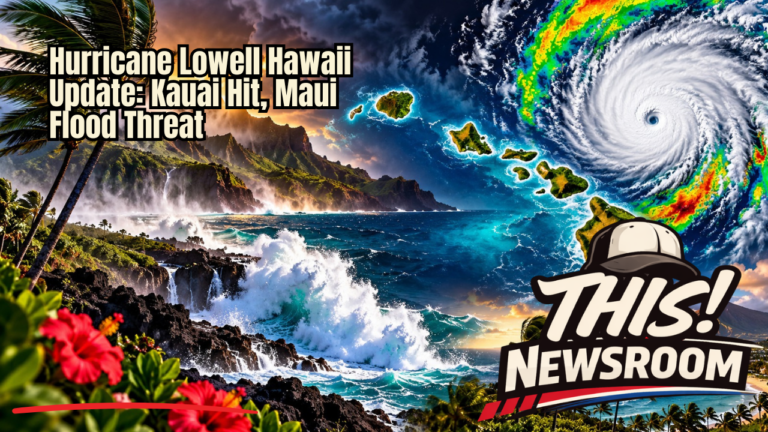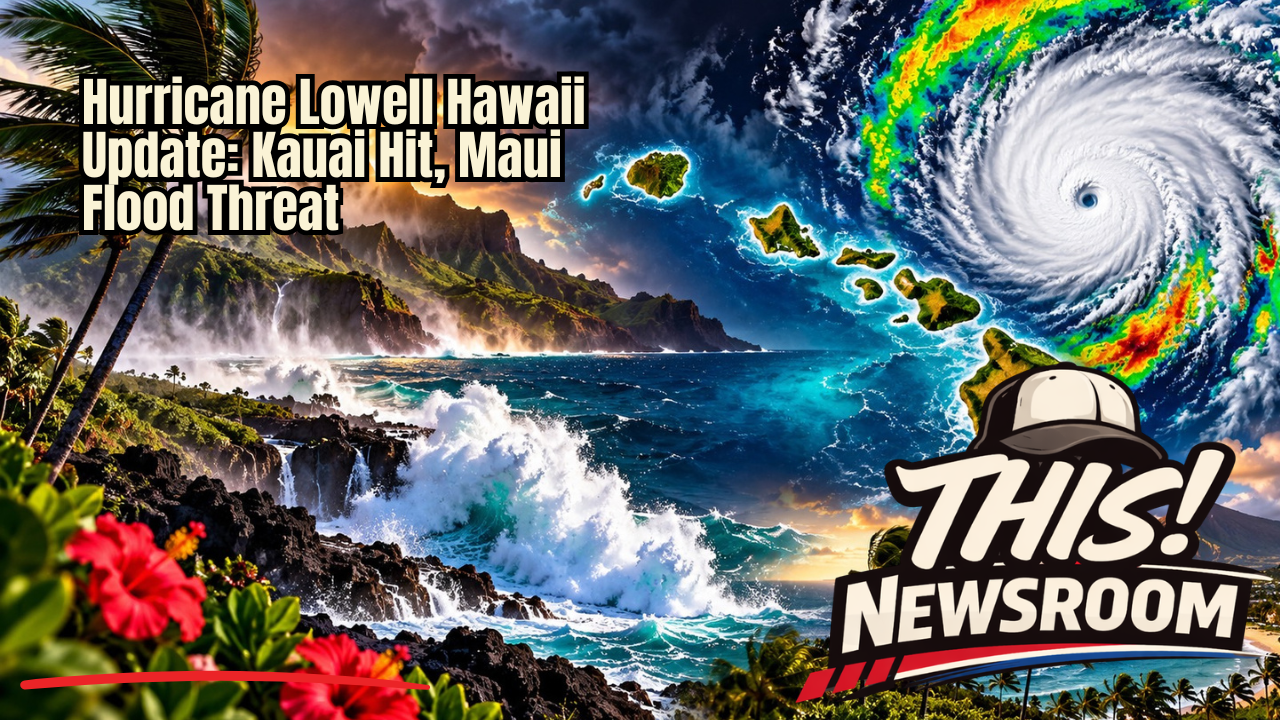
Hurricane Lowell brought damaging winds, dangerous surf and heavy rainfall to Hawaii, with Kauai experiencing some of the storm's strongest impacts.
HONOLULU — September 8, 2026 — Hurricane Lowell is pulling away from the Hawaiian Islands after delivering damaging winds, torrential rain and dangerous surf to portions of the state, with Kauai taking the most significant hitwhile Maui and other islands continue to face flooding and hazardous ocean conditions.
The National Weather Service in Honolulu said Tuesday morning that Lowell was lifting northward away from Hawaii. Officials have now canceled the Hurricane Warning for Kauai County and the Tropical Storm Warning for Oahu as winds begin to diminish.
But the immediate danger isn’t necessarily over.
Moist tropical air trailing behind Lowell could continue producing heavy showers and flooding through Tuesday and potentially into Wednesday. Maui County is among the areas still dealing with the storm’s lingering moisture.
Kauai Takes the Hardest Hit
Kauai emerged Tuesday morning to widespread storm damage after Lowell passed west of the island overnight.
The County of Kauai reported widespread power outages, downed trees, debris and damage associated with both powerful winds and coastal surge. Officials urged residents to remain indoors and stay off roads while emergency crews assess damage, clear debris and begin restoring electricity and other services.
The Associated Press reported that nearly all of Kauai’s utility members lost electricity during the storm, while hundreds of residents sought shelter. Coastal infrastructure was damaged as powerful waves pushed debris inland and affected roads and parks.
Wind gusts reached approximately 80 mph in portions of Kauai and Oahu during Lowell’s closest approach, according to the National Weather Service.
For Kauai residents, officials are now shifting from hurricane preparation to damage assessment and recovery.
Residents have been warned not to drive through flooded roads, move around barricades or approach fallen power lines.
Maui Avoids Lowell’s Worst Winds — But Flooding Remains a Concern
Maui did not experience the hurricane conditions that struck Kauai, but Lowell’s enormous circulation has affected weather across the entire Hawaiian island chain.
The National Weather Service maintained a Flood Watch for Maui Tuesday as tropical moisture continued moving across the region. Some Maui locations were also under high-surf hazards.
At Kahului Airport Tuesday morning, conditions included rain and breezy southwest winds, with gusts reported above 30 mph. Earlier observations showed gusts exceeding 40 mph.
Areas including Kihei, South Maui, Upcountry and Hana remained vulnerable to heavy showers and localized flooding.
For Maui, the biggest concern now isn’t the hurricane’s eyewall or hurricane-force winds. It’s what Lowell leaves behind: saturated terrain, runoff, dangerous surf and additional tropical moisture.
Hawaii’s Storm Threat Stretches Across the Islands
Lowell’s effects have not been confined to Kauai and Maui.
Oahu experienced strong winds, heavy rainfall and flooding concerns as the hurricane passed west of the state. The Big Island has also faced increased rainfall associated with the system’s moisture plume.
The National Weather Service said Tuesday that southerly winds were rapidly decreasing across Hawaii but could remain locally gusty, particularly around Kauai. Flooding could remain a concern through Wednesday in some locations.
Trade winds are expected to gradually return Wednesday and Thursday, although relatively wet conditions could linger before drier weather becomes established later in the week.
Lowell Became a Powerful Major Hurricane Before Reaching Hawaii
Lowell was considerably stronger earlier in its life cycle.
On Sunday morning, the hurricane was packing 125 mph sustained winds while still hundreds of miles south-southwest of Kauai.
The storm subsequently weakened but remained a formidable hurricane as it approached Hawaii.
By early Tuesday, Lowell still had maximum sustained winds of approximately 105 mph while located about 110 miles northwest of Lihue.
Its track kept the center offshore, but that didn’t prevent Lowell’s broad circulation from delivering hurricane conditions to Kauai.
That distinction is important: a hurricane does not have to make an official landfall for an island to experience destructive hurricane-force conditions.
Dangerous Surf Adds Another Threat
One of Lowell’s most visually dramatic and potentially destructive impacts has been the ocean.
Large waves battered portions of Hawaii’s coastline as the hurricane moved past the state. High-surf warnings and advisories remained active Tuesday for several areas, including portions of Maui.
Even as the weather improves, residents and visitors should remain extremely cautious around beaches.
Ocean conditions can remain dangerous well after the center of a hurricane moves away, with powerful breaking waves, rip currents and unpredictable coastal surges continuing after skies begin clearing.
Kauai Begins What Could Be a Significant Cleanup
The immediate question for Kauai is now the extent of the damage.
Tuesday’s early reports show widespread electrical outages, fallen trees, blocked roads and coastal damage. A complete assessment could take time as emergency personnel reach affected communities.
Kauai County is asking residents to document damage to homes and property while allowing emergency and utility crews room to operate.
The storm also inevitably brings comparisons with Hurricane Iniki, which devastated Kauai in 1992 and remains one of the most consequential hurricanes in modern Hawaiian history.
It is far too early to compare Lowell’s final damage totals with Iniki, but Lowell has provided another reminder of Kauai’s vulnerability when a powerful Central Pacific hurricane passes close to the island.
What Happens Next?
For Hawaii, Tuesday is becoming a transition day.
The primary hurricane threat is moving away, but the state is now entering the secondary phase of the storm: flooding, cleanup, power restoration, road assessments and coastal hazards.
Kauai faces the most substantial recovery effort.
Maui remains under threat from lingering tropical moisture and flooding.
Oahu is dealing with residual rain and runoff after experiencing tropical-storm conditions.
Across the state, residents and visitors should continue following local emergency guidance even as Lowell moves farther north.
Hurricanes can leave behind dangerous conditions long after the wind begins to fade.
For Hawaii, Hurricane Lowell may be departing — but its full impact is only beginning to come into focus.
This Newsroom Take
Hawaii appears to have avoided the nightmare scenario of Lowell’s center making a direct landfall on one of the major islands, but Kauai’s experience demonstrates why the exact centerline of a hurricane forecast doesn’t tell the entire story.
A powerful hurricane passing just offshore can still shut down electricity, flood communities, topple trees, destroy coastal infrastructure and disrupt life across an island.
Kauai took the hardest punch.
Maui and the rest of Hawaii now have to deal with what Lowell leaves behind.
And until the flooding threat disappears and officials complete their damage assessments, this storm isn’t finished with Hawaii yet.
This is a developing story. Conditions, damage estimates, road closures and weather alerts may change rapidly as officials complete assessments across the Hawaiian Islands.
About the Author