Krish Dhokia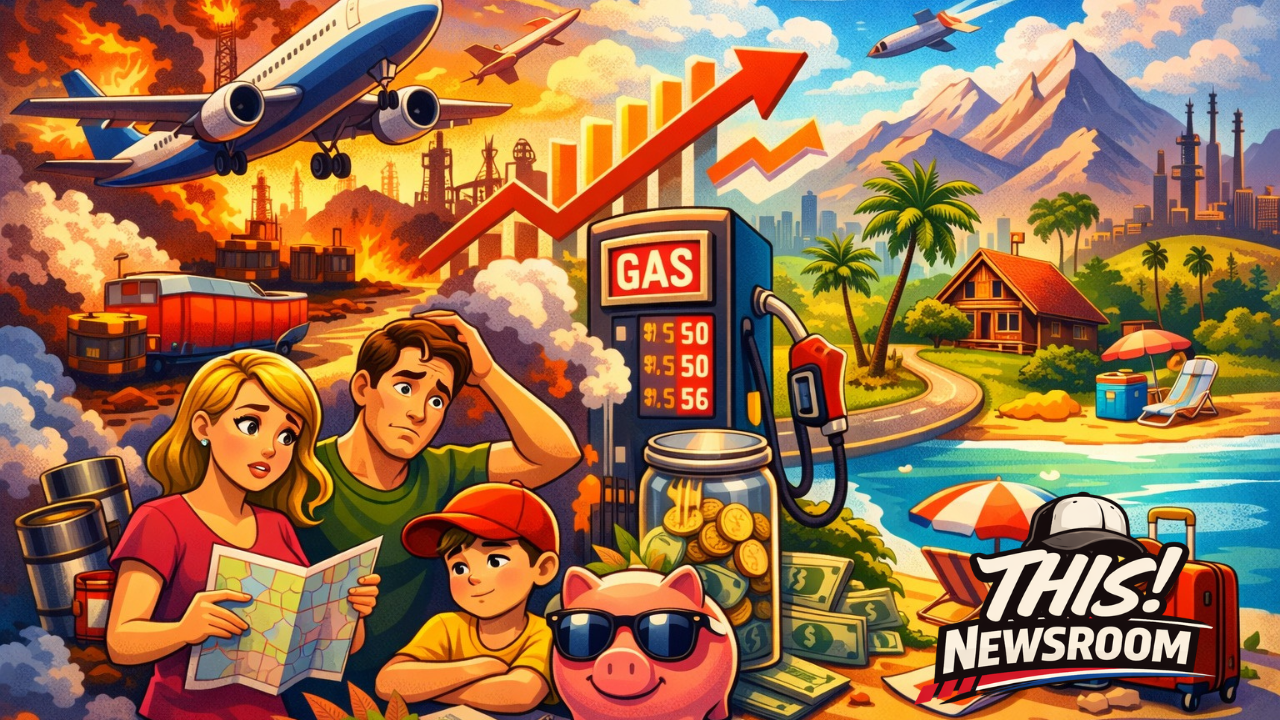
As summer approaches, a season typically defined by packed airports, road trips, and long-awaited vacations is starting to look very different in 2026. Across the United States, families are quietly reworking—or outright canceling—their travel plans. The reason isn’t just inflation or scheduling conflicts. Instead, a growing geopolitical tension in the Middle East is sending ripple effects straight into the wallets of everyday Americans.
What’s Actually Happening?
The ongoing instability in the Middle East—particularly involving key oil-producing regions—has triggered a surge in global energy prices. Whenever tensions rise in this part of the world, markets react quickly. Oil futures climb, supply concerns increase, and before long, those changes hit consumers at the gas pump and airline checkout page.
This year, that domino effect is impossible to ignore.
Airfare prices have jumped noticeably compared to last summer, and gasoline costs are climbing just as millions of families would normally be hitting the road. Even hotels and rental cars are seeing price increases, partly due to higher operational costs tied to fuel and supply chain pressures.
Why the Middle East Impacts Your Summer Vacation
It may feel distant, but the Middle East plays a central role in the global energy ecosystem. When conflict disrupts stability in the region, oil production and transportation can be threatened. Markets respond with higher prices almost immediately.
For Americans, that translates into:
- More expensive flights (jet fuel costs rise)
- Higher gas prices for road trips
- Increased shipping and logistics costs, which affect hotels and tourism businesses
In short, a conflict thousands of miles away can add hundreds—or even thousands—of dollars to a family’s summer plans.
The Shift in Consumer Behavior
Instead of pushing forward with expensive plans, many Americans are adapting.
Recent travel trends show:
- More people opting for staycations or short, local trips
- Families choosing drive-to destinations instead of flying
- Travelers booking later than usual, hoping prices drop
- A noticeable increase in budget-conscious planning
There’s also a psychological component. Economic uncertainty tends to make consumers more cautious, and geopolitical instability only adds to that hesitation.
Airlines and Travel Industry Feeling the Pressure
Airlines are in a difficult position. Higher fuel costs squeeze margins, but raising ticket prices too aggressively can reduce demand. Many carriers are walking a tightrope—adjusting routes, limiting discounts, and trying to maintain profitability without losing customers.
Hotels and tourism boards are also seeing shifts. Popular international destinations may experience softer demand from U.S. travelers, while domestic tourism hotspots could see a mixed impact—more visitors, but with tighter spending habits.
What This Means for Summer 2026
This summer may not be defined by record-breaking travel numbers, but rather by smarter, more intentional travel.
Families are asking:
- Is this trip worth the extra cost?
- Can we get the same experience closer to home?
- Should we wait until prices stabilize?
For many, the answer is leading to scaled-back plans—or creative alternatives.
A Bigger Picture Moment
This shift is also a reminder of how interconnected the world really is. A geopolitical conflict in one region can quickly shape economic realities across the globe, influencing everything from gas prices to family vacations in suburban America.
And while travel isn’t stopping altogether, it is evolving.
The Bottom Line
Summer travel in 2026 isn’t canceled—but it is being redefined. Americans are still prioritizing experiences and time with family, but they’re doing it with sharper awareness, tighter budgets, and a closer eye on global events.
If current trends continue, this may be the summer where flexibility—and financial prudence—become just as important as the destination itself.
About the Author