Krish Dhokia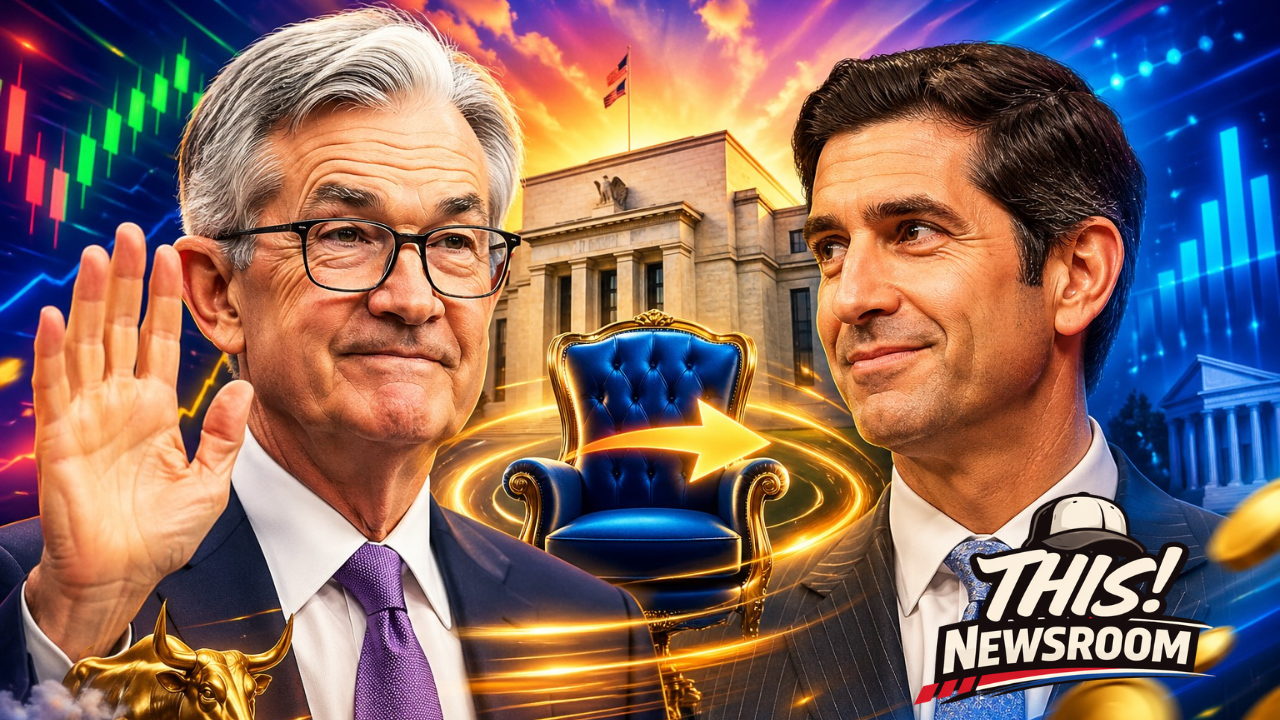
Powell Steps Down as Fed Chair, Warsh Takes Over

In a move that feels less like a farewell tour and more like a strategic reshuffle, Jerome Powell has officially stepped down as Chair of the Federal Reserve—but don’t cue the goodbye music just yet.
Powell made it clear: he’s not leaving the building. He’ll remain on the Board of Governors, meaning his voice—and influence—aren’t going anywhere. Think of it as moving from CEO to Executive Chairman. Less spotlight, still plenty of power.
Meanwhile, stepping into the Chair role is Kevin Warsh, a familiar face in central banking circles and a former Fed governor himself.
So what does this leadership pivot mean for the economy, interest rates, and your wallet? Let’s break it down.
A “See You Later,” Not a Goodbye
Powell’s decision to remain on the Board is a big deal. Former Fed Chairs typically exit entirely. By staying on:
- He retains voting power on monetary policy
- He provides continuity during a leadership transition
- He likely acts as a stabilizing force for markets
Translation: This isn’t a clean break—it’s a controlled handoff.
Markets tend to hate uncertainty. This structure reduces it.
Enter Kevin Warsh: A More Hawkish Tone?
Kevin Warsh isn’t new to the Fed, but his reputation leans more hawkish than Powell’s recent stance.
That means:
- More focus on controlling inflation
- Potentially slower or more cautious rate cuts
- Greater skepticism of easing too quickly
Warsh has historically emphasized financial stability and market discipline—so don’t expect a dramatic pivot to cheap money overnight.
What Happened at the Latest Fed Meeting?
At the most recent FOMC meeting, the Fed delivered a message that can best be summarized as:
“We’re close… but not quite there.”
Key takeaways:
1. Rates Held Steady (For Now)
The Fed kept the federal funds rate unchanged, signaling patience.
- Inflation is cooling, but not fully under control
- Labor markets remain resilient
- Economic growth hasn’t cracked
2. Inflation Is Improving—But Sticky
Core inflation continues to trend downward, but:
- Services inflation remains elevated
- Housing costs are still a pressure point
- Wage growth hasn’t fully normalized
3. The Fed Is Data-Dependent (Still)
Powell reiterated that future decisions hinge on incoming data—not a preset timeline.
So… Where Are Rate Cuts?
This is the question everyone actually cares about.
Here’s the real story:
The Market Expected Cuts Sooner
At the start of the year, markets priced in aggressive rate cuts.
The Fed Pumped the Brakes
Now, the tone has shifted:
- Cuts are likely delayed
- Fewer total cuts expected
- Possibly starting later in the year
Why the Delay?
- Inflation isn’t fully tamed
- The economy is still strong
- Cutting too early risks reigniting inflation
In other words: the Fed doesn’t want to undo its own progress.
What This Means for You
Borrowing Costs Stay Higher (For Now)
- Mortgage rates remain elevated
- Credit card interest stays painful
- Auto loans won’t get cheaper overnight
Savings Still Benefit
- High-yield savings accounts remain attractive
- Money market funds continue to pay
Markets May Get Volatile
Leadership changes + delayed rate cuts = uncertainty
But remember: uncertainty creates opportunity.
Why This Transition Actually Matters
This isn’t just a title change—it’s a philosophical shift.
With Kevin Warsh stepping in and Jerome Powell staying close:
- You get continuity + caution
- You avoid a policy shock
- You introduce a slightly more disciplined tone
It’s like changing drivers mid-race—but keeping the same co-pilot.
The Big Picture
The Fed is walking a tightrope:
- Cut too soon → inflation spikes again
- Wait too long → risk slowing the economy too much
This leadership structure gives them flexibility—and a safety net.
So no, Powell isn’t riding off into the sunset.
He’s just stepping out of the spotlight… while still helping run the show.
Final Thought
If you were waiting for a flood of rate cuts and cheap money to return quickly—this update likely resets expectations.
But if you’re looking for stability, measured decision-making, and a Fed that’s not rushing into mistakes…
This “not really goodbye” might be exactly what the market needed.
About the Author