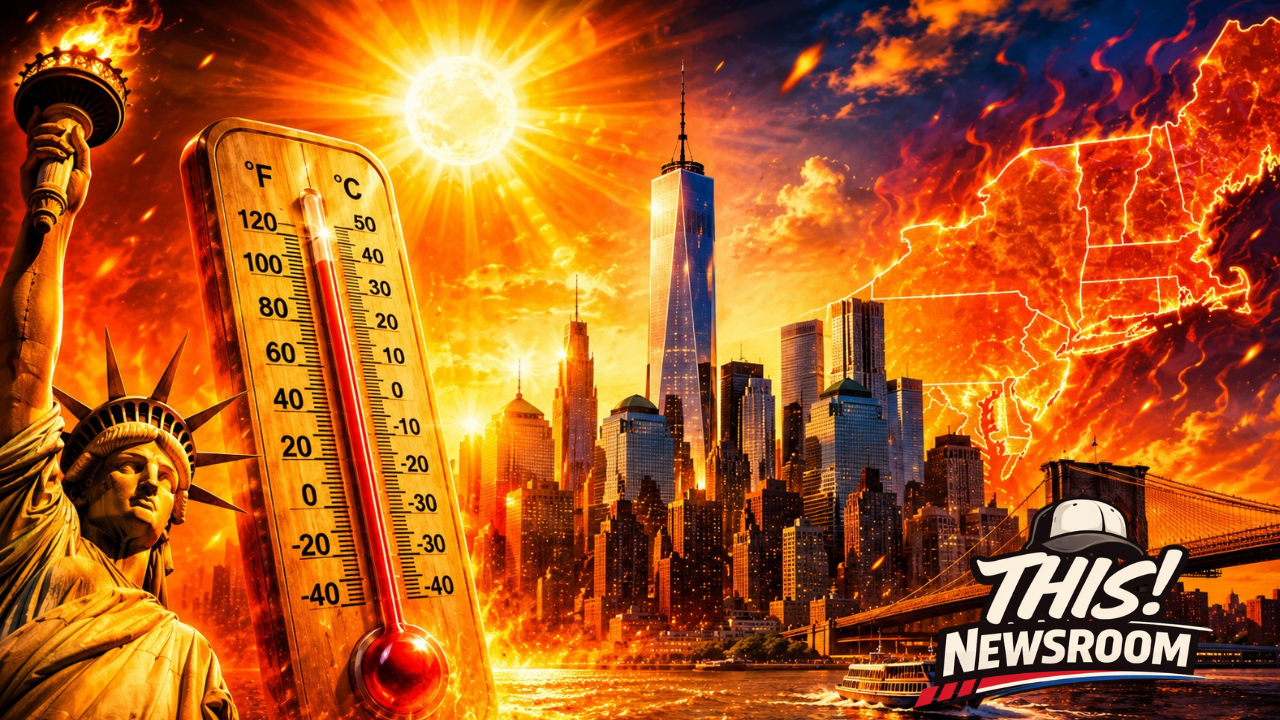
New York Heat Wave to Bring Record-Breaking Temperatures Across the Northeast
A dangerous stretch of summer weather is about to grip millions across the Northeast.
If you’ve been enjoying a relatively mild July, that break is coming to an end. Meteorologists are warning that a powerful ridge of high pressure will push temperatures across New York and much of the northeastern United States well above normal this week, with several cities expected to challenge or even break daily temperature records.
While the calendar says it’s summer, this week’s weather will feel more like the hottest days of August.
Triple-Digit Heat Indexes Expected
Beginning midweek, temperatures are forecast to climb into the mid-to-upper 90s across much of New York City, New Jersey, Pennsylvania, Connecticut, Rhode Island, Massachusetts, and parts of Vermont and New Hampshire.
When humidity is factored in, heat index values could soar between 100 and 108 degrees, making it feel significantly hotter than the thermometer suggests.
Large metropolitan areas expected to experience the most intense heat include:
- New York City
- Newark
- Philadelphia
- Hartford
- Providence
- Boston
- Albany
Some inland communities could briefly reach the upper 90s, while urban areas may remain uncomfortably warm overnight with temperatures struggling to fall below 80 degrees.
Why Is It Getting So Hot?
The culprit is a massive dome of high pressure settling over the eastern United States.
Often called a “heat dome,” this weather pattern traps hot air beneath it like the lid on a pot. Sunshine continues heating the ground each day, while the stagnant atmosphere prevents cooler air from moving in.
The result is multiple consecutive days of dangerous heat, especially in cities where concrete and asphalt absorb and radiate warmth long after sunset.
Could Records Fall?
Forecasters believe several long-standing daily temperature records could be tied or broken this week.
Even where actual air temperatures fall just short of records, overnight warmth may set new records for the highest minimum temperatures ever recorded on those dates.
That matters because overnight cooling gives the human body a chance to recover from daytime heat. Without it, the risk of heat-related illness rises dramatically.
Health Officials Urge Caution
Extreme heat consistently ranks among America’s deadliest weather hazards.
Doctors warn that dehydration and heat exhaustion can develop quickly, particularly for:
- Older adults
- Young children
- Outdoor workers
- Athletes
- People with heart or respiratory conditions
- Anyone without access to air conditioning
Officials recommend:
- Drinking water throughout the day, even if you don’t feel thirsty.
- Limiting strenuous outdoor activity during the afternoon.
- Wearing lightweight, light-colored clothing.
- Checking on elderly neighbors and family members.
- Never leaving children or pets inside parked vehicles.
Vehicle interiors can exceed 120 degrees within minutes, even if outside temperatures are below 100 degrees.
What About Air Quality?
The combination of intense sunshine, stagnant air, and vehicle emissions may also lead to elevated ozone levels across parts of the Northeast.
Air quality alerts are possible in several metropolitan areas, especially for people with asthma or other respiratory conditions.
Relief Is Coming—Eventually
The good news is that the heat won’t last forever.
A cold front is expected to arrive later in the week or over the weekend, depending on location, bringing scattered thunderstorms and a noticeable drop in temperatures.
Until then, much of the Northeast should prepare for one of its hottest stretches of the summer.
Final Thoughts
For many Americans, summer means backyard barbecues, baseball games, and beach trips. This week, however, Mother Nature is turning up the thermostat well beyond comfortable levels.
Whether you’re commuting through Manhattan, working outside in New Jersey, hiking in New England, or simply walking the dog, take the heat seriously. Record-breaking temperatures aren’t just uncomfortable—they can quickly become dangerous.
Staying hydrated, planning activities during cooler parts of the day, and checking on vulnerable friends and neighbors could make all the difference during this week’s intense heat.
About the Author