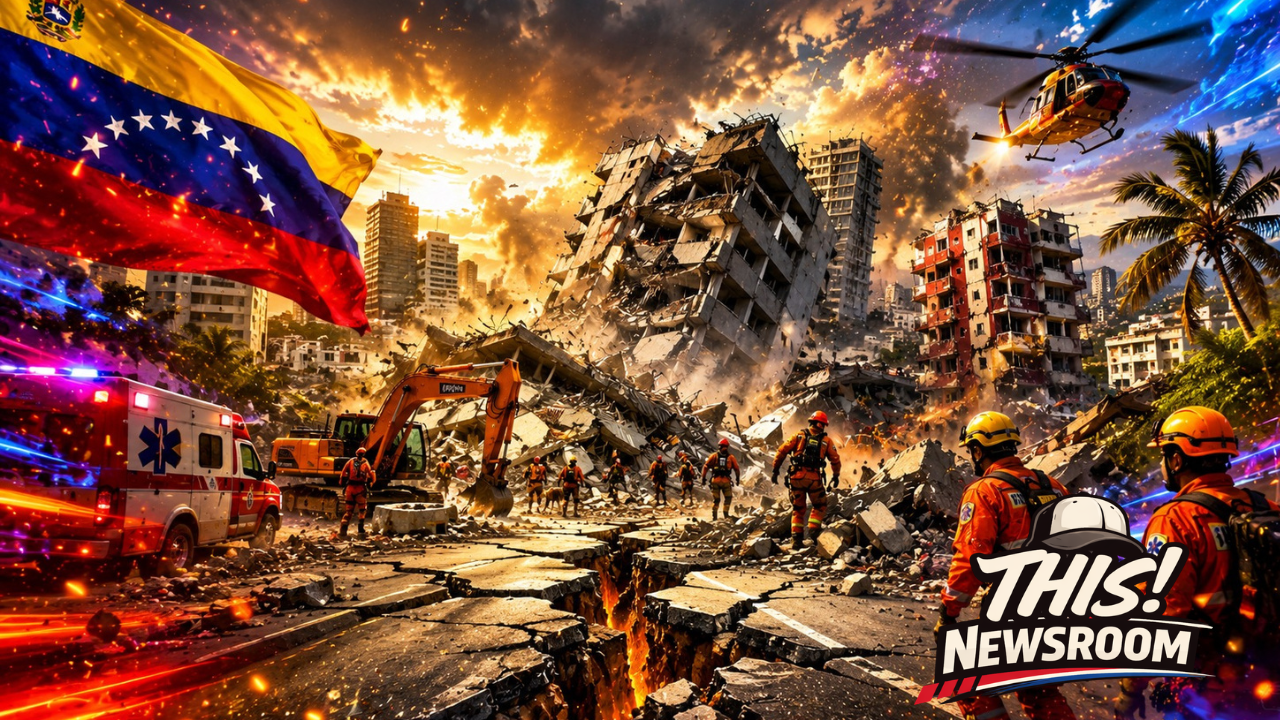
Emergency crews continue searching for survivors after two powerful earthquakes caused widespread destruction across northern Venezuela.
CARACAS, Venezuela — Venezuela continues to battle one of the deadliest natural disasters in its modern history after two powerful earthquakes struck the country’s northern coast on June 24. The disaster caused widespread destruction, claimed thousands of lives, and triggered a massive international rescue effort.
The back-to-back earthquakes measured 7.2 and 7.5 in magnitude, according to the U.S. Geological Survey (USGS). They struck less than a minute apart. The epicenters were west of Caracas, but people felt the violent shaking across northern Venezuela and neighboring countries.
Officials say more than 1,400 people have died, while over 3,000 others suffered injuries. Rescue crews continue searching collapsed buildings as thousands of people remain missing. Emergency officials expect those numbers to change as crews reach additional communities.
Entire Communities Lie in Ruins
The coastal state of La Guaira suffered some of the worst damage. The earthquakes leveled apartment buildings, businesses, schools, and public infrastructure within seconds.
The disaster also cracked highways, damaged bridges, and knocked out electricity across large portions of the region. Thousands of families now live in temporary shelters after losing their homes.
Meanwhile, hundreds of aftershocks continue to shake the area. Many residents refuse to return indoors because they fear additional collapses.
Rescue Teams Find Survivors
Despite the devastation, rescue crews continue pulling survivors from the rubble.
One emotional rescue involved a father and son who survived nearly four days beneath a collapsed building. Their rescue lifted the spirits of exhausted emergency responders working nonstop across the disaster zone.
International teams from the United States, France, Colombia, Mexico, and several other countries have joined Venezuelan crews. Together, they are using specialized equipment, search dogs, and heavy machinery to locate survivors.
International Aid Begins Arriving
Countries around the world have mobilized humanitarian aid for Venezuela.
Medical teams, engineers, emergency responders, and relief supplies continue arriving every day. Hospitals remain overwhelmed, so officials have opened temporary medical centers to care for the injured. Schools, sports facilities, and government buildings now serve as emergency shelters.
Government leaders have pledged to continue rescue operations for as long as there is hope of finding additional survivors.
Damage Extends Far Beyond Buildings
The earthquakes disrupted nearly every aspect of daily life across northern Venezuela.
Officials report:
- Hundreds of buildings collapsed or suffered severe structural damage.
- Major highways and bridges remain closed for inspections and repairs.
- Utility crews continue restoring electricity and communications.
- Several industrial and oil facilities suspended operations while engineers inspect equipment.
- Schools remain closed throughout many affected regions.
Recovery Will Take Years
Officials believe Venezuela faces a long recovery.
Engineers must inspect thousands of damaged structures before residents can safely return home. At the same time, emergency crews continue searching for survivors, restoring utilities, and delivering food, water, and medical supplies.
Communities across the region now face months, and likely years, of rebuilding.
Final Thoughts
The resilience of the Venezuelan people continues to inspire the world. Every successful rescue provides hope amid unimaginable tragedy. At the same time, the widespread destruction reminds everyone how quickly powerful earthquakes can transform entire communities. As rescue operations continue, the focus will gradually shift toward rebuilding homes, restoring infrastructure, and helping thousands of families recover from one of South America’s worst earthquake disasters.
About the Author