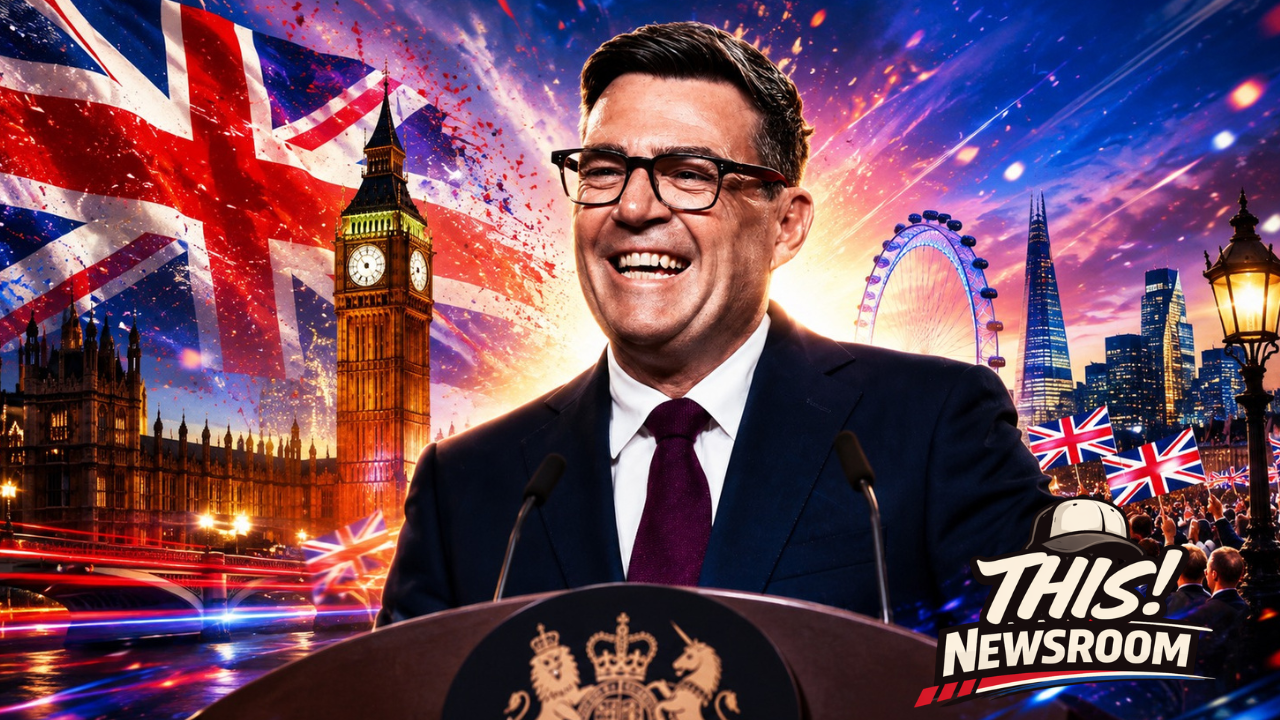
Andy Burnham Becomes UK Prime Minister, Britain's Seventh Leader in 10 Years
The UK enters another new political chapter as Andy Burnham takes over following Keir Starmer’s resignation.
The United Kingdom has a new prime minister once again.
Andy Burnham officially became Britain’s prime minister on Monday after Keir Starmer resigned, making Burnham the seventh person to hold the office in just 10 years. The remarkable turnover underscores one of the most politically turbulent periods in modern British history, stretching from the Brexit referendum through multiple elections, leadership contests, and economic crises.
A New Leader, A Familiar Challenge
Burnham, the former Mayor of Greater Manchester, secured overwhelming backing from Labour lawmakers before traveling to Buckingham Palace, where King Charles III formally invited him to form a government.
Moments later, Burnham arrived at 10 Downing Street and delivered his first speech as prime minister, promising a fresh start and unveiling plans for what he called a 10-year vision to rebuild Britain. He said his administration will focus on restoring political stability, reducing the cost of living, revitalizing industry, tackling homelessness, and shifting more power away from Westminster to local communities.
Seventh Prime Minister Since Brexit
Burnham’s appointment highlights just how rapidly British leadership has changed over the past decade.
Since 2016, the UK has been led by:
- David Cameron
- Theresa May
- Boris Johnson
- Liz Truss
- Rishi Sunak
- Keir Starmer
- Andy Burnham
The frequent changes have reflected years of political instability fueled by Brexit negotiations, economic uncertainty, leadership rebellions, inflation, and shifting public confidence. Burnham is also the fourth prime minister appointed during King Charles III’s reign, despite the King having been monarch for fewer than four years.
Burnham’s Immediate Priorities
Burnham acknowledged that many Britons have grown frustrated with constant political turnover and promised to provide long-term stability instead of short-term fixes.
Among his early priorities are:
- Lowering household costs
- Stimulating economic growth
- Investing in infrastructure
- Ending rough sleeping
- Reforming public services
- Strengthening regional economies through greater local authority
He also pledged continued support for Ukraine while emphasizing the need to rebuild trust between government and the public.
Cabinet Shake-Up Begins
Burnham wasted little time reshaping his government.
Several senior ministers from Starmer’s cabinet departed as Burnham began assembling his own leadership team, signaling a significant shift in Labour’s direction despite remaining within the same governing party. Financial markets reacted cautiously as investors awaited more details about Burnham’s economic strategy.
What Comes Next?
The biggest question facing Burnham is whether he can accomplish something few recent British leaders have managed—lasting political stability.
His proposed 10-year national plan aims to address many of the structural issues that have challenged successive governments. However, with economic pressures, strained public services, and geopolitical uncertainty continuing to weigh on the country, many observers say his success will depend on delivering measurable results quickly while maintaining long-term public confidence.
For now, Britain begins yet another new chapter under its seventh prime minister in a decade—a statistic that illustrates just how dramatically the country’s political landscape has shifted since the Brexit era.
About the Author