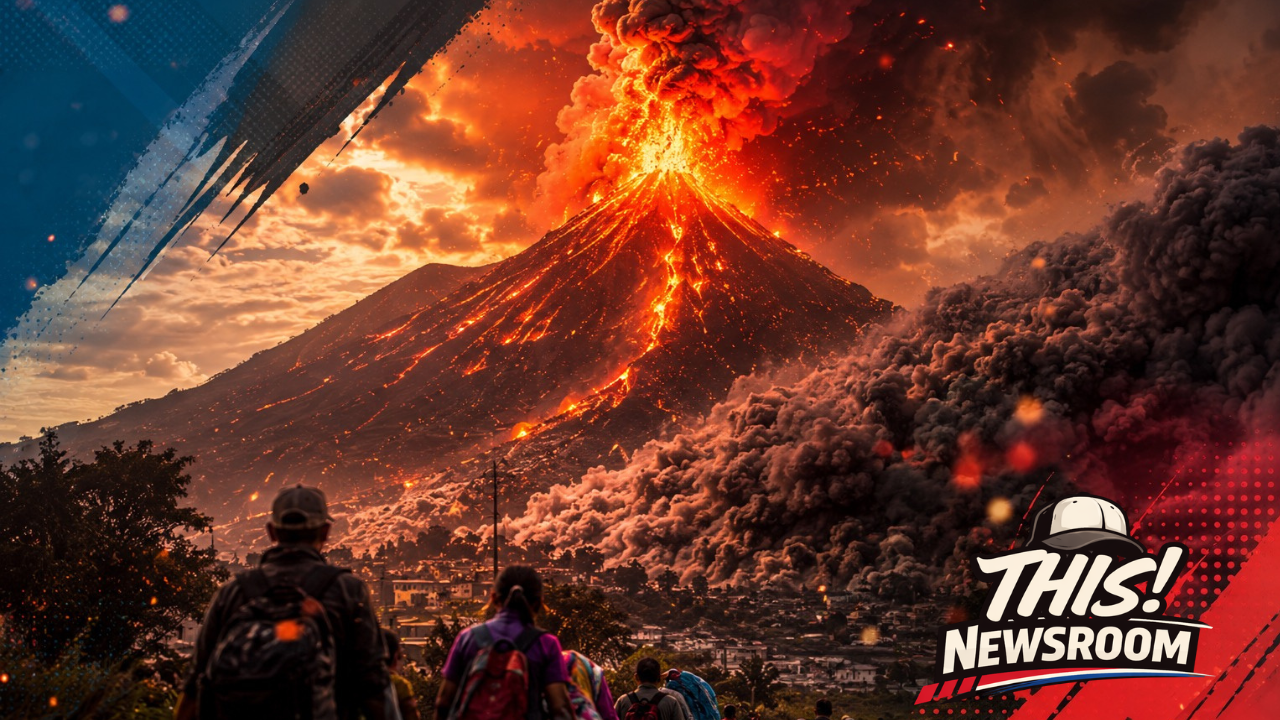
Guatemala’s Fuego volcano erupted as authorities evacuated approximately 1,700 people from communities near the volcano.
GUATEMALA — One of Central America’s most active volcanoes has roared back to life, forcing roughly 1,700 people to evacuate communities surrounding Guatemala’s Volcán de Fuego.
The eruption began Monday and intensified as Fuego sent lava, ash and volcanic material down its slopes. Guatemala’s emergency services raised alerts and moved residents from vulnerable communities into shelters. Officials say roughly 29,000 additional people have experienced impacts from ashfall.
Although authorities reported Thursday that volcanic activity had begun to decrease, the emergency isn’t necessarily over. Rainfall could combine with accumulated volcanic debris to produce dangerous lahars — fast-moving flows of mud, rock and ash capable of sweeping through valleys and communities downstream.
Fuego Eruption Triggers Large-Scale Evacuations
Volcán de Fuego, or the “Volcano of Fire,” sits about 35 kilometers — roughly 22 miles — southwest of Guatemala City. It ranks among Central America’s most active volcanoes and regularly produces explosions and ash emissions.
This week’s activity went well beyond its routine eruptions.
Authorities evacuated residents from several communities as the eruption intensified. Emergency officials eventually placed the affected area under the country’s highest-level red alert as conditions worsened.
Approximately 1,700 people fled nearby villages and moved into shelters or other safe locations. Ashfall affected thousands more across the region.
Officials also restricted access to dangerous areas around the volcano as emergency teams monitored its activity.
Ash, Lava and Mud Create Multiple Threats
The spectacular images coming from Fuego show glowing volcanic material shooting into the night sky. However, lava isn’t the only concern.
Heavy ash can reduce visibility, contaminate water supplies and cause respiratory problems. It can also accumulate on roofs and create dangerous driving conditions.
Another major concern involves lahars.
Rain falling onto fresh volcanic ash and loose debris can create powerful mudflows that race through ravines surrounding the volcano. Officials warned that forecast rainfall could increase that danger even as Fuego’s eruptive activity declines.
That means communities could remain at risk after the most dramatic explosions subside.
Authorities have described the coming days as particularly important for monitoring rainfall and conditions around the volcano.
Fuego’s Activity Appears to Be Decreasing
There was some encouraging news Thursday.
Guatemalan authorities said the eruption that began Monday appeared to be gradually decreasing in intensity. However, officials have not declared the danger over.
Emergency crews continue monitoring the volcano and surrounding drainage channels.
The combination of fresh volcanic deposits and rain means conditions can change quickly. Residents near evacuation zones may therefore have to wait before authorities determine that returning home is safe.
Guatemala Has Seen Fuego Turn Deadly Before
Fuego’s latest eruption carries additional weight because Guatemala has experienced devastating consequences from the volcano before.
On June 3, 2018, Fuego produced a catastrophic eruption that sent pyroclastic flows racing into nearby communities. More than 100 people died, hundreds disappeared, and thousands were forced from their homes.
The disaster became one of Guatemala’s deadliest volcanic events in modern history.
Pyroclastic flows pose an especially serious threat. These rapidly moving mixtures of superheated gas, ash and volcanic debris can travel down a volcano at tremendous speeds.
That history helps explain why authorities are taking aggressive precautions during the current eruption.
One of Central America’s Most Active Volcanoes
Fuego rises more than 12,000 feet above sea level and sits near another famous Guatemalan volcano, Acatenango.
Its frequent eruptions have also made the region a destination for hikers and tourists hoping to witness volcanic activity from surrounding mountains.
But Fuego’s frequent activity can create a misleading sense of predictability.
Most eruptions remain relatively limited. Occasionally, however, the volcano enters a much more powerful eruptive phase capable of threatening nearby communities.
This week’s eruption once again demonstrates how quickly those conditions can escalate.
Thousands Remain Under Watch
For now, approximately 1,700 evacuated residents remain the center of Guatemala’s emergency response, while tens of thousands more deal with ash and other effects from the eruption.
Officials will continue watching Fuego for renewed explosions, lava activity and dangerous mudflows.
The immediate volcanic activity may be easing, but Guatemala’s rainy weather could create another threat.
For families living beneath the Volcano of Fire, the next several days could determine when — and how safely — they can return home.
THIS NEWSROOM will continue monitoring developments surrounding Guatemala’s Fuego volcano as emergency officials release new information.
About the Author