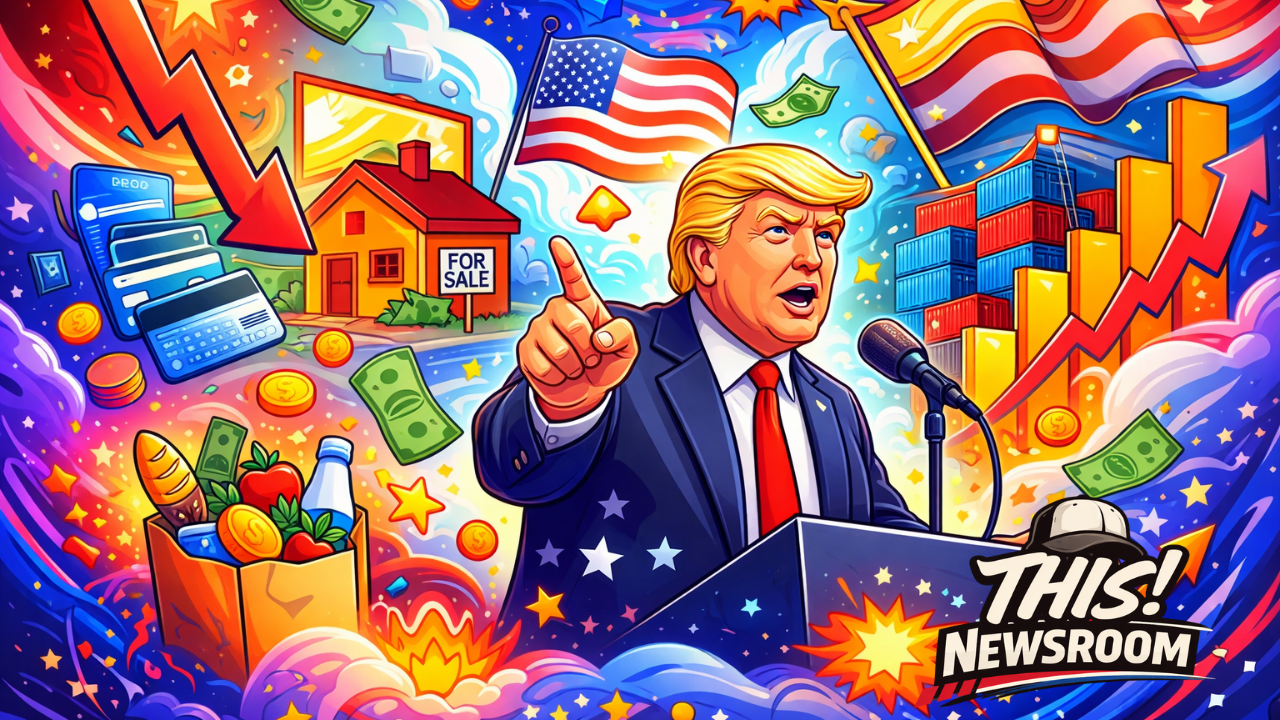
As President Donald Trump prepares for his upcoming State of the Union address, two domestic themes are expected to dominate the conversation: affordability and tariffs. Both issues carry significant political weight in 2026 — and both could have meaningful ripple effects across financial markets, housing, and consumer sectors.
With midterm elections approaching in November, the administration faces mounting pressure to demonstrate progress on kitchen-table economic concerns. At the same time, investors are parsing policy signals that could impact everything from credit-card issuers to homebuilders.
Here’s a deeper look at what’s at stake.
Affordability Takes Center Stage
Consumer affordability remains a defining issue of the economic narrative in 2026. While inflation has cooled from its peak, many Americans continue to feel pressure from elevated prices on housing, insurance, food, and energy.
According to RealClearPolitics polling averages, President Trump’s approval rating currently sits near 42%, underscoring the political urgency around cost-of-living concerns.
In response, the administration has proposed several measures aimed at reducing financial strain:
- A proposed 10% cap on credit-card interest rates
- Regulatory cuts intended to lower household energy costs
- Targeted tax relief measures
- Restrictions on corporations purchasing single-family homes
Each of these proposals speaks directly to middle-class affordability. However, the path to implementation may be more complex.
The Tariff Debate Returns to the Spotlight
Tariffs are also expected to feature prominently in the address, particularly following the Supreme Court’s recent ruling related to trade authority.
President Trump has reiterated his pledge to maintain tariffs in place, framing them as essential to protecting American industry and reducing trade imbalances. Supporters argue tariffs strengthen domestic manufacturing and create leverage in negotiations.
Critics, however, warn that sustained tariffs could contribute to higher consumer prices, particularly in sectors reliant on imported goods.
The economic impact remains a point of debate:
- Retailers exposed to imported inventory face margin pressure
- Homebuilders could see material costs fluctuate
- Credit-card issuers may be affected indirectly if consumer spending slows
- Single-family REITs and housing investors could be impacted by proposed ownership restrictions
For markets, the key question is whether tariff policy fuels renewed inflationary pressure — potentially offsetting affordability efforts elsewhere.
Limits of Presidential Authority
While the administration can influence regulatory and executive actions, several affordability proposals would require congressional approval. Given the divided political landscape heading into midterms, significant legislative changes face uncertain odds.
Historically, large-scale caps on financial products — such as credit-card interest rates — have encountered resistance from industry groups and lawmakers concerned about credit availability and unintended consequences.
Similarly, restrictions on corporate homeownership could invite legal challenges and require detailed legislative frameworks.
In short, executive ambition may collide with institutional constraints.
Investor and Market Implications
From an investor standpoint, headline risk appears elevated across multiple sectors:
- Financial services (especially credit-card issuers)
- Homebuilders and housing-related equities
- Retailers exposed to tariff-sensitive supply chains
- Energy producers and utilities
- Single-family rental REITs
Markets will likely respond not only to policy proposals but to tone, detail, and feasibility signals within the speech.
Investors will be listening closely for clarity on:
- Whether tariff levels will expand, contract, or remain stable
- How affordability initiatives will be funded
- The likelihood of bipartisan support
- Timeline expectations for implementation
The Political Calculus Ahead of Midterms
With the November midterm elections on the horizon, affordability messaging carries clear electoral significance. Consumer sentiment often shapes voter behavior, and economic confidence historically plays a decisive role in congressional races.
However, policy execution — not just rhetoric — will determine long-term impact.
If affordability gains traction without reigniting inflation, the administration could claim meaningful progress. Conversely, if tariff policy contributes to higher prices, critics may argue that trade protection undermines consumer relief efforts.
Bottom Line
Affordability and tariffs represent a high-stakes intersection of politics and economics in 2026. The upcoming State of the Union will serve not only as a policy roadmap but also as a signal to markets and voters alike.
As investors, households, and businesses evaluate what comes next, one theme remains clear: the balance between protecting domestic industries and lowering consumer costs will define the economic conversation in the months ahead.
All eyes now turn to the address — and to whether proposed solutions translate into measurable change.
About the Author