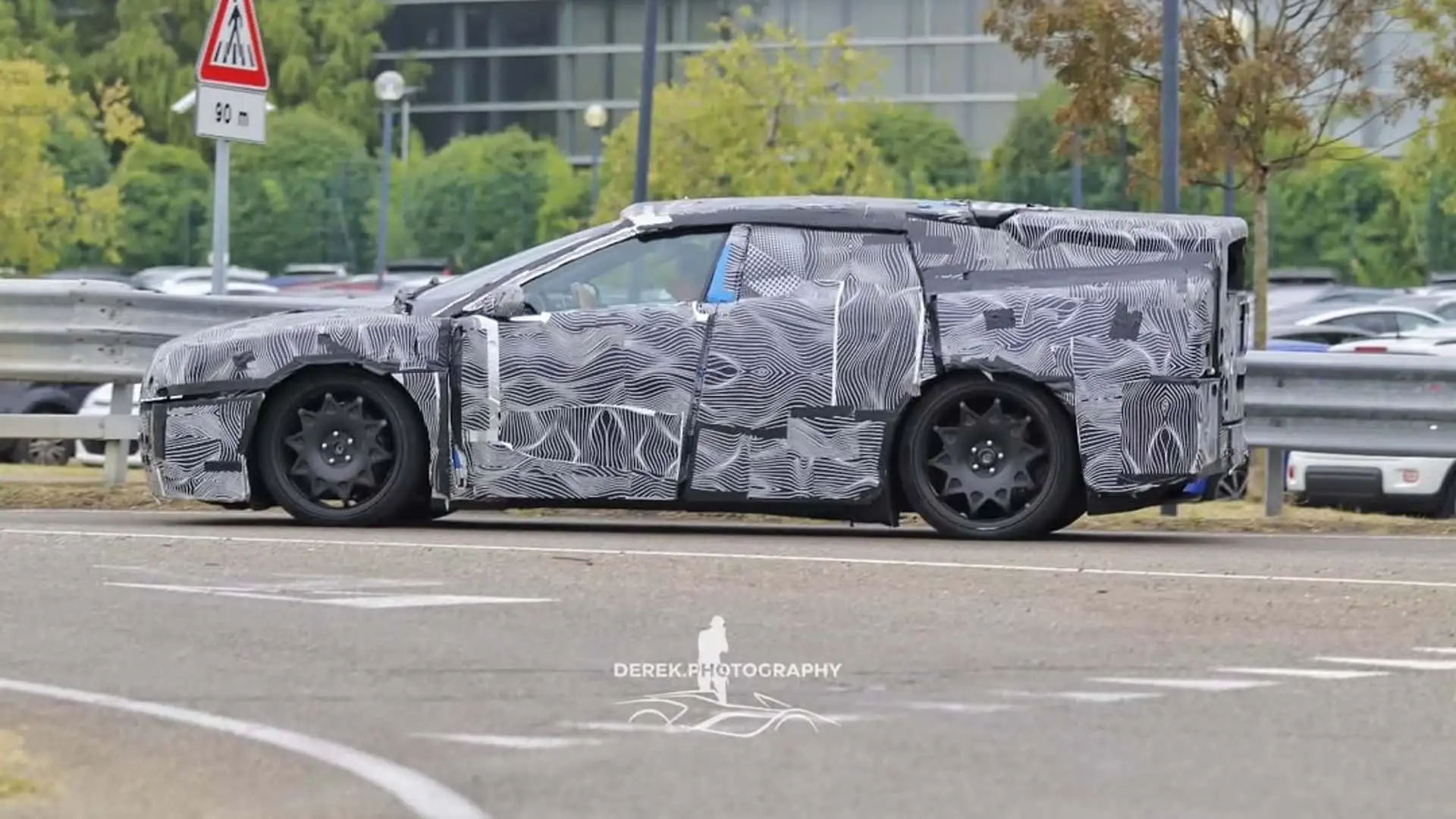
Ferrari’s first fully electric supercar signals a bold new era for Maranello.

4
For nearly 80 years, the identity of Ferrari has been inseparable from the sound of combustion — the scream of a V12 climbing toward redline, the crackle of a downshift echoing off canyon walls, the raw mechanical drama that made Maranello legendary.
Now, Ferrari is preparing to write a new chapter.
The Italian marque is set to introduce its first fully electric vehicle, marking the most radical transformation in the company’s modern history. And while some purists may see it as the end of an era, Ferrari views it as something very different: evolution.
From Hybrid Pioneer to Full Electrification
Ferrari has not entered the electric conversation blindly. Over the past several years, it has methodically integrated hybrid technology into its lineup. The Ferrari SF90 Stradale proved that electrification could amplify performance rather than dilute it. The Ferrari 296 GTB refined that formula with a smaller turbocharged engine paired with electric motors to deliver blistering acceleration and improved efficiency.
Those models were stepping stones.
A fully electric Ferrari, however, represents a leap.
The vehicle will be produced in Maranello, where Ferrari has invested heavily in advanced battery assembly and electrification infrastructure. By keeping development in-house, Ferrari ensures the car will carry the same craftsmanship and engineering DNA that define its heritage.
Performance Without Compromise
Ferrari executives have been clear about one non-negotiable principle: performance comes first.
Electric powertrains offer unique advantages. Instant torque delivery eliminates lag entirely. Power can be distributed precisely across axles using advanced torque vectoring systems. Acceleration figures are expected to rival — and potentially surpass — Ferrari’s current V8-powered models.
Industry observers anticipate 0–60 mph times well under three seconds, with a top speed that maintains Ferrari’s reputation among the fastest production vehicles in the world.
Yet Ferrari understands that numbers alone do not define the driving experience.
Handling balance, steering feel, braking feedback, and chassis dynamics will determine whether this car feels like a true Ferrari rather than simply a fast electric machine.
The Sound of the Future
Perhaps the most emotional question surrounding Ferrari’s EV is sound.
For decades, Ferrari engines have been as recognizable as the prancing horse badge itself. Removing the combustion engine risks silencing one of the brand’s most defining traits.
Ferrari has hinted that it is engineering a distinctive acoustic signature for its electric model. Whether through carefully tuned electric motor harmonics or advanced sound design technology, the goal is clear: create an emotional connection that resonates with drivers.
It will not mimic a V12. Instead, Ferrari appears focused on crafting a new kind of auditory drama — one that signals the future rather than imitates the past.
Entering a Competitive Electric Arena
Ferrari’s entry into the EV space places it among formidable competitors. The Porsche Taycan has demonstrated that electric performance cars can deliver both speed and daily usability. The Rimac Nevera shattered acceleration records and redefined what electric hypercars can achieve.
Ferrari’s strategy, however, is different.
It is not chasing mass production or headline-grabbing horsepower alone. Ferrari’s brand equity rests on exclusivity, craftsmanship, and emotional storytelling. Production volumes will likely remain limited. Pricing is expected to reflect the car’s halo status within the lineup.
This will not be an electric commuter. It will be a Ferrari first — and an EV second.
A Pivotal Moment for the Industry
Ferrari’s transition to electric power carries symbolic weight beyond its own customer base. When one of the most storied performance brands in history commits to full electrification, it signals a broader shift in automotive priorities.
Regulatory pressures continue to tighten globally. Consumer expectations are evolving. Sustainability and performance are no longer seen as opposing forces but increasingly as complementary goals.
Ferrari’s challenge is to prove that an electric supercar can stir the same passion as its combustion predecessors.
If it succeeds, skeptics across the industry may reconsider their doubts about the emotional potential of EVs.
Tradition Meets Innovation
Change has always been part of Ferrari’s story. The brand transitioned from naturally aspirated engines to turbocharging despite resistance. It embraced hybrid systems when many questioned whether electrification belonged in a supercar.
Each time, performance validated the decision.
This moment feels similar.
Ferrari is not abandoning its heritage. It is redefining it.
The roar of combustion may eventually give way to the whir of electric motors, but the essence of Ferrari — speed, precision, artistry, and passion — remains the standard by which the company measures itself.
The first Ferrari EV will not simply be another electric vehicle launch.
It will be a statement that even the most iconic brands must evolve — and that the future of performance may sound different, but it can still make hearts race just as fast.
About the Author