
4
Rev. Jesse Jackson, one of the most influential civil rights leaders of the 20th century, has passed away at the age of 84. His death marks the end of a political and moral era that spanned the Civil Rights Movement, two historic presidential campaigns, global diplomacy efforts, and decades of advocacy for racial and economic justice.
For more than sixty years, Jackson stood at the intersection of faith, activism, and politics. As a close associate of Martin Luther King Jr., and later as founder of Operation PUSH and the Rainbow Coalition, he helped redefine political participation in America.
Who Was Jesse Jackson?
Jesse Jackson was a Baptist minister, civil rights activist, political candidate, and founder of major advocacy organizations focused on racial equality and economic empowerment.
More specifically, he is remembered for:
- Working alongside Dr. King during the Civil Rights Movement
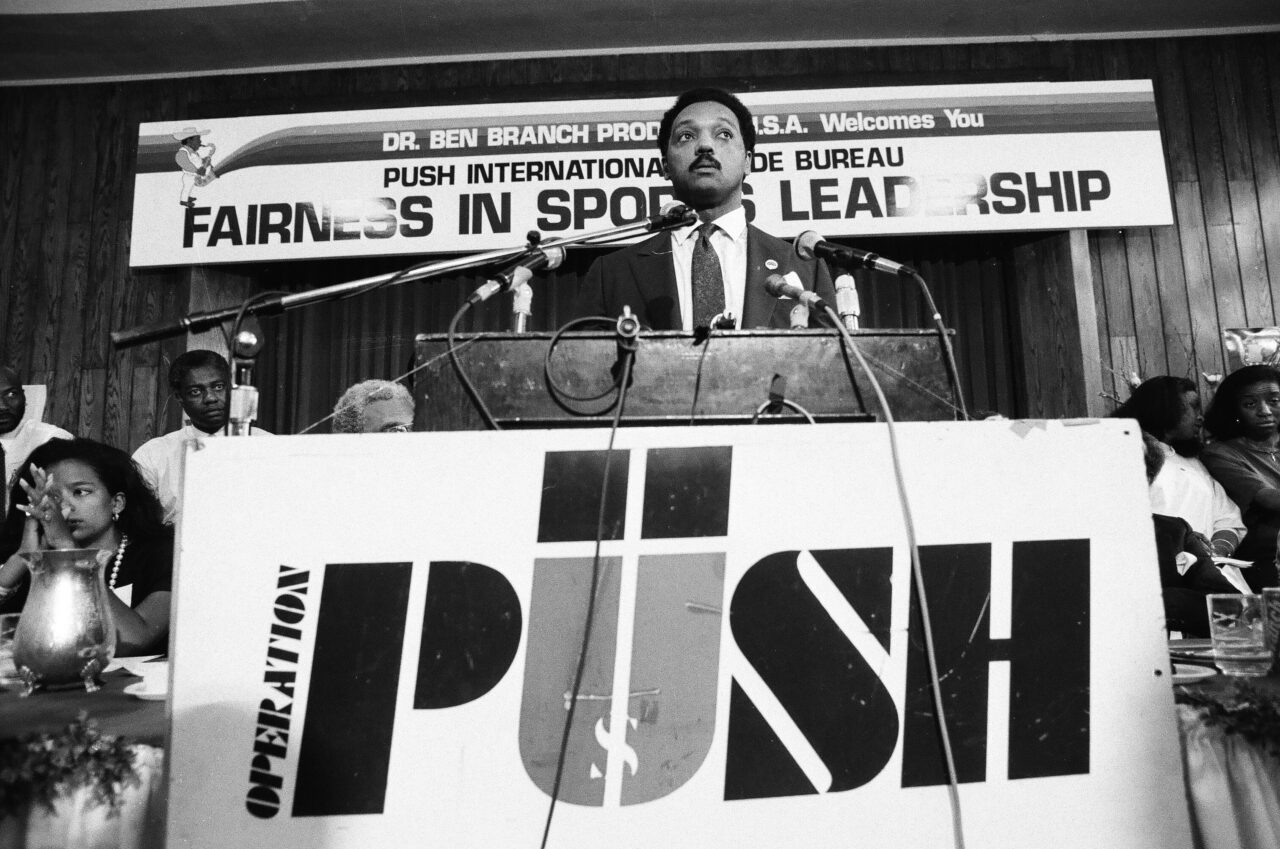
- Founding Operation PUSH in 1971
- Creating the Rainbow Coalition in 1984
- Running for U.S. President in 1984 and 1988
- Receiving the Presidential Medal of Freedom in 2000
Because of these milestones, Jackson became one of the most recognizable voices in American political life.
Early Life and Education
Born on October 8, 1941, in Greenville, South Carolina, Jackson grew up in the segregated South. Those early experiences profoundly shaped his worldview. As a young student, he attended the University of Illinois on a football scholarship before transferring to North Carolina A&T State University.
While in college, he became deeply involved in civil rights activism. Soon afterward, he moved to Chicago and studied at Chicago Theological Seminary. Although he did not complete a traditional pastoral track at that time, he later received ordination and numerous honorary doctorates.
Consequently, his identity fused faith and public policy in a uniquely American way.
Role in the Civil Rights Movement
During the 1960s, Jackson rose to prominence through his work with the Southern Christian Leadership Conference (SCLC). Under Dr. King’s leadership, the organization focused on nonviolent protest and economic justice.
Notably, Jackson was in Memphis in April 1968 when Dr. King was assassinated. That moment became a defining chapter in his life. After King’s death, Jackson continued advancing the movement’s goals, particularly in the areas of economic empowerment and voter registration.
As a result, he transitioned from movement organizer to national political figure.
Operation PUSH and the Rainbow Coalition
In 1971, Jackson founded Operation PUSH (People United to Save Humanity). The organization emphasized:
- Corporate accountability
- Minority hiring initiatives
- Voter registration drives
- Economic development in underserved communities
Later, in 1984, he launched the Rainbow Coalition. The concept was simple yet transformative: unite minorities, labor groups, farmers, working-class voters, and marginalized communities into one political alliance.
Therefore, the coalition model influenced Democratic Party strategy for decades.
Historic Presidential Campaigns (1984 and 1988)
Jackson’s presidential campaigns were groundbreaking — not merely symbolic.
1984 Presidential Campaign
In 1984, Jackson sought the Democratic nomination for President of the United States. Although he did not win, he captured 3.5 million votes and secured delegates nationwide. Importantly, his campaign demonstrated that a Black candidate could build a viable national coalition.
1988 Presidential Campaign
Four years later, he ran again — and performed even stronger. In 1988, Jackson won 11 primaries and caucuses and finished second in the Democratic race. He received nearly 7 million votes.
Because of that performance, minority voter engagement increased substantially. Furthermore, his coalition strategy reshaped how campaigns approached diverse voting blocs.
Without question, his runs paved the way for future candidates of color.
Diplomatic Efforts and International Influence
Beyond domestic politics, Jackson frequently served in informal diplomatic roles. Over the years, he helped negotiate the release of hostages abroad and met with foreign leaders during tense geopolitical moments.
Additionally, he advocated strongly against apartheid in South Africa. Through corporate pressure campaigns and public advocacy, he contributed to growing American opposition to racial segregation overseas.
Thus, his activism extended beyond U.S. borders.
Awards and Recognitions
Throughout his life, Jackson received numerous honors for his leadership:
- Presidential Medal of Freedom (2000)
- NAACP Spingarn Medal
- Multiple honorary doctorate degrees
- Induction into various civil rights halls of fame
These recognitions reflected decades of influence across faith, politics, and activism.
Health Challenges and Later Years
In 2017, Jackson announced he had been diagnosed with Parkinson’s disease. Despite the diagnosis, he remained publicly engaged.
Even as his health declined, he continued advocating for voting rights, healthcare equity, and economic justice. Consequently, his final years were marked not by retreat, but by continued commitment.
Frequently Asked Questions (AEO + Featured Snippet Optimized)
How did Jesse Jackson die?
While full details are still emerging, Jackson had been battling Parkinson’s disease since 2017. Official statements are expected to clarify the cause.
What is Jesse Jackson most famous for?
He is most famous for his leadership in the Civil Rights Movement, founding Operation PUSH and the Rainbow Coalition, and running historic presidential campaigns in 1984 and 1988.
Did Jesse Jackson ever hold public office?
No, he never held elected office. However, his political influence was substantial and nationally recognized.
How did Jesse Jackson influence American politics?
He expanded minority voter participation, reshaped Democratic coalition-building strategies, pressured corporations to diversify, and helped normalize diverse presidential candidacies.
What awards did Jesse Jackson receive?
He received the Presidential Medal of Freedom and numerous civil rights honors throughout his career.
Jesse Jackson’s Legacy in American History
Jesse Jackson’s life cannot be reduced to a single headline. Instead, it represents a bridge between eras — from the moral urgency of the 1960s to the coalition politics of modern America.
Throughout his career, he consistently pushed institutions toward broader inclusion. Moreover, his campaigns expanded voter engagement nationwide. In addition, his advocacy efforts pressured corporations and political parties to reconsider representation at the highest levels.
Because of that persistence, opportunities widened for future generations. As a result, leadership in America became more reflective of its diversity.
Ultimately, Rev. Jesse Jackson will be remembered not only as a civil rights activist, but also as a political architect whose strategies reshaped national campaigns for decades.

Jesse Jackson will be remembered as one of the defining political and civil rights figures of the late 20th century.
External Resources
White House – Presidential Medal of Freedom
https://www.whitehouse.gov/about-the-white-house/presidential-medal-of-freedom/
NAACP (National Association for the Advancement of Colored People)
https://naacp.org/
Rainbow PUSH Coalition (Official Site)
https://rainbowpush.org/
National Archives – Civil Rights Resources
https://www.archives.gov/research/african-americans/civil-rights
About the Author