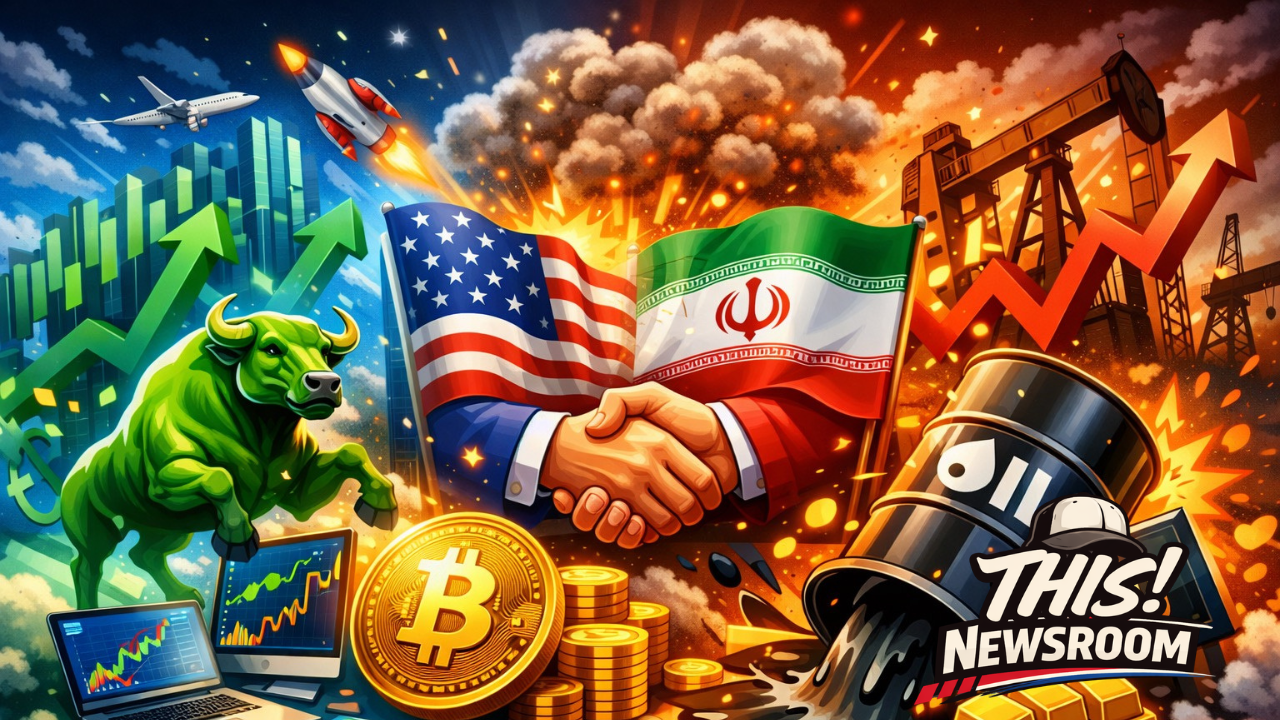
US–Iran Ceasefire Sparks Stock Rally and Crypto Surge as Oil Prices Drop
The announcement of a two-week ceasefire between the United States and Iran has triggered one of the most immediate market reactions of 2026. After weeks of rising tension, disrupted oil supply, and inflation concerns, global markets shifted quickly from defensive positioning to renewed optimism.
Here is what happened and why it matters.
Stocks Surge as Risk Appetite Returns
Global equities responded instantly.
- The Dow Jones jumped more than 1,000 points, while the S&P 500 and Nasdaq posted strong gains
- International markets followed, with Japan, South Korea, and European indexes rising between 2% and 7% in a single session
- Analysts now suggest this could fuel a multi-week rally, with projections of roughly 6% upside for the S&P 500
Why stocks jumped
The ceasefire reduced one of the biggest fears in global markets: a prolonged disruption of oil supply through the Strait of Hormuz, which carries about 20% of the world’s oil.
Less geopolitical risk increases investor confidence, and that confidence drives capital back into equities.
Energy Stocks Fall as Oil Prices Drop
While the broader market rallied, energy stocks moved in the opposite direction.
- Oil prices dropped between 13% and 15% in a single day, one of the sharpest declines since 2020
- Major oil companies such as ExxonMobil and Chevron fell between 5% and 8%
- Energy indexes globally declined more than 6%
What changed
Before the ceasefire:
- Oil prices were rising due to supply fears
- Inflation concerns were increasing
After the ceasefire:
- Supply fears eased
- Oil prices dropped
- Inflation expectations cooled
This shift created immediate upside for airlines, travel companies, and consumer-focused businesses that benefit from lower fuel costs.
Tech and Growth Stocks Rebound
Technology stocks, which had been pressured during the conflict, rebounded quickly.
- Major tech names gained between 1% and 5% in a single trading session
- Investors rotated back into growth sectors as interest rate concerns eased
This reflects a familiar pattern:
- Conflict drives inflation higher and pressures interest rates upward
- Higher rates hurt growth stocks
- A ceasefire reduces inflation pressure and improves the outlook for rate stability or cuts
Crypto Climbs with Risk-On Momentum
Crypto markets followed equities higher.
- Bitcoin climbed to a three-week high, moving above approximately $71,000
- Crypto-related stocks such as Coinbase and Marathon Digital gained between 3% and 5%
Why crypto moved
Crypto performs well in risk-on environments:
- Investors are more willing to take on speculative exposure
- A weaker U.S. dollar supports alternative assets
- Expectations of increased liquidity drive demand
At the same time, the U.S. dollar weakened following the ceasefire, adding further support to crypto markets.
The Dollar Weakens as Markets Rebalance
- The U.S. dollar declined as global confidence improved
- Gold and metals adjusted as investors repositioned portfolios
This reflects a classic macro shift:
- During conflict, the dollar strengthens as a safe haven
- During de-escalation, capital moves into risk assets and away from the dollar
The Bigger Picture: Relief, Not Resolution
Despite the positive reaction, this is a temporary two-week ceasefire, not a long-term peace agreement.
Key risks remain:
- The ceasefire could break down quickly
- Oil infrastructure damage may continue to affect supply
- Shipping through the Strait of Hormuz is not fully normalized
- Inflation pressures could return if tensions escalate again
Markets are responding to the removal of worst-case scenarios, not the establishment of long-term stability.
Final Take: What Comes Next
This ceasefire has created a clear risk-on reversal across global markets.
Short-term winners:
- Technology stocks
- Airlines and travel
- Crypto
- Consumer sectors
Short-term laggards:
- Oil and energy stocks
- Defensive sectors
The key insight is simple:
Markets are not pricing in peace. They are pricing out escalation.
If the ceasefire holds, momentum could continue. If it breaks, volatility will return quickly.
About the Author