4
By Krish Dhokia | This NEWSROOM
Published: January 4, 2026
Introduction (SEO-Optimized Lead)
For more than a decade, Venezuela has been trapped in a cycle of economic collapse, political repression, and mass migration. That cycle changed this week.
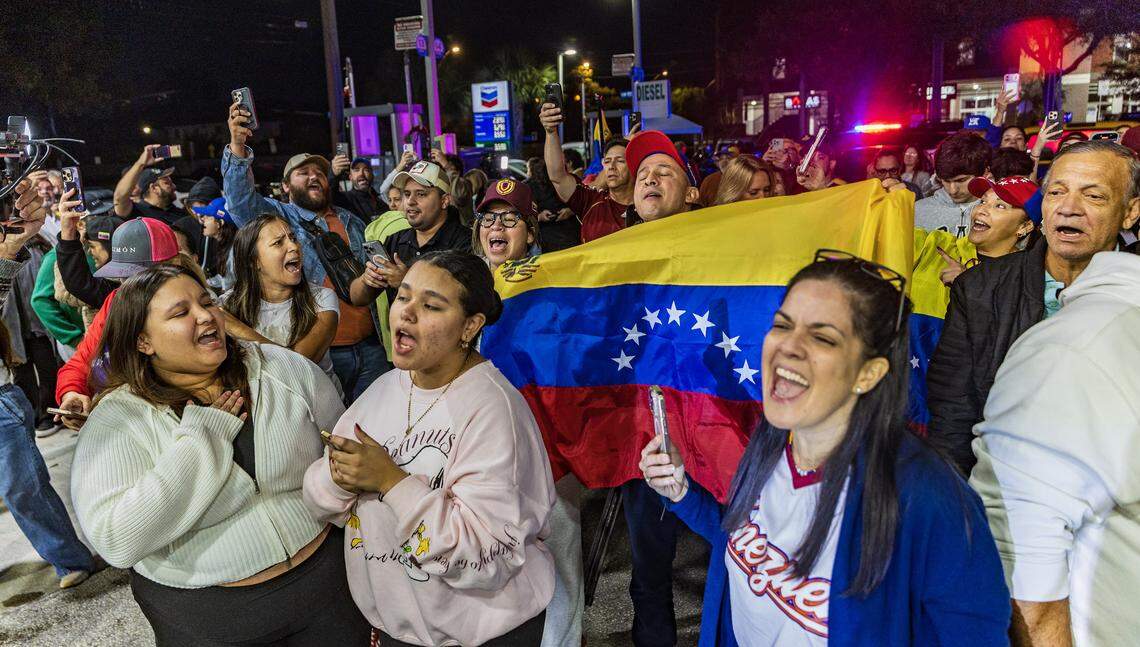
Following a dramatic international operation, Nicolás Maduro was removed from power and taken into U.S. custody. Within hours, celebrations erupted across Venezuela and throughout the global Venezuelan diaspora, marking what many see as the end of one of the darkest chapters in the country’s modern history.
This is not about ideology. It is about outcomes. And by almost every measurable standard—economic stability, democratic legitimacy, human rights, and global credibility—Venezuela is better positioned without Maduro.
What “Better Off Without Maduro” Actually Means
Being better off does not mean Venezuela’s problems vanish overnight. It means the removal of the primary barrier to recovery:
- No more governance through fear and coercion
- No more elections lacking credibility
- No more economic paralysis driven by political survival
- No more international isolation rooted in legitimacy concerns
At its core, this moment represents a return to possibility.
Today’s Press Conference and the Moment That Changed Everything
At a press conference held today, U.S. officials confirmed:
- Maduro and his wife were captured in Caracas
- He is being transferred to face prosecution
- International partners will support a transitional framework
The announcement triggered spontaneous celebrations in Caracas, Maracaibo, Valencia, Miami, Madrid, Bogotá, and beyond. Venezuelans waved flags, prayed openly in the streets, and embraced strangers—many calling it “the first time hope felt real in years.”
For millions forced into exile, the emotion was deeply personal.
A Brief but Necessary History of Damage Under Maduro
Economic Collapse
Under Maduro, Venezuela experienced:
- Hyperinflation that destroyed wages and savings
- Chronic shortages of food, fuel, and medicine
- Collapse of oil production despite massive reserves
A nation once among Latin America’s wealthiest became a case study in economic mismanagement.
Mass Migration
More than 7 million Venezuelans fled the country during this period, creating the largest displacement crisis in the Western Hemisphere.
Democratic Erosion
- Elections widely disputed
- Opposition leaders jailed or barred
- Media outlets silenced or taken over
Democracy became procedural, not functional.
Human Rights Allegations
International organizations documented:
- Arbitrary detentions
- Torture and intimidation
- Violent suppression of protests
These findings led to investigations by the International Criminal Court, focusing on alleged crimes against humanity by state officials.
Legal Accountability: Why This Is Different
Maduro now faces:
- U.S. federal charges including narco-terrorism and corruption
- International legal scrutiny that targets individuals—not the Venezuelan people
This matters. Accountability creates closure without collective punishment. It also sends a clear message: power is not immunity.
Why Celebrations Matter — and Why They’re Not Enough
Celebrations signal something essential: legitimacy begins with the people.
But history is clear—removing a leader without rebuilding institutions risks repeating the same failures under a new name. Venezuela’s future depends on what happens next.
What the Future of Venezuela Could Look Like
Best-Case Scenario: A Real Democratic Reset
- Independent elections with international monitoring
- Release of political prisoners
- Restoration of judicial independence
- Gradual reintegration into global markets
Middle Scenario: Slow, Uneven Progress
- Partial reforms
- Lingering elite influence
- Cautious international engagement
Worst-Case Scenario: Power Fragmentation
- Competing factions
- Security breakdowns
- Renewed instability
The difference between these paths is institutional reform, not rhetoric.
A Bipartisan Reality Check
From a conservative perspective:
- Rule of law matters
- Markets require trust
- Property rights are essential
From a broader bipartisan lens:
- Human dignity is non-negotiable
- Free expression is foundational
- Governments must be removable by voters
Venezuela’s recovery requires both.
Conclusion: A Reset, Not a Resolution
Venezuela is not fixed. But it is finally unstuck.
The fall of Maduro removes the largest obstacle to recovery—but rebuilding will take years, discipline, and unity. The world should support Venezuela’s people without attempting to replace one form of control with another.
This moment will be remembered not for who fell—but for what Venezuela chooses to build next.
About the Author