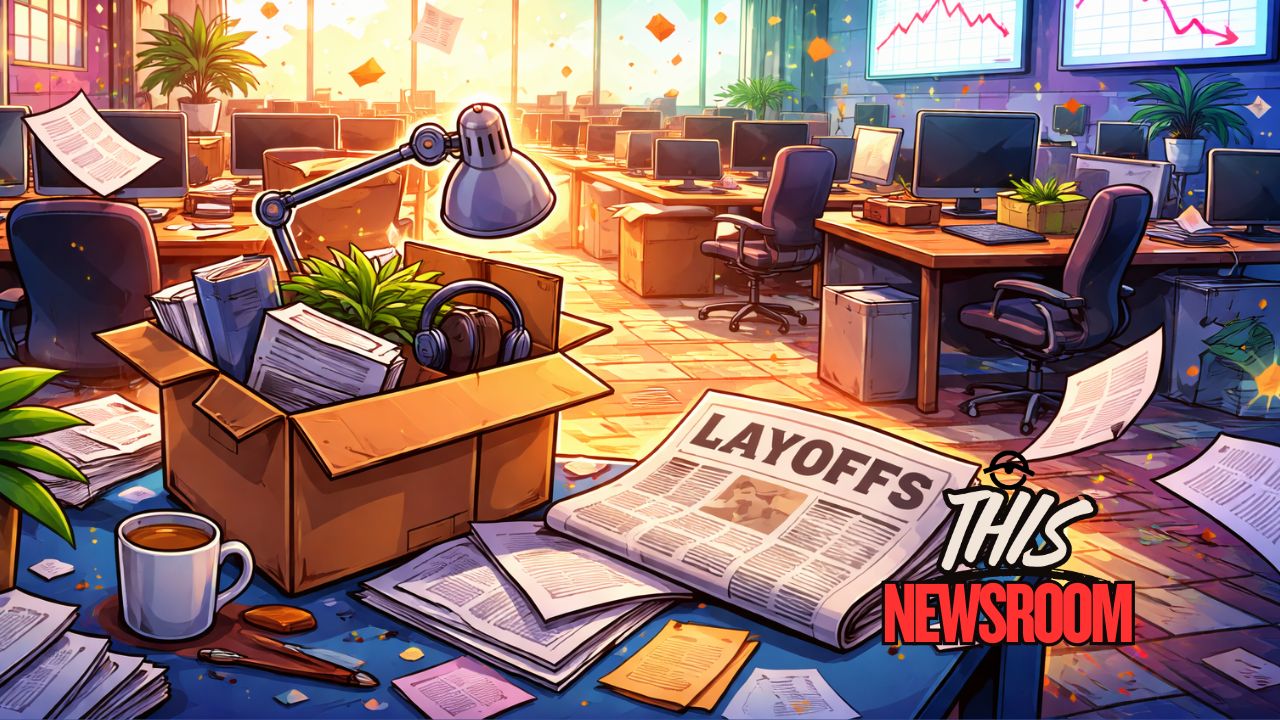
A visual representation of shrinking newsrooms as legacy media struggles to adapt.
For decades, seeing The Wall Street Journal on a desk signaled credibility, permanence, and authority. At one time, the publication felt untouchable—immune to disruption, insulated from chaos, and firmly planted at the center of American journalism.
That illusion no longer holds.
This week, the Journal confirmed another sweeping round of layoffs, cutting deep across its newsroom. In several departments, staffing reductions reportedly approached 30 percent. While leadership avoided flashy announcements, the impact landed hard. Entire teams vanished. Veteran journalists exited quietly. Institutional knowledge walked out the door.
Clearly, this wasn’t an isolated move. Instead, it marked the latest chapter in a long, visible decline.
A Once-Great Institution, Now Trapped in a Failing System
Over time, the Journal didn’t collapse in one dramatic moment. Rather, it eroded slowly—decision by decision.
First, leadership doubled down on paywalls as growth stalled. Then, the organization leaned heavily on aggressive subscription funnels instead of audience trust. Meanwhile, cluttered ad stacks crept across pages, degrading the reading experience. As a result, readers encountered more friction and less value.
Eventually, newsroom cuts became the default solution.
Unfortunately, cost-cutting never fixes a broken strategy. It only delays the reckoning.
Journalism Isn’t Dying — The Business Model Is
Despite what legacy executives claim, audiences haven’t abandoned journalism. Instead, they’ve rejected arrogance, friction, and endless pop-ups.
People still crave clarity. They still want facts. However, they refuse to be ambushed by autoplay ads, cookie walls, and subscription demands before reading a single paragraph.
In other words, the issue isn’t willingness to pay—it’s tolerance for disrespect.
Because of that shift, the old model continues to crack.
Why This Newsroom Was Built Differently
This moment explains exactly why This with Krish and This Newsroom exist.
Rather than begging for subscriptions, this platform earns attention. Instead of burying readers under ads, it prioritizes access and trust. Most importantly, it treats audiences like adults—not metrics.
Here, value comes first. Revenue follows.
That philosophy doesn’t chase legacy approval. It builds something stronger.
A Respectful Nod — And a Necessary Reality Check
To be clear, the Wall Street Journal still employs talented journalists. Many did everything right. However, institutions that refuse to evolve don’t survive on reputation alone.
Right now, the industry isn’t witnessing layoffs—it’s witnessing a reset.
Legacy media was built for scarcity, control, and paper. The future rewards transparency, adaptability, and trust.
That future isn’t behind a paywall.
It’s already here.
About the Author