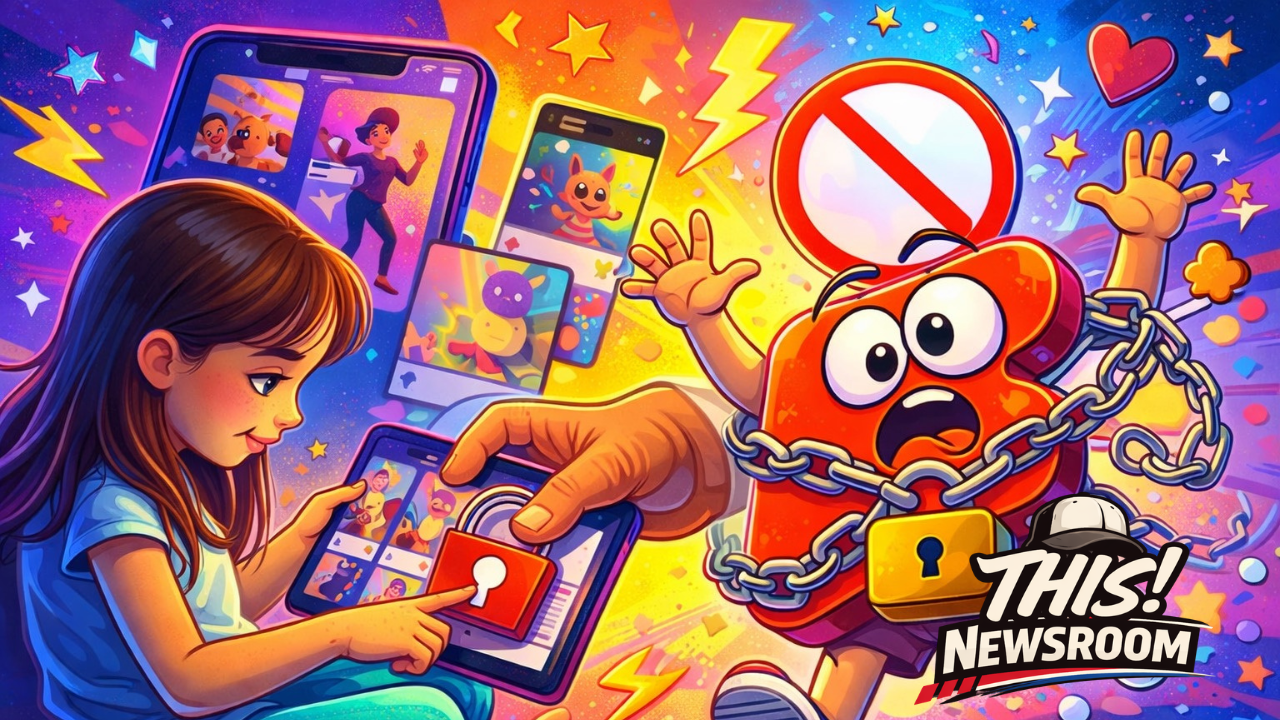
In a move that’s already sparking conversation across households, YouTube has officially introduced a feature that allows parents to block YouTube Shorts entirely for their children. And if you’ve ever watched your kid fall down the endless scroll of short-form content, you already know—this is a big deal.
Why This Update Matters More Than You Think
Short-form video has exploded over the last few years. Platforms like TikTok, Instagram Reels, and YouTube Shorts have reshaped how content is consumed—fast, addictive, and often hard to step away from.
For kids, that’s even more powerful.
Parents have been asking for more control—not just screen time limits, but content-type control. And that’s exactly what this update delivers.
Instead of trying to monitor every video, parents can now turn off the entire Shorts experience.
The Real Concern: The “Infinite Scroll Effect”
Shorts are designed for one thing: keeping attention.
- No natural stopping point
- Algorithm-driven content loops
- Rapid dopamine hits
For developing minds, this can lead to:
- Shortened attention spans
- Reduced patience for long-form content
- Increased screen dependency
This isn’t just about content quality—it’s about how content is consumed.
What YouTube Is Actually Offering
This isn’t a blanket shutdown of YouTube—it’s more nuanced.
With this update, parents can:
- Disable access to YouTube Shorts completely
- Customize viewing experiences through supervised accounts
- Shift kids toward longer, more intentional content
It’s a move toward intentional consumption over passive scrolling.
A Strategic Shift from YouTube
Let’s be honest—this is also a smart business and brand move by YouTube.
They’re balancing two competing forces:
- Competing with TikTok and short-form platforms
- Addressing growing concerns from parents, educators, and policymakers
By giving parents control, YouTube positions itself as:
- More family-friendly
- More responsible
- More aligned with long-term user trust
What This Means for Parents
This update puts power back in your hands.
But here’s the truth: tools don’t replace conversations.
Blocking Shorts is a great first step, but pairing it with:
- Clear screen-time boundaries
- Open discussions about content
- Encouraging offline activities
…that’s where the real impact happens.
What This Means for Creators
If you’re a content creator, this is a signal.
Short-form isn’t going away—but there’s a renewed opportunity in long-form content, especially:
- Educational content
- Storytelling
- Thought leadership
Creators who can hold attention without relying on rapid-fire clips will stand out even more.
The Bigger Picture
This isn’t just a feature update.
It’s part of a larger shift happening right now:
- Digital wellness is becoming mainstream
- Parents are demanding more control
- Platforms are being forced to respond
And this? This is YouTube saying:
“We hear you.”
Final Thoughts
For years, parents have been playing defense against algorithms.
This is one of the first moments where the platform is finally giving them a real offensive tool.
The question now is simple:
Will you use it?
About the Author