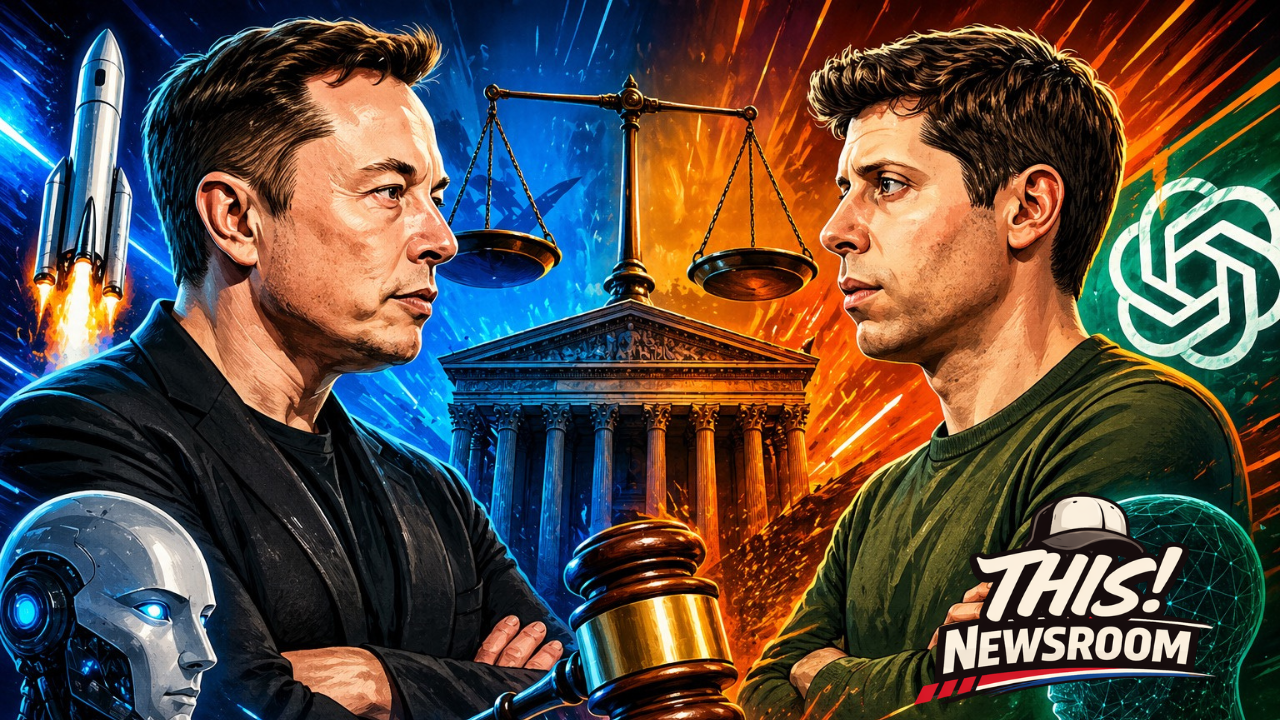
Elon Musk vs OpenAI Lawsuit: $150B Battle That Could Change AI Forever
A high-stakes legal battle is set to unfold in federal court, and its outcome could redefine the future of artificial intelligence. At the center: Elon Musk versus Sam Altman and OpenAI — with an estimated $150 billion hanging in the balance.
This is not just another dispute between tech billionaires. It’s a case that could determine how the most powerful AI company in the world operates moving forward.
How It All Started
Back in 2015, Elon Musk helped co-found OpenAI alongside a group of prominent tech leaders. The mission was clear: build artificial intelligence that benefits all of humanity. The organization launched as a nonprofit, focused on safety, transparency, and long-term societal impact.
Musk played a critical role early on. He contributed funding, helped shape the vision, and publicly supported the idea that AI should not be controlled by profit-driven motives. However, in 2018, Musk stepped away from OpenAI’s board, citing potential conflicts of interest as his own AI ambitions expanded.
The Turning Point
After Musk’s departure, OpenAI evolved. It transitioned from a purely nonprofit structure into a capped-profit model, allowing it to raise massive amounts of capital.
That shift brought in billions from major investors, most notably Microsoft. The company rapidly scaled, becoming a dominant force in artificial intelligence with products that reshaped industries.
But according to Musk, this transformation crossed a line.
The Core of the Lawsuit
Musk filed a lawsuit alleging that OpenAI and CEO Sam Altman abandoned the company’s founding principles. He argues that the organization used its nonprofit status to build trust and secure funding, only to pivot into a highly commercial, closed AI powerhouse.
The lawsuit centers on a critical question:
Did OpenAI violate its founding agreement by shifting from a nonprofit mission to a profit-driven model?
Musk claims the move betrayed the original intent — that AI development should serve humanity broadly, not prioritize investor returns.
What’s Happening Now
In a recent development, a judge dismissed Musk’s fraud claims at his own request. However, key elements of the case remain active and are now heading to trial.
The court will examine whether any legal agreements were broken during OpenAI’s structural transition. That decision could have sweeping implications, not just for OpenAI but for how future AI companies are built and governed.
Why $150 Billion Matters
Musk estimates that the value tied to this dispute could reach $150 billion. That figure reflects what he believes he is owed — or what OpenAI may be required to relinquish if the court rules in his favor.
This isn’t just about money. It’s about control, governance, and the philosophical direction of artificial intelligence.
Why This Case Is Bigger Than Musk vs Altman
This trial goes far beyond a personal or financial dispute. It raises fundamental questions:
- Should AI companies prioritize profit or public good?
- Can a nonprofit foundation evolve into a commercial giant without breaking trust?
- Who ultimately controls the direction of transformative technologies?
The answers could influence regulators, investors, and innovators across the entire AI ecosystem.
The Bottom Line
As the trial begins, the stakes couldn’t be higher. The outcome may determine whether OpenAI continues on its current path or faces structural changes that ripple across the tech world.
One thing is certain:
This case will shape the conversation around AI for years to come.
About the Author