Amazon Reaches 1 Million Robots in Warehouses
Amazon has officially crossed a milestone that once sounded like science fiction: the company now operates more than one million robots across its global fulfillment network.
The achievement cements Amazon’s position as the world’s largest operator of industrial mobile robots and signals just how quickly artificial intelligence and automation are reshaping the future of logistics.
A Warehouse Powered by Machines
If you’ve ever watched an Amazon fulfillment center in action, it looks more like a futuristic city than a warehouse.
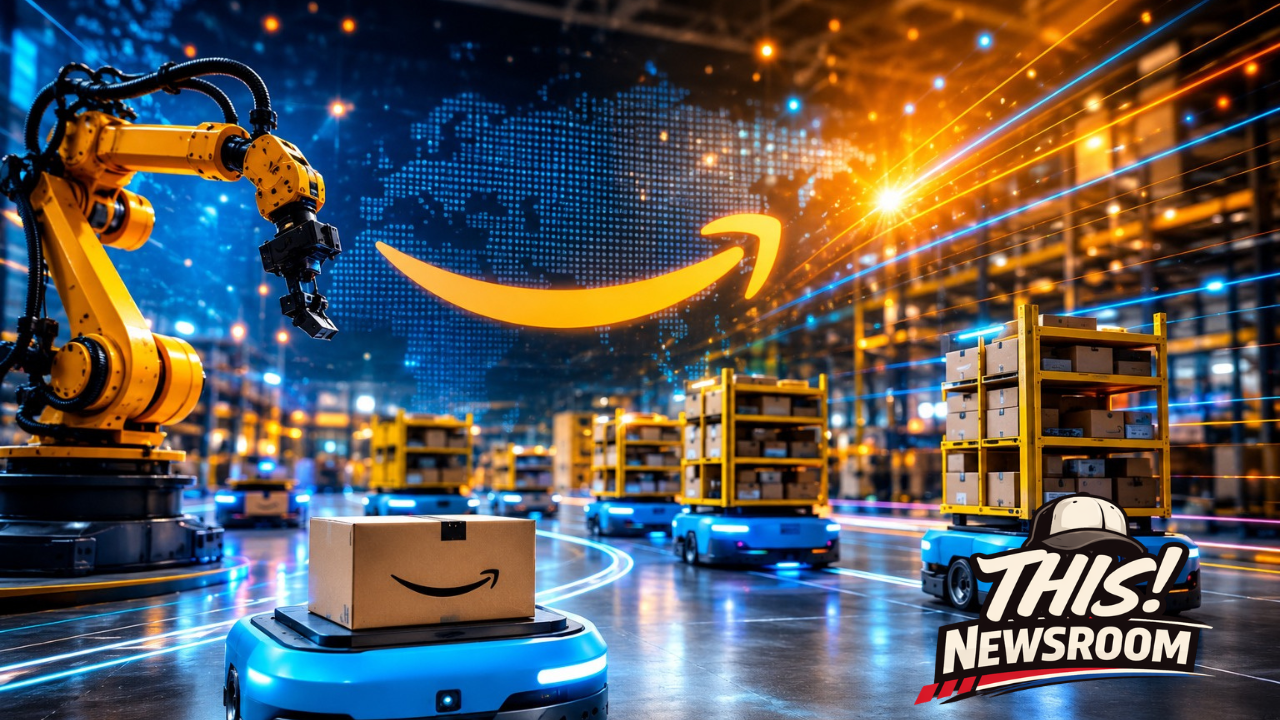
Thousands of autonomous blue robots glide across warehouse floors carrying inventory shelves, while robotic arms sort packages and AI-powered systems coordinate traffic to keep everything moving efficiently.
Instead of humans walking miles each day to retrieve products, many of Amazon’s robots bring the products directly to employees, dramatically reducing travel time and increasing productivity.
Meet DeepFleet
Alongside its million-robot milestone, Amazon has introduced DeepFleet, a generative AI foundation model designed specifically to manage its robotic fleet.
Think of it as air traffic control—but for warehouse robots.
DeepFleet analyzes millions of movements throughout Amazon’s facilities and directs robots onto faster, less congested routes. Amazon says the system improves robot travel efficiency by roughly 10%, helping lower operating costs while speeding up customer deliveries.
What Do These Robots Actually Do?
Amazon’s robotic workforce isn’t made up of humanoid robots.
Instead, the company uses specialized machines designed for individual tasks, including:
- Transporting inventory shelves
- Sorting packages
- Lifting heavy products
- Moving pallets
- Assisting employees during order fulfillment
- Navigating warehouses autonomously
Some of Amazon’s newest systems, including Proteus, can safely move throughout facilities alongside human workers without fixed guide paths, while others like Vulcan feature advanced sensors that allow them to grasp items with remarkable precision.
What About Human Jobs?
Whenever automation reaches a milestone like this, one question immediately follows:
Will robots replace workers?
Amazon says the goal is augmentation rather than replacement.
The company argues that robots now perform many repetitive or physically demanding tasks, allowing employees to focus on quality control, technical operations, maintenance, engineering, and customer-focused work. Amazon also says it has invested heavily in employee training, with more than 700,000 workers participating in upskilling programs since 2019.
Still, labor experts continue to debate what widespread automation could mean for long-term employment as AI capabilities continue to advance.
The Bigger Picture
Amazon’s million-robot milestone isn’t just about faster package delivery.
It’s another sign that AI-powered automation is becoming part of everyday business operations.
Retail, manufacturing, healthcare, transportation, agriculture, and even education are rapidly adopting robotics and AI to improve efficiency and reduce costs. What once seemed decades away is increasingly becoming standard practice.
For consumers, that could mean quicker deliveries and lower operating costs.
For businesses, it raises the stakes in the race to automate.
For workers, it reinforces the importance of developing skills that complement technology rather than compete directly with it.
Final Thoughts
Amazon’s robotic fleet has grown from a handful of warehouse machines into more than one million autonomous systems in just over a decade.
Whether viewed as an incredible engineering achievement or the beginning of a new workforce transformation, one thing is clear:
The future of work isn’t coming—it’s already rolling across warehouse floors.
About the Author