Chick-fil-A Ingredients Go Viral: What’s Really in Your Food?
If you’ve been anywhere near social media lately, you’ve probably seen it—videos, posts, and threads dissecting what’s really inside Chick-fil-A’s iconic menu items.
At first glance, the content feels shocking. However, once you dig deeper, a more nuanced story begins to emerge.
From ingredient breakdowns to bold claims, the internet is once again locked into a familiar question:
What exactly are we eating—and should we actually be concerned?
Why Chick-fil-A Is Trending Right Now
The latest viral wave didn’t happen by accident. Instead, it started with creators analyzing ingredient lists directly from Chick-fil-A’s website and packaging.
As a result, these videos quickly gained traction by highlighting long, unfamiliar ingredient names. Meanwhile, viewers reacted strongly, often without full context.
In many cases, the content focused more on reaction than explanation. Consequently, millions of views poured in, along with a surge of debate.
Some viewers expressed concern, while others pushed back, pointing out that most fast food chains use similar ingredients. Either way, the conversation exploded.
What’s Actually in Chick-fil-A’s Food?
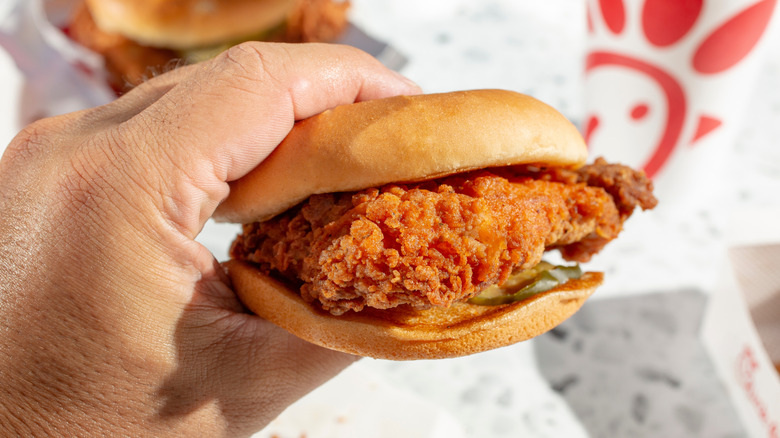
Let’s take a closer look at the original chicken sandwich.
On the surface, the ingredients appear simple:
- Chicken breast
- Seasoned breading
- Milk and egg wash
- Peanut oil
- Buttered bun
- Pickles
However, when each component is expanded into its full ingredient list, the complexity increases significantly.
For example, enriched flour includes added vitamins, while frying oils may contain stabilizers. Similarly, flavor enhancers are often used to maintain consistency across locations.
Because of this, a short ingredient list can quickly turn into a much longer one when fully detailed.
The Ingredients Sparking Debate
Some ingredients tend to spark more conversation than others.
For instance, monosodium glutamate (MSG) is commonly used to enhance flavor. At the same time, dimethylpolysiloxane helps prevent oil from foaming during cooking.
Additionally, sodium phosphates help retain moisture in the chicken, ensuring consistency in texture.
Importantly, all of these ingredients are approved by the U.S. Food and Drug Administration and are widely used across the food industry.
Even so, their scientific names often sound intimidating, which is part of what fuels viral reactions.
The Internet vs. Reality
Social media thrives on quick reactions. Because of this, short-form videos often prioritize shock value over explanation.
For example, a single unfamiliar ingredient can be framed as dangerous, even when it serves a standard purpose. As a result, viewers may walk away with more fear than facts.
In reality, not all “chemicals” are harmful. In fact, everything—from water to essential vitamins—has a chemical structure.
Therefore, context becomes critical when evaluating what we consume.
Chick-fil-A’s Push for Transparency
Over time, Chick-fil-A has taken steps to improve ingredient transparency and quality.
For example, the company has removed artificial trans fats and reduced certain additives across parts of its menu. In addition, it has publicly shared detailed ingredient lists online for customers to review.
Because of these efforts, consumers now have more access to information than ever before.
Still, greater transparency also means more scrutiny, especially in the age of viral content.
Should You Be Concerned?
This is where the conversation becomes more personal.
On one hand, longer ingredient lists can feel overwhelming, and processed foods have been linked to health concerns when consumed excessively.
On the other hand, these ingredients are regulated, tested, and widely used across the food industry.
Ultimately, moderation plays a bigger role than any single ingredient. Occasional fast food consumption is unlikely to be harmful for most people, especially within a balanced lifestyle.
The Bigger Picture
This debate isn’t just about Chick-fil-A. Instead, it reflects a broader shift in how people think about food.
Consumers are asking more questions, reading labels more closely, and demanding higher standards. At the same time, brands are being pushed to respond with greater transparency.
Because of this shift, viral moments like this are likely to keep happening.
Final Thoughts
Ultimately, the Chick-fil-A ingredient debate says less about the restaurant itself and more about us.
We’re more informed. We’re more curious. And most importantly, we’re paying attention.
That’s a good thing. However, balance still matters.
So rather than reacting to every viral post, the smarter approach is simple: stay informed, think critically, and keep perspective.
About the Author