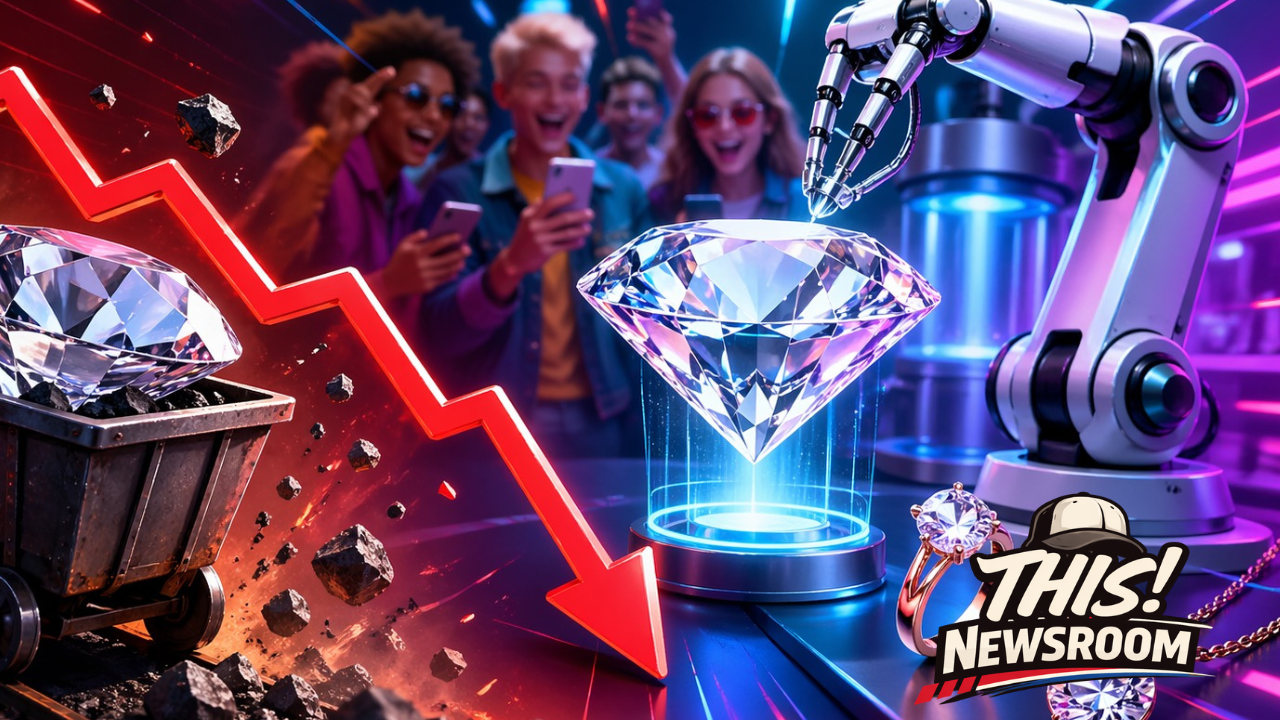
Diamond Prices Crash as Gen Z Chooses Lab-Grown Over Natural Stones


The global diamond market is facing a major shake-up—and it’s not subtle. Prices for natural diamonds have fallen to record lows, signaling a dramatic shift in consumer behavior, industry dynamics, and what “luxury” actually means in 2026.
At the center of it all? Gen Z buyers and the rapid rise of lab-grown diamonds.
The Collapse: Natural Diamond Prices Under Pressure
For decades, diamonds were positioned as rare, timeless, and—most importantly—valuable. But that narrative is breaking down.
Wholesale prices for natural diamonds have dropped significantly over the past 12–18 months, with some categories seeing declines of 20% to 40%. Retailers are sitting on excess inventory, and major producers are quietly cutting supply to stabilize the market.
Even industry giant De Beers has been forced to adjust pricing strategies and scale back production—something that would have been almost unthinkable just a few years ago.
Gen Z Is Changing the Game
The next generation of buyers isn’t playing by the old rules.
Gen Z consumers are:
- Less interested in traditional status symbols
- More focused on value and transparency
- Highly aware of ethical sourcing concerns
- Open to alternatives that offer better pricing
For many, the idea of spending thousands on a natural diamond—especially when a nearly identical option exists for a fraction of the price—just doesn’t make sense.
This shift is hitting the engagement ring market especially hard, which has historically been the backbone of diamond demand.
The Rise of Lab-Grown Diamonds
Lab-grown diamonds are no longer a niche product—they’re becoming the default choice.
Using advanced technologies like Chemical Vapor Deposition (CVD) and High Pressure High Temperature (HPHT), companies can now create diamonds that are chemically and visually identical to mined stones.
And the biggest differentiator?
Price.
Lab-grown diamonds typically cost 60% to 90% less than their natural counterparts.
Companies like Diamond Foundry and Brilliant Earth are leading the charge, marketing these stones as ethical, sustainable, and modern.
Retailers are responding quickly—many now dedicate more display space to lab-grown inventory than natural diamonds.
A Luxury Industry Facing an Identity Crisis
The diamond industry has always relied on perception: rarity, emotional value, and long-term worth.
But those pillars are being challenged.
- Rarity? Lab-grown diamonds are scalable.
- Value? Resale prices for diamonds—natural or lab-grown—are far lower than consumers expect.
- Emotion? Younger buyers are redefining what matters.
Even the iconic “A Diamond is Forever” messaging is losing relevance in a world where flexibility, affordability, and personal expression are driving purchasing decisions.
What Happens Next?
This isn’t just a short-term dip—it’s a structural shift.
Expect to see:
- Continued price pressure on natural diamonds
- Increased marketing around “heritage” and “rarity” from legacy players
- Rapid expansion of lab-grown options across all price tiers
- More innovation in alternative gemstones and jewelry styles
The big question: can natural diamonds reinvent their story fast enough?
The Bottom Line
The diamond market is being rewritten in real time.
Gen Z isn’t rejecting diamonds entirely—they’re redefining them. And with lab-grown stones offering the same look at a dramatically lower price, the traditional diamond industry is facing its biggest disruption in over a century.
Luxury isn’t disappearing. It’s just evolving.
About the Author