Europe Hesitates to Commit Naval Forces to the Strait of Hormuz as Middle East Tensions Rise
The World’s Most Important Oil Chokepoint Faces a Growing Security Question
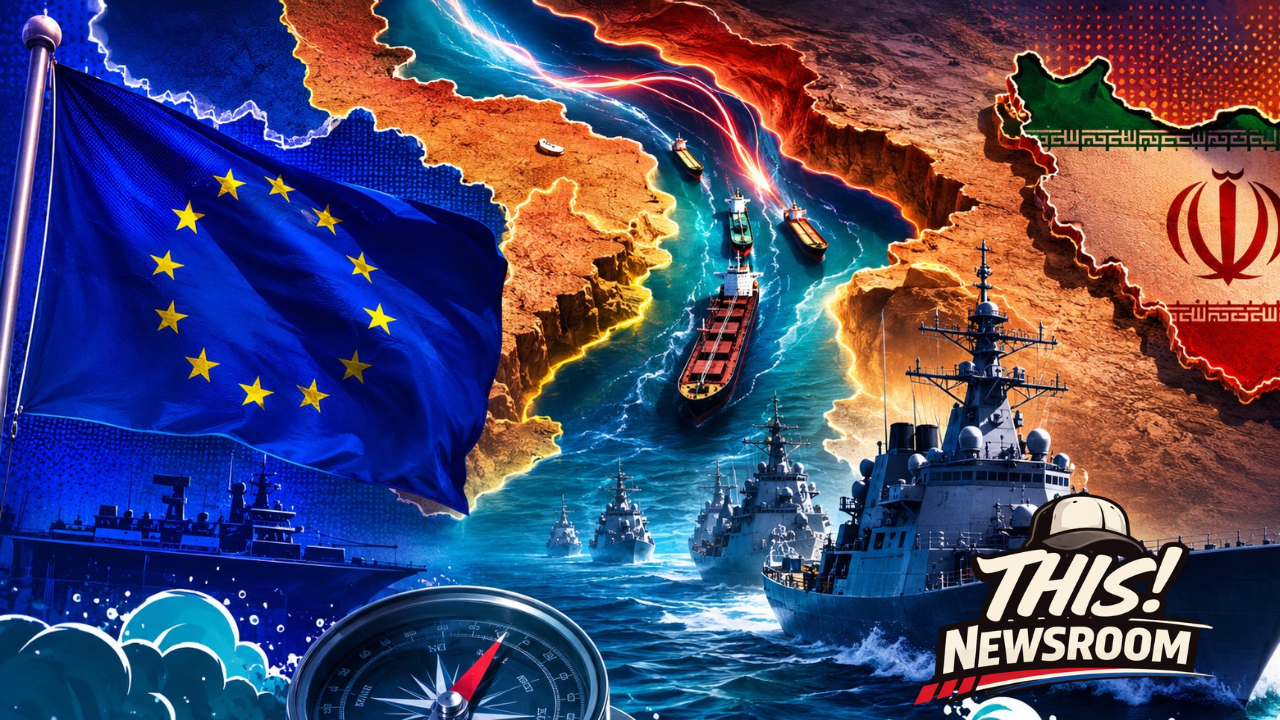
As tensions continue to simmer in the Middle East, European nations are showing increasing reluctance to commit significant naval forces to the Strait of Hormuz, one of the most strategically important waterways on the planet.
The hesitation comes at a critical moment. Roughly one-fifth of the world’s oil supply passes through the narrow shipping lane connecting the Persian Gulf to the Gulf of Oman and the Arabian Sea. Any disruption to maritime traffic could send shockwaves through global energy markets, increase shipping costs, and reignite inflation concerns worldwide.
While the United States has historically taken the lead in securing the region, growing geopolitical uncertainty and stretched military resources are forcing allies to reconsider their roles. So far, many European governments appear cautious about becoming more deeply involved.
Why the Strait of Hormuz Matters
The Strait of Hormuz is only about 21 miles wide at its narrowest point, yet it serves as the primary export route for major oil-producing nations including Saudi Arabia, Iraq, Kuwait, the United Arab Emirates, and Qatar.
Every day, millions of barrels of crude oil and petroleum products move through the passage. In addition, massive quantities of liquefied natural gas are transported through the route, making it vital to both Asian and European energy security.
Any military confrontation, blockade, or sustained disruption could have immediate consequences:
- Higher oil and gasoline prices
- Increased shipping insurance costs
- Supply chain disruptions
- Renewed inflation pressure
- Market volatility across global financial markets
Simply put, what happens in Hormuz rarely stays in Hormuz.
Europe’s Dilemma
European leaders find themselves caught between competing priorities.
On one hand, Europe depends heavily on stable global energy markets. Although the continent has diversified its energy sources following the Russia-Ukraine conflict, a major disruption in Gulf shipping could still create economic pain.
On the other hand, many European governments face domestic political pressure to avoid deeper military commitments abroad.
Several nations already contribute vessels to maritime security missions in the region. However, expanding those deployments would require additional funding, personnel, and political support at a time when European militaries are already balancing commitments related to Ukraine, NATO readiness, and regional security challenges closer to home.
Defense analysts note that many European navies simply lack the available fleet capacity to sustain large-scale operations in multiple theaters simultaneously.
The Shadow of Escalation
Another major factor behind Europe’s caution is the risk of escalation.
Sending additional warships into a region experiencing heightened tensions increases the possibility of incidents involving commercial vessels, drones, missile attacks, or direct confrontations between state actors.
European governments appear determined to avoid actions that could pull them into a broader regional conflict.
Officials across the continent have emphasized diplomatic engagement, de-escalation efforts, and multinational cooperation rather than unilateral military expansion.
The challenge is that deterrence often requires visible military presence, creating a difficult balancing act between maintaining stability and avoiding provocation.
The United States Still Carries the Burden
For decades, the United States Navy has served as the primary guarantor of freedom of navigation in the Persian Gulf.
American carrier strike groups, destroyers, surveillance assets, and regional military bases provide the backbone of maritime security efforts.
As Washington increasingly focuses on strategic competition with China and maintaining commitments in Europe, questions continue to emerge about how much responsibility allies should assume in protecting critical global trade routes.
Some policymakers argue that Europe, which benefits significantly from stable energy markets, should contribute more resources.
Others counter that European military capabilities remain limited and that forcing greater involvement could create new political divisions among allies.
Markets Are Watching Closely
Financial markets remain highly sensitive to developments around the Strait of Hormuz.
Even rumors of potential disruptions have historically caused oil prices to spike. Investors understand that a prolonged interruption to shipping could tighten global energy supplies almost immediately.
Energy traders, shipping companies, and insurers are closely monitoring the situation for signs of escalating military activity or changes in naval deployments.
The mere possibility of instability often translates into higher risk premiums across energy and transportation sectors.
What Happens Next?
For now, Europe appears committed to a cautious approach.
Rather than dramatically increasing naval deployments, leaders are focusing on intelligence sharing, diplomatic coordination, and limited maritime security operations.
However, the situation remains fluid.
Should tensions worsen or commercial shipping come under greater threat, European governments may face mounting pressure from allies and markets alike to take a more active role.
The Strait of Hormuz remains one of the world’s most important economic arteries. As uncertainty grows, the question is no longer whether Europe has an interest in keeping the waterway open—it is whether European nations are willing to commit the military resources necessary to help secure it.
In a region where a single incident can influence global markets overnight, the world’s attention remains fixed on one narrow stretch of water that carries enormous consequences for the global economy.
About the Author