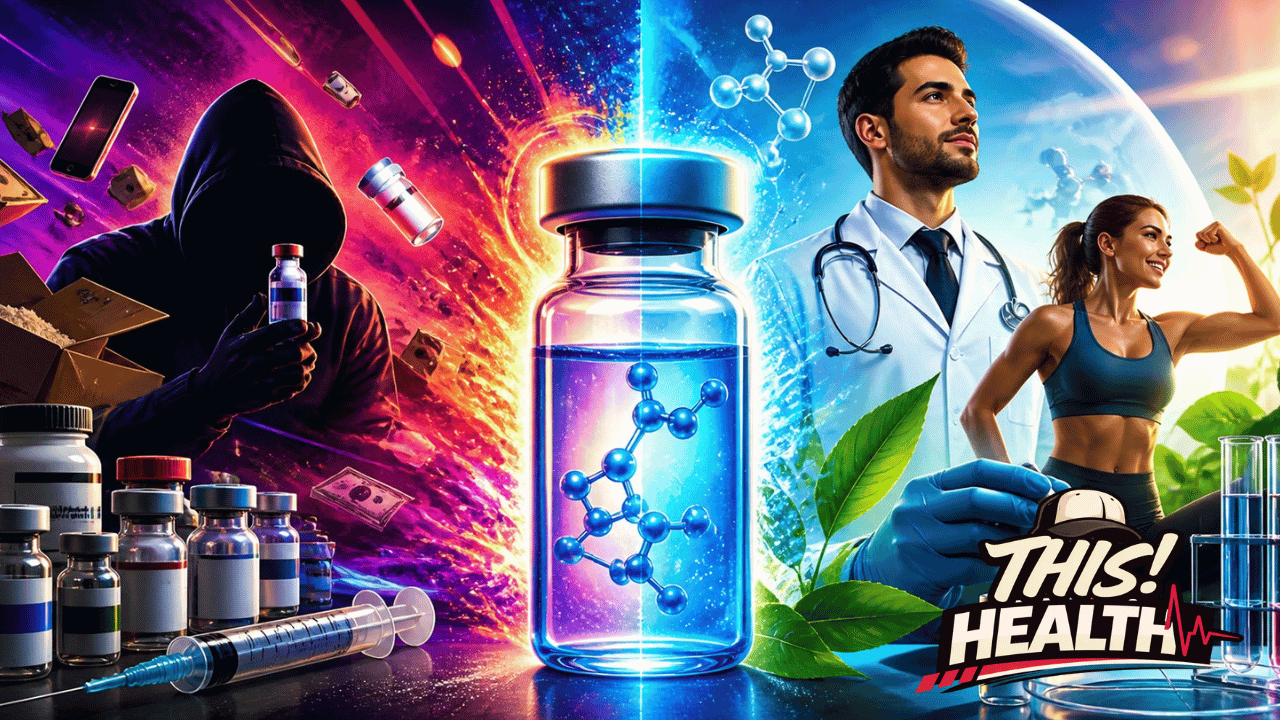
Peptides Health Industry Reset: Why the “Research Chemical” Boom Is Ending
Welcome to the Next Era of Health Optimization
For the past few years, peptides have been the “insider secret” of biohackers, fitness influencers, and longevity obsessives. If you’ve spent even five minutes scrolling health content online, you’ve probably heard whispers about miracle recovery, fat loss acceleration, and age-defying results.
But here’s the truth: peptides didn’t just trend—they transformed an entire industry.
Now, just as quickly as the underground peptide market exploded, it’s facing a massive reset. And this time, it’s coming from the top—federal regulators, licensed physicians, and legitimate medical platforms.
What Are Peptides—and Why Everyone Suddenly Cares

Peptides are short chains of amino acids—the same building blocks that make up proteins. But instead of acting broadly like many traditional medications, peptides operate more like precision tools.
Think of them as biological text messages—sending highly specific instructions to your cells.
That specificity is what makes them so powerful.
The Big Breakthroughs
Targeted Healing
Compounds like BPC-157 have gained attention for their potential role in tissue repair and inflammation reduction. Instead of masking symptoms, peptides aim to trigger the body’s own healing processes.
Metabolism & Longevity
Certain peptides are used to stimulate natural hormone pathways, support lean muscle development, and improve metabolic efficiency. This has made them a cornerstone in modern longevity protocols.
Preventative Health Shift
Perhaps the biggest impact? Peptides helped push healthcare from reactive to proactive. Instead of waiting for illness, people began optimizing performance, recovery, and aging in real time.
The Wild West Era: “Research Chemicals” and Influencer Hype

As demand surged, a shadow market exploded alongside it.
You’ve seen it:
- Vials labeled “Research Use Only”
- Websites disclaiming “Not for Human Consumption”
- Influencers casually explaining how to inject compounds they technically aren’t allowed to recommend
This wasn’t accidental—it was strategic.
By labeling peptides as research chemicals, sellers attempted to sidestep regulatory oversight, creating a gray market that looked legitimate… but often wasn’t.
Behind the scenes, many of these operations:
- Relied on offshore manufacturing
- Had little to no quality control
- Operated through affiliate or pyramid-style marketing structures
Consumers were essentially gambling with their health—injecting substances with unknown purity, origin, or dosage accuracy.
The Government Steps In: A Major Industry Reset
Now, the tide is turning.
A broader federal push toward improving national health outcomes—often tied to initiatives like “Make America Healthy Again”—has accelerated a shift in how peptides are viewed and regulated.
What’s Actually Changing
1. Legitimate Access Is Expanding
Peptides once stuck in regulatory limbo are now being re-evaluated for legal use through licensed compounding pharmacies and physician-guided care.
2. The Gray Market Is Collapsing
When consumers can access pharmaceutical-grade peptides through telehealth platforms, the need for risky, unverified sources disappears.
3. Enforcement Is Increasing
The U.S. Food and Drug Administration has ramped up warnings and enforcement actions against companies selling unapproved or mislabeled peptide products.
4. Trust Is Shifting
Patients are becoming more informed—and far less willing to inject something they bought from a social media ad.
The End of the “Peptide Bro” Economy
Let’s be clear: this isn’t just a regulatory tweak—it’s a market correction.
The influencer-driven peptide economy thrived on three things:
- Information gaps
- Limited legal access
- Hype over science
All three are disappearing.
As legitimate medical providers enter the space:
- Testing replaces guesswork
- Prescriptions replace DM orders
- Clinical oversight replaces influencer advice
And that changes everything.
What This Means for You
This shift is actually good news—if you care about results and safety.
The New Reality
- Higher Quality: Pharmaceutical-grade compounds with verified sourcing
- Medical Guidance: Personalized protocols based on labs and health data
- Reduced Risk: Less exposure to contamination, mislabeling, or incorrect dosing
But Also—More Accountability
The days of experimenting blindly are fading. The future of peptides is:
- Clinical
- Regulated
- Data-driven
The Bottom Line
Peptides aren’t going anywhere—but the way we access and use them is evolving fast.
The underground market that once fueled their rise is being replaced by something far more powerful: legitimacy.
And that’s how industries grow up.
The era of mystery vials and Instagram “experts” is closing. In its place? A smarter, safer, and more scientifically grounded approach to human performance and longevity.
Final Thought
If peptides were Phase 1 of the biohacking revolution, Phase 2 is here—and it’s wearing a lab coat.
The question isn’t whether peptides work.
It’s whether you’re getting them the right way.
About the Author