By This Newsroom
December 01, 2025
Mass layoff warnings in the United States have surged to their highest level in ten years — a startling signal that the labor market may be heading into a colder, more uncertain season. Twelve months into the rollercoaster that is 2025, economists say the signs are no longer subtle: the year of “quiet hiring” and “quiet quitting” has officially been replaced by the year of loud layoffs.
From WARN notices to corporate earnings calls, every major dataset points in the same direction: job cuts are rising fast, and the ripple effects are just beginning.


Why WARN Notices Are Surging
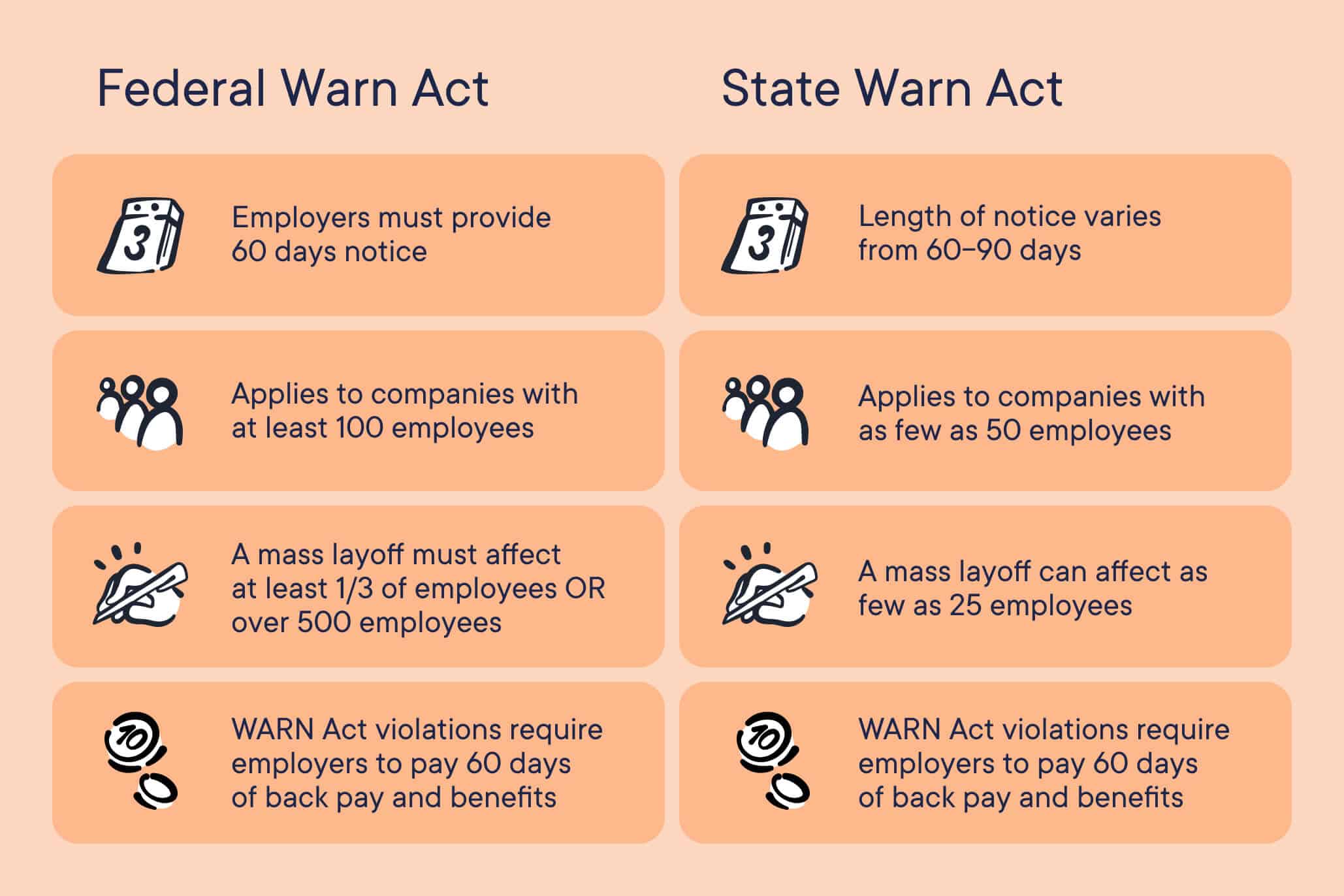
The Worker Adjustment and Retraining Notification Act (WARN) requires companies to issue a public alert before large-scale layoffs. Normally, spikes in WARN filings foreshadow downturns long before headlines catch up — and 2025’s surge is unmistakable.
According to analysts reviewing state and federal filings, WARN notices are up dramatically across tech, manufacturing, logistics, and even white-collar professional services.
After historically low layoffs in 2024, the pendulum has swung fast.
Economic uncertainty + restructuring + slower hiring = a clear labor market softening.
Companies appear to be preparing for weaker consumer demand, higher operating costs, and long-term automation strategies — none of which bode well for payrolls.
What the Data Shows About 2025 Mass Layoffs
Multiple data sets highlight how dramatic the shift has been:
- Goldman Sachs analysts reviewed thousands of earnings-call transcripts and found a sharp rise in companies openly discussing layoffs — with nearly half referencing automation or AI as a driving factor.
Source: Goldman Sachs Global Investment Research. - Challenger, Gray & Christmas reported 153,074 job cuts in October alone, a staggering 175% increase from the same month last year.
Source: Challenger, Gray & Christmas October 2025 Report. - Total U.S. layoffs this year have already exceeded 1.1 million, making 2025 the most layoff-heavy year since 2015.
Between WARN filings and confirmed layoffs, the message is loud and clear: the labor market is weakening faster than many expected.
Why This Spike in Layoff Warnings Matters
Layoffs are not just a corporate restructuring story — they’re an early economic indicator.
Economists view low layoffs as a natural “shock absorber” for the economy. When that buffer disappears, every other pillar — hiring, wage growth, consumer spending — becomes more exposed.
Right now:
- Unemployment numbers remain relatively stable,
- but WARN notices typically appear 60 days before cuts take effect,
- which means the real damage may not appear until Q1 2026.
The timing matters. Rising layoffs paired with slowing hiring is a double hit that can reshape labor dynamics quickly.
The result?
Fewer openings. More applicants. Stiffer competition.
The AI Effect: The 2025 Job Market’s New Variable
One of the most notable features of the 2025 layoff wave has been its connection to automation.
Across tech, finance, and administrative support roles, companies are explicitly linking workforce reductions to AI adoption:
- Replacing repetitive back-office functions
- Consolidating marketing and support teams
- Streamlining engineering and operations
- Reducing reliance on contract labor
This isn’t just cost-cutting — it’s strategic restructuring.
As AI becomes more deeply integrated into daily operations, structural layoffs may become a permanent fixture, not a temporary economic reaction.


Will This Continue Into 2026?
Based on current trends, all signs suggest the layoff cycle is not done.
Expect more of the following heading into next year:
- Hiring freezes
- Role consolidations
- Lower headcount targets
- More WARN filings through Q1
- Increased AI-driven restructuring
But it isn’t all negative. Growth sectors still exist.
Industries expected to stay strong:
- Healthcare & biotech
- AI development & engineering
- Defense & cybersecurity
- Renewable energy
- Skilled trades & infrastructure
Where demand remains high, opportunity follows.
The Bottom Line
U.S. mass layoff warnings hitting a decade-high is more than a headline — it’s a warning signal. Employers are preparing for uncertainty. Workers are stepping into a more competitive environment. And the integration of AI is accelerating long-term structural shifts that won’t reverse anytime soon.
The labor market is entering a transition period — not a collapse, but a recalibration.
And in recalibrations, the people who adapt fastest often come out ahead.
Sources
Goldman Sachs Global Investment Research
https://www.goldmansachs.com/insights/
Challenger, Gray & Christmas – Job Cuts Report (Monthly)
https://www.challengergray.com/blog/
https://www.challengergray.com/category/job-cut-report/
U.S. Department of Labor – WARN Act Filings
https://www.dol.gov/agencies/eta/layoffs/warn
https://edd.ca.gov/en/jobs_and_training/Layoff_Services_WARN/
Bureau of Labor Statistics (Employment Trends, Layoffs, JOLTS Data)
https://www.bls.gov/data/
https://www.bls.gov/jlt/
National Employment Law Project – WARN Notice Tracking
NELP’s WARN Act resource & research hub:
https://www.nelp.org/topic/worker-dislocation/
https://www.nelp.org/publication/warn-act-resources/
About the Author