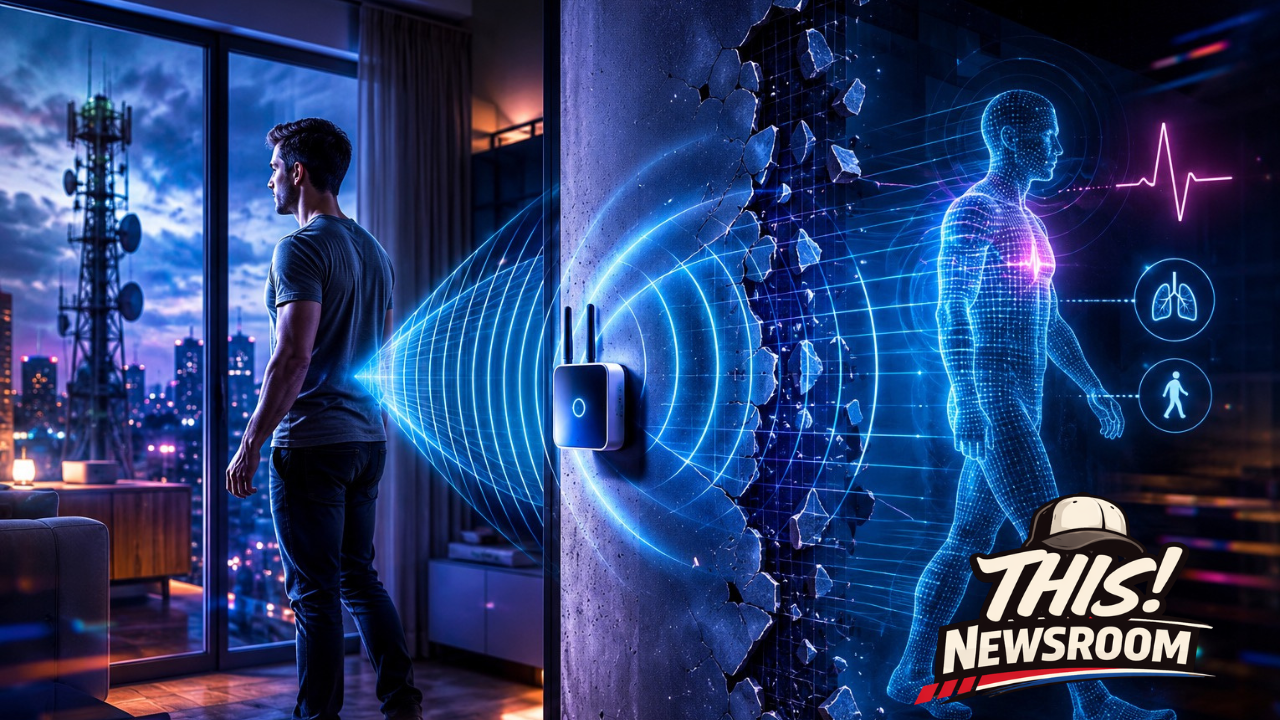
Researchers are exploring how future 6G wireless networks could detect movement, breathing, and human presence through walls using integrated sensing technology.
The next generation of wireless technology may do much more than deliver blazing-fast internet speeds. Researchers in Germany are exploring how 6G networks could function as both communication systems and advanced sensing platforms, potentially detecting movement, breathing, heart rate, and even the presence of people through walls.
While the technology remains years away from widespread deployment, it is already sparking a global debate over privacy, surveillance, and how much information future wireless networks should be allowed to collect.
What Is 6G?
Most people think of each new wireless generation as simply making smartphones faster.
6G aims to be something entirely different.
Instead of only transmitting data, researchers are developing what’s known as Integrated Sensing and Communication (ISAC)—a system where the same radio waves used for internet and phone service can also analyze the surrounding environment.
In other words, future wireless networks could potentially function like a radar system while simultaneously carrying your data.
Can It Really See Through Walls?
The viral claim is partly true—but it needs context.
Researchers are not creating X-ray vision that generates detailed images through concrete walls.
Instead, experimental systems analyze how radio waves bounce off objects and people. By processing those reflections with sophisticated AI algorithms, researchers can infer:
- Human presence
- Movement
- Position within a room
- Walking patterns
- Breathing
- Heart rate under certain conditions
Because radio waves can penetrate some building materials better than visible light, these sensing systems may detect activity even when someone is behind drywall or other non-metal barriers. Performance depends heavily on distance, materials, and environmental conditions, so it’s far from a magical “see-through-wall” capability.
Why Researchers Want This Technology
The potential applications extend far beyond smartphones.
Possible uses include:
- Search-and-rescue operations after earthquakes
- Monitoring elderly people who fall at home
- Smart factories
- Autonomous vehicles
- Building security
- Emergency response
- Health monitoring without wearable devices
Many researchers believe combining sensing and communications could eliminate the need for separate radar or sensor hardware in countless applications.
Privacy Concerns Are Growing
The same technology that could save lives also raises uncomfortable questions.
German privacy regulators have warned that future 6G sensing could collect information considered highly sensitive under European privacy laws.
Among the concerns:
- Tracking people without their knowledge
- Monitoring breathing or heart rate
- Identifying individuals by movement patterns
- Continuous environmental surveillance
- Collection of biometric information
Researchers at Germany’s Barkhausen Institute are already working on privacy protections, including hardware switches that could disable sensing while leaving communications intact and software that alerts users when environmental sensing is active.
Is This Coming Soon?
Not yet.
Although research is accelerating, 6G has not been commercially deployed, and international standards are still being developed. Most industry forecasts place the first large-scale commercial rollout around 2030, meaning today’s research represents what future networks may eventually support—not capabilities already available to consumers.
The Bottom Line
The viral headline claiming that “6G could see through solid walls” isn’t entirely wrong—but it’s more nuanced than it sounds.
Researchers are developing wireless sensing technologies capable of detecting human presence and certain physiological signals by analyzing reflected radio waves, rather than producing detailed visual images through walls. While the technology holds enormous promise for healthcare, public safety, and automation, it also introduces significant privacy challenges that engineers and regulators are trying to address before 6G becomes a reality.
As wireless technology evolves from simply connecting devices to sensing the world around us, the biggest question may no longer be how fast our networks become—but how much they know about us.
About the Author