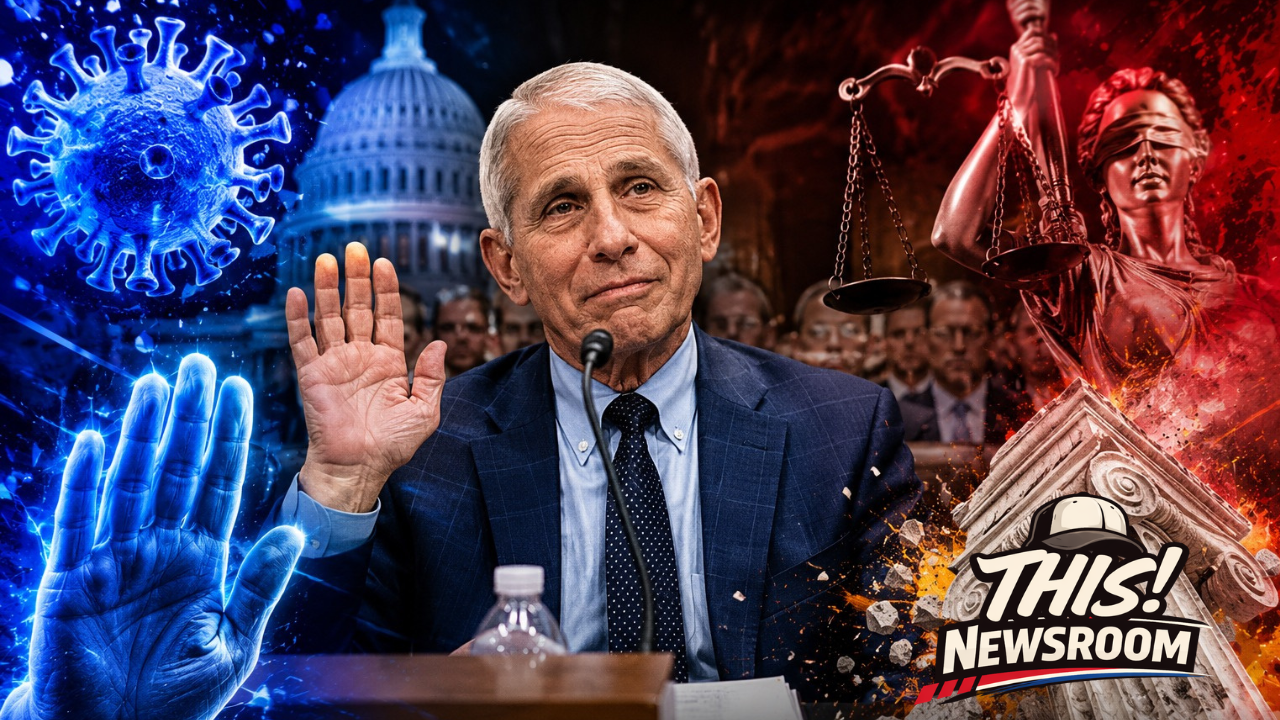
Dr. Fauci Invokes Fifth Amendment During COVID Hearing
Dr. Anthony Fauci repeatedly invoked his Fifth Amendment right Wednesday during a heated Senate hearing focused on the federal government’s handling of COVID-19.
The former director of the National Institute of Allergy and Infectious Diseases declined to answer questions about the pandemic’s origins, research connected to Wuhan, and allegations that he previously misled Congress.
The July 29 hearing quickly became one of the most dramatic moments in the years-long battle over America’s pandemic response.
Fauci Refuses to Answer Senate Questions
Sen. Rand Paul, the Republican chairman of the Senate Homeland Security and Governmental Affairs Committee, subpoenaed Fauci to appear before the panel.
However, Fauci announced during his opening statement that he would not answer the committee’s questions.
He accused Paul of pursuing a personal and politically motivated campaign against him.
Fauci said Paul had repeatedly called for his prosecution and publicly suggested that he should end up “behind bars.” Fauci argued that answering questions could expose him to new legal accusations, including claims that he committed perjury during the hearing.
“Although it pains me to do so,” Fauci said, he would follow his attorneys’ advice and invoke his constitutional right to remain silent.
Fauci then repeated his Fifth Amendment response as senators questioned him throughout the hearing.
Why Was Fauci Called Back to Congress?
The hearing centered on several unresolved controversies from the COVID-19 pandemic.
Republican senators questioned whether U.S. government funding supported risky coronavirus research conducted in China. They also revisited the possibility that COVID-19 escaped from a laboratory in Wuhan.
Paul has long accused Fauci of misleading Congress about whether the National Institutes of Health funded gain-of-function research.
That term generally refers to research that can alter a virus to study how it may spread or cause disease. However, scientists and government officials have disagreed over how the term should apply to specific experiments.
The NIH previously awarded funding to EcoHealth Alliance, a New York-based nonprofit. EcoHealth then worked with researchers at the Wuhan Institute of Virology on studies involving bat coronaviruses.
Fauci has consistently denied that the funded experiments could have produced SARS-CoV-2, the virus responsible for COVID-19.
Fauci’s Pandemic Diaries Become Part of the Fight
Ahead of the hearing, Paul released more than 1,000 pages from Fauci’s personal pandemic-era diary.
Paul claimed the entries showed differences between Fauci’s private thoughts and his public statements.
The documents reportedly included Fauci’s early discussions about the virus’s possible origins, internal White House disputes and his reaction to media coverage during the pandemic.
Some entries also reflected the uncertainty that existed during the early stages of the crisis, when scientists knew very little about the virus.
Paul said the diary raised serious questions about whether Fauci dismissed the laboratory-leak theory too quickly.
Fauci and his attorney rejected those accusations. His legal team called Paul’s claims false and politically motivated.
What About Fauci’s Presidential Pardon?
The hearing also created a complicated constitutional dispute.
Former President Joe Biden issued Fauci a preemptive federal pardon before leaving office in January 2025. Biden said the pardon aimed to protect Fauci from politically motivated prosecution.
Republicans argued that the pardon removed Fauci’s ability to invoke the Fifth Amendment regarding conduct covered by it.
The Fifth Amendment protects people from being forced to provide testimony that could incriminate them. A pardon can remove that risk for specific federal offenses because the government can no longer prosecute the pardoned person for those acts.
However, the pardon would not necessarily protect Fauci from every possible legal threat.
It would not cover new conduct, including any alleged false statements made during Wednesday’s testimony. It also may not cover state-level offenses or actions outside the pardon’s scope.
Paul rejected Fauci’s assertion of privilege and warned that the committee could consider further action over his refusal to testify.
Fauci’s Attorney Removed From Hearing Room
The tension escalated when Fauci’s attorney, David Schertler, attempted to object during Paul’s questioning.
Paul said attorneys could attend the hearing but could not interrupt or testify for the witness.
After repeated disputes, Paul ordered Capitol Police to remove Schertler from the hearing room.
Fauci continued to sit before the committee and declined to answer questions with other members of his legal team nearby.
Republicans Call Fauci’s Silence an Insult
Republican senators sharply criticized Fauci’s decision.
Sen. Josh Hawley asked him basic questions, including the day of the week and the color of his tie. Fauci still invoked the Fifth Amendment.
Hawley argued that Fauci’s refusal showed contempt for Congress and the American people.
Sen. Rick Scott called Fauci a “villain” and accused him of placing his public image above Americans who lost loved ones, businesses and years of normal life during the pandemic.
Other Republicans raised questions about school closures, mask guidance, vaccine policies and the government’s treatment of alternative COVID-19 therapies.
Fauci did not respond to those accusations.
Democrats Accuse Republicans of Staging a Political Spectacle
Democratic senators defended Fauci and attacked the hearing’s purpose.
They described the proceedings as an attempt to turn one scientist into the face of every mistake made during a global emergency.
Sen. Gary Peters argued that hundreds of federal, state and local officials made pandemic decisions. He warned that targeting Fauci could discourage scientists from entering public service.
Other Democrats said Fauci and his family had received threats because of the political anger surrounding COVID-19.
They also argued that the committee should focus on preparing for the next pandemic rather than relitigating the same partisan battles.
Does Pleading the Fifth Mean Fauci Is Guilty?
No.
Invoking the Fifth Amendment is not legally considered an admission of guilt.
The Constitution allows a witness to refuse testimony when truthful answers could create a reasonable risk of criminal prosecution.
However, the political impact can be very different.
Fauci spent years directly answering lawmakers’ questions and defending the federal government’s decisions. His refusal to testify now will likely intensify public suspicion among Americans who already distrust him.
Supporters will see the move as a necessary response to threats of prosecution. Critics will view it as evidence that Fauci has something to hide.
The COVID Debate Is Far From Over
More than six years after the pandemic began, the country still lacks a universally accepted explanation for how the virus first reached humans.
Many scientists continue to believe an animal-to-human transmission remains the most likely explanation.
Several U.S. intelligence agencies have reached different conclusions. Some have leaned toward a laboratory-related incident, often with low or moderate confidence. Others continue to support a natural origin or remain undecided.
No publicly released evidence has established that Fauci created the virus, caused the pandemic or knowingly funded research that produced SARS-CoV-2.
Still, questions about government transparency, research oversight and shifting public-health guidance remain legitimate subjects for investigation.
Wednesday’s hearing did little to settle those questions.
Instead, it delivered another explosive chapter in America’s unresolved COVID-19 reckoning.
Fauci remained silent. Republicans threatened consequences. Democrats cried political persecution.
And the public was once again left watching Washington fight over one of the most divisive events in modern American history.
Sources: U.S. Senate Homeland Security and Governmental Affairs Committee, The Associated Press and live hearing coverage from The Guardian.
About the Author