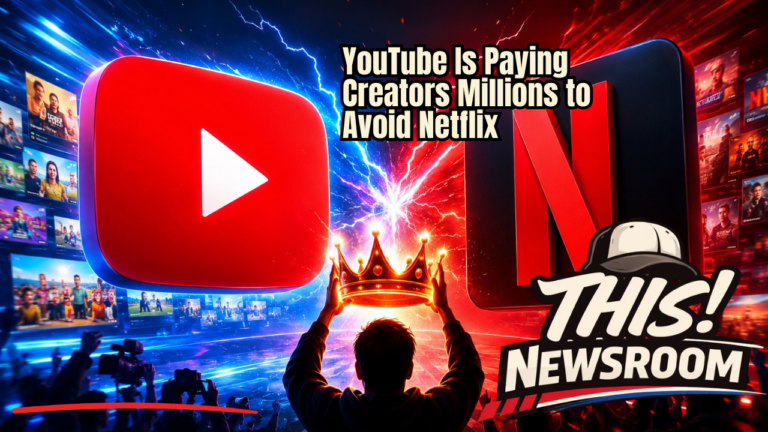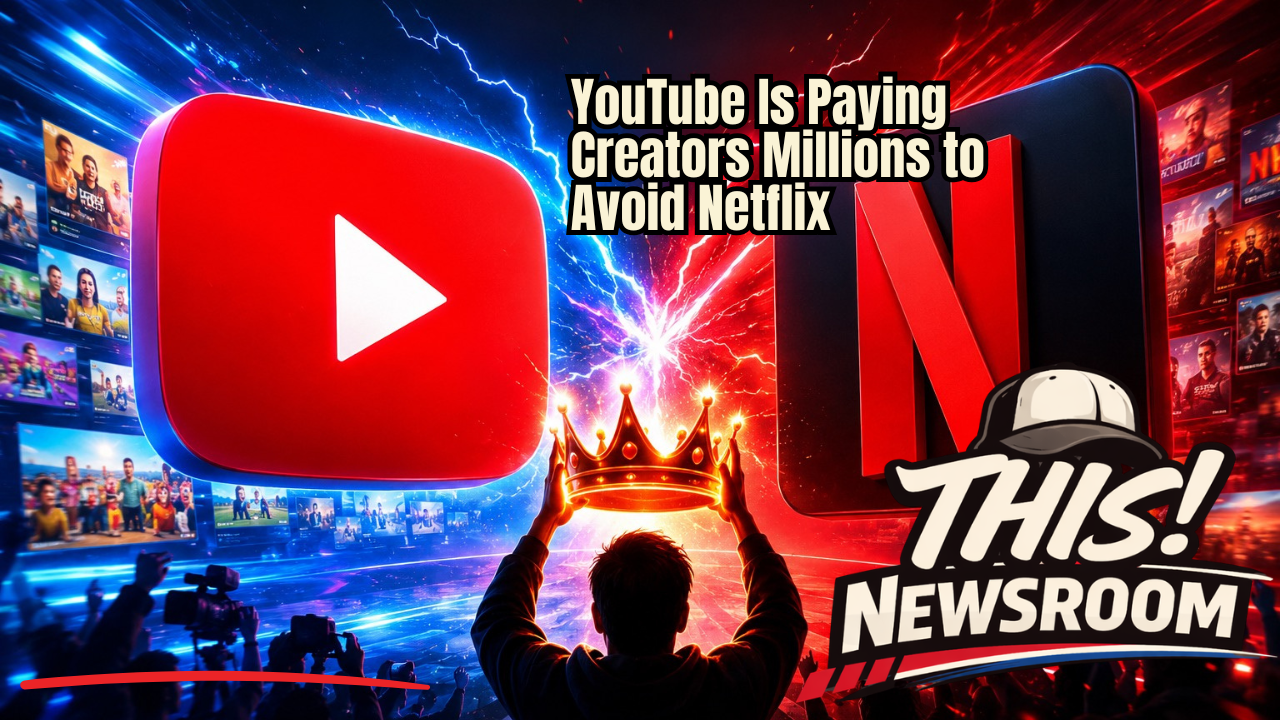
YouTube is reportedly offering major creators incentives to prioritize its platform as competition with Netflix intensifies.
The battle for your screen time is taking a dramatic new turn.
YouTube is reportedly offering some of its biggest creators millions of dollars to keep their programming exclusive to YouTube for a period of time, as Netflix increasingly looks toward the creator economy for its next generation of entertainment.
According to reporting from Bloomberg, YouTube has been discussing deals that could include direct financing for creator-produced shows, upfront payments and access to major brand partnerships. In exchange, participating creators would agree to give YouTube an exclusive window before making the same programming available on competing services such as Netflix.
It represents something much bigger than another fight between two streaming platforms.
Creators are becoming the new television networks.
YouTube Suddenly Has Something Worth Protecting
For years, YouTube’s greatest advantage was its scale.
Creators produced the programming. Audiences showed up. Advertisers paid for access to those audiences, and YouTube shared a portion of the revenue with creators.
That ecosystem turned thousands of independent personalities into legitimate media businesses.
YouTube says its Partner Program now includes more than 3 million creators, highlighting just how enormous the creator economy surrounding the platform has become.
But Netflix appears increasingly interested in the same talent.
Streaming services have been experimenting with creator-led programming, podcasts, reality shows and licensing arrangements because established internet personalities arrive with something traditional Hollywood productions often have to build from scratch:
An audience.
Some creators already command millions — sometimes tens of millions — of followers across YouTube, TikTok, Instagram and other platforms.
That makes them incredibly valuable.
Netflix Is Coming for the Creator Economy
Netflix doesn’t necessarily need to turn YouTubers into traditional Hollywood stars.
It can simply bring successful internet programming onto Netflix.
Recent negotiations across the streaming industry have reportedly included arrangements ranging from licensing existing creator shows to temporarily making new episodes exclusive to streaming platforms. Some creators have resisted those arrangements because they worry that withholding programming from YouTube could damage the audience — and revenue stream — they spent years building there.
That puts YouTube in an unusual position.
It isn’t simply competing with TikTok, Instagram or other social platforms anymore.
It is increasingly competing with Netflix, television networks and Hollywood itself.
And YouTube appears willing to spend money to defend its territory.
Millions Could Be on the Table
The reported offers aren’t necessarily simple checks for exclusivity.
YouTube has discussed several potential incentives, including financing creator programs and giving creators a portion of large advertising and brand deals arranged through the platform. Negotiations remain fluid, and reports indicate YouTube had not yet finalized the deals at the time they were reported.
That distinction matters.
This isn’t YouTube suddenly offering every creator millions of dollars.
The strategy appears focused on some of the platform’s most valuable programming and personalities — exactly the creators Netflix or another streaming service might want.
In other words, YouTube may increasingly treat its biggest creators less like users of a platform and more like premium media properties.
YouTube-First Could Become the New Battleground
One particularly interesting part of the reported strategy involves release windows.
Rather than permanently preventing creators from distributing programming elsewhere, YouTube could pay creators to release their content on YouTube first and keep it exclusive there for an agreed period.
That’s remarkably similar to how Hollywood has operated for decades.
A movie might begin exclusively in theaters before reaching digital rentals, streaming services and television.
Creator content could increasingly follow the same model.
Imagine a major YouTube series launching exclusively on YouTube for several weeks or months before appearing on Netflix.
Suddenly, a YouTube upload isn’t simply “content.”
It’s a premiere.
The Power Dynamic Is Changing
For creators, this competition could be extremely lucrative.
For most of the internet era, creators depended heavily on platforms for distribution.
Now the biggest platforms may increasingly depend on creators for programming.
That’s a major reversal.
A creator with a massive, loyal audience can potentially negotiate among YouTube, Netflix, Spotify and other media companies rather than simply accepting whatever advertising revenue a platform generates.
The most successful creators are effectively becoming independent studios.
They own the personalities.
They own the formats.
They often control production.
And most importantly, they bring their own distribution and audience.
That combination is extraordinarily valuable.
YouTube’s CEO Had Already Called the Platform Their “Home”
The reported strategy is especially interesting considering comments YouTube CEO Neal Mohan made earlier this year.
Speaking about competition from streaming platforms, Mohan argued that leading YouTubers recognize YouTube as their long-term “home,” even when they pursue opportunities elsewhere.
Now YouTube may be putting serious money behind that idea.
Because loyalty becomes considerably easier to maintain when millions of dollars are involved.
This Could Trigger a Creator Bidding War
If Netflix continues pursuing major YouTube personalities and YouTube responds with exclusivity incentives, other platforms could eventually feel pressure to participate.
That creates the possibility of something resembling professional sports free agency.
A creator’s next distribution agreement could become a multimillion-dollar negotiation.
Netflix wants the show.
YouTube wants the audience to stay.
Advertisers want access to both.
Creators suddenly have leverage.
And unlike traditional television stars, many top creators also own their brands and maintain direct relationships with their viewers.
That’s why the creator economy is becoming such an important battlefield.
But Exclusivity Comes With Risk
The biggest check isn’t automatically the best deal.
Creators have spent years learning that their relationship with their audience can be more valuable than any individual platform agreement.
Leaving YouTube — or withholding content from it for too long — could mean sacrificing discovery, advertising revenue, subscriber growth and the community surrounding a channel.
Netflix offers enormous global reach.
YouTube offers something different: an open platform where audiences can continuously discover, share, comment on and interact with creators.
That difference explains why some creators may ultimately prefer hybrid arrangements rather than complete exclusivity.
The winning model could become YouTube first, streaming later.
The Line Between YouTube and Television Is Disappearing
For years, people talked about YouTube as an alternative to television.
That distinction increasingly makes little sense.
YouTube creators produce documentaries, talk shows, competitions, sports programming, podcasts, children’s entertainment and massive reality productions.
Meanwhile, Netflix and other traditional streaming companies are pursuing the people who built those formats online.
Now YouTube is reportedly prepared to spend millions to keep them.
The streaming war isn’t just Netflix versus Disney or another Hollywood studio anymore.
The next major battle may be over who controls the creators themselves.
And if YouTube and Netflix start bidding against one another for the biggest personalities on the internet, creators could become the biggest winners of all.
THIS NEWSROOM | This with Krish
Faith. Family. Freedom. At the center of truth.
About the Author