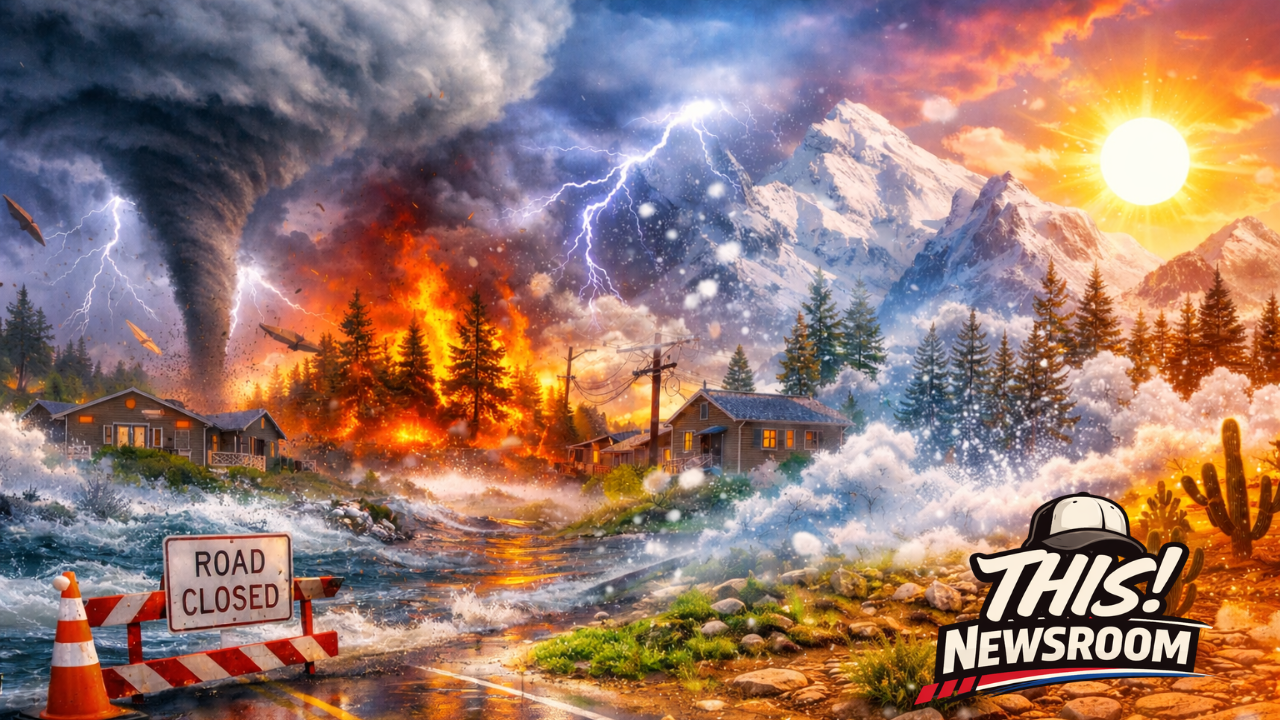
A powerful weather pattern is sweeping across the United States and delivering nearly every type of extreme condition at once. Tornado outbreaks are forming across the Midwest, heavy flooding rains are hitting the South, late-season snow is falling in the Rockies, and early-season heat is building across parts of the Southwest.
According to the National Weather Service and the National Oceanic and Atmospheric Administration, a strong cold front colliding with warm Gulf moisture is driving this chaotic pattern. As a result, the atmosphere is producing severe thunderstorms, tornadoes, flash flooding, heavy snow, and sharp temperature swings across the country.
Below is a state-by-state breakdown of the severe weather impacting the United States.
State-by-State Severe Weather Breakdown
Alabama
Currently, central and northern Alabama are seeing heavy thunderstorms and localized flooding. In addition, meteorologists warn that tornado watches could develop as Gulf moisture continues feeding storm systems.
Alaska
Across southern Alaska, heavy snowfall and strong winds are creating dangerous travel conditions. Meanwhile, coastal communities are dealing with rain and melting snow that could lead to minor flooding.
Arizona
Temperatures across Arizona are climbing rapidly. In fact, Phoenix and nearby desert regions are approaching the upper 90s, which is significantly warmer than seasonal averages.
Arkansas
Arkansas remains directly in the path of severe storms. Consequently, residents are reporting large hail, damaging winds, and an increasing tornado risk.
California
Northern California continues to experience steady rainfall and mountain snow. However, southern parts of the state remain dry and warmer than usual.
Colorado
High elevations across Colorado are receiving heavy snow as a late-season winter system moves through the Rockies. Therefore, travel disruptions are possible along mountain passes.
Connecticut
A sharp cold front has pushed into Connecticut. As a result, the state is experiencing cold rain, gusty winds, and falling temperatures.
Delaware
Heavy rain bands are moving across Delaware. Additionally, strong coastal winds may cause minor flooding in low-lying areas.
Florida
Florida remains warm and humid ahead of the advancing cold front. However, northern parts of the state could soon see strong thunderstorms and heavy rainfall.
Georgia
Severe thunderstorms are pushing across northern Georgia. Because of this, meteorologists are monitoring the risk of flash flooding.
Hawaii
Weather conditions across Hawaii remain relatively stable. Nevertheless, tropical moisture could still trigger brief but intense rain showers.
Idaho
Across Idaho, colder temperatures continue to dominate. In higher elevations, snow showers remain possible.
Illinois
Illinois has experienced some of the strongest storms in the Midwest. Earlier today, tornado warnings and damaging winds affected several central counties.
Indiana
Powerful thunderstorms swept across Indiana overnight. Consequently, strong winds and lightning caused scattered power outages.
Iowa
Iowa remains under active tornado watches. Meanwhile, powerful storm cells continue to move through the region.
Kansas
Kansas sits near the center of this volatile weather pattern. Therefore, the state faces a heightened risk of tornadoes and severe thunderstorms.
Kentucky
Kentucky is experiencing widespread heavy rain. As storm systems move eastward, flooding concerns are growing.
Louisiana
Along the Gulf Coast, Louisiana is dealing with intense rainfall and thunderstorms. Flooding risks are increasing in several communities.
Maine
Maine is seeing colder conditions as the storm system pushes northeast. In northern areas, rain may mix with snow.
Maryland
Storm bands moving up the East Coast are bringing heavy rain and gusty winds across Maryland.
Massachusetts
Massachusetts continues to experience cold rain and strong coastal winds as the front advances.
Michigan
Michigan saw thunderstorms earlier in the week. However, colder air arriving behind the system could bring snow showers to northern areas.
Minnesota
Northern Minnesota is experiencing another burst of snow and icy conditions due to a late-season cold surge.
Mississippi
Mississippi is facing repeated rounds of severe thunderstorms. Consequently, flash flooding remains a growing concern.
Missouri
Missouri continues to sit in a dangerous storm corridor. Meteorologists warn that tornadoes and large hail remain possible.
Montana
Across Montana, heavy snow and strong winds are impacting mountainous regions and travel routes.
Nebraska
Severe thunderstorms have already moved through Nebraska. Tornado warnings have also been issued across eastern counties.
Nevada
Nevada remains mostly dry and warm. Still, mountain areas continue to experience cooler temperatures.
New Hampshire
Cold rain and gusty winds have spread across New Hampshire as the storm system expands through the Northeast.
New Jersey
New Jersey is experiencing heavy rain and strong coastal winds. Consequently, minor flooding is possible in vulnerable areas.
New Mexico
Warm temperatures and dry air dominate across New Mexico. Because of these conditions, wildfire concerns are rising.
New York
Storms moving through New York are producing rain, wind, and falling temperatures.
North Carolina
Thunderstorms are sweeping across central North Carolina. In some locations, heavy rain could cause flash flooding.
North Dakota
Cold air has returned to North Dakota. As a result, parts of the state are seeing snow showers once again.
Ohio
Ohio experienced strong thunderstorms overnight. Localized flooding and high winds have been reported.
Oklahoma
Oklahoma remains in one of the highest-risk zones for tornado development as severe storms strengthen.
Oregon
Western Oregon continues to see steady rainfall. At the same time, mountain areas are receiving snow.
Pennsylvania
Rain and wind have spread across Pennsylvania as the storm system moves east.
Rhode Island
Wind-driven rain and cooler temperatures are affecting Rhode Island.
South Carolina
Heavy thunderstorms are crossing South Carolina. Because of persistent rainfall, flooding risks remain elevated.
South Dakota
South Dakota is seeing colder temperatures and snowfall returning to northern regions.
Tennessee
Tennessee is dealing with strong storms and heavy rainfall. Consequently, flash flooding is possible in several counties.
Texas
Texas is experiencing major weather contrasts. Northern areas face severe thunderstorms and tornado threats. Meanwhile, southern regions remain hot and humid.
Utah
Utah’s mountain regions continue receiving snowfall. However, lower elevations remain dry and cool.
Vermont
Cold rain and gusty winds dominate weather conditions across Vermont.
Virginia
Storms pushing through Virginia are producing heavy rain and localized flooding.
Washington
Washington continues to see widespread rainfall and snow across the Cascade Mountains.
West Virginia
Heavy rain and strong winds are impacting West Virginia. As a result, flooding concerns are increasing.
Wisconsin
Wisconsin experienced thunderstorms earlier this week. Now, colder temperatures are settling in.
Wyoming
Across Wyoming, strong winds and snowfall are creating hazardous travel conditions in mountain areas.
Why This Weather Pattern Is So Dangerous
Several atmospheric forces are combining to create this extreme pattern.
First, a powerful Arctic cold front is plunging southward. At the same time, warm and moisture-rich air from the Gulf of Mexico is moving north. Meanwhile, a strong jet stream pattern is intensifying storm development across the Plains and Midwest.
When these ingredients combine, the atmosphere becomes extremely unstable. Consequently, the environment becomes capable of producing tornadoes, severe thunderstorms, heavy snow, and flash flooding simultaneously.
According to the National Weather Service, spring is historically the most volatile weather season in the United States because of these sharp temperature contrasts.
What Comes Next
Weather models suggest the system will continue moving east during the coming days. However, additional storms could redevelop across the Plains as new cold fronts emerge.
Because of this, meteorologists warn residents across the Midwest, South, and Southeast to remain alert for:
- Tornado outbreaks
- Flash flooding
- Severe thunderstorms
- Rapid temperature swings
For real-time warnings and forecasts, visit:
Final Thoughts
This massive weather system highlights how dynamic spring weather can become across the United States. Blizzards are hitting the Rockies, tornadoes are forming across the Plains, and extreme heat is building in the Southwest.
Because these competing air masses continue colliding, experts expect volatile weather patterns to remain possible throughout the coming weeks.
For now, staying informed and weather-aware remains the best defense as these powerful systems continue moving across the country.
About the Author