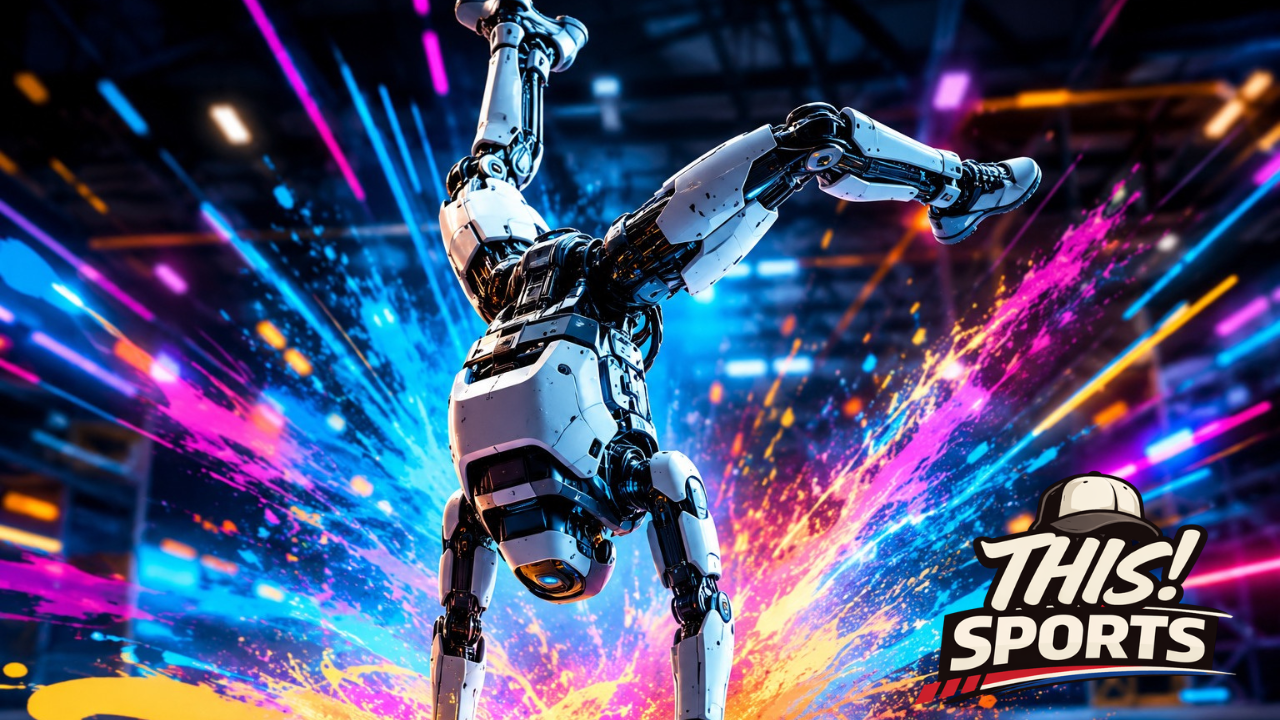
Hyundai Atlas Robot Performs Handstand and Gymnastics in Viral Boston Dynamics Video
The future of robotics just took another jaw-dropping leap forward.
In newly released footage from Boston Dynamics, the humanoid robot Atlas stunned viewers by performing advanced gymnastics movements including a handstand, “L-sit,” balance transitions, and complex full-body mobility exercises that look more like Olympic training than factory automation.
And yes — this is the same Atlas robot that previously wowed the world with parkour, backflips, and obstacle courses.
Only now, things have become significantly more advanced.
Atlas Is No Longer Just a Viral Robot
The newest version of Atlas is part of Hyundai’s rapidly expanding robotics ambitions after the automaker acquired a controlling stake in Boston Dynamics in 2021. The all-electric humanoid robot is being positioned as a future industrial workforce assistant capable of handling difficult, repetitive, or dangerous tasks inside factories and warehouses.
However, the latest demonstration suggests Atlas is evolving far beyond simple automation.
The footage shows the robot smoothly transitioning into a handstand before shifting into an “L-sit,” a notoriously difficult gymnastics move requiring immense balance, stability, and core control. At one point, Atlas supports its entire body weight on just its hands while rotating its legs through complex positions with almost eerie fluidity.
Even more impressive?
Many of the movements go beyond the limitations of the human skeletal system itself.
Why This Matters More Than You Think
For years, humanoid robots struggled with the basics:
- Walking naturally
- Maintaining balance
- Recovering from slips
- Coordinating arms and legs simultaneously
Now, Atlas is executing dynamic movements that require split-second adjustments, force calculations, joint coordination, and real-time environmental awareness.
That is a massive leap in robotics engineering.
According to reports surrounding the release, Boston Dynamics has been leveraging reinforcement learning and whole-body control systems that allow Atlas to learn movements through simulation before performing them in the real world.
In simple terms:
The robot practices digitally thousands — or even millions — of times before attempting the move physically.
The result is movement that looks shockingly smooth and almost human.
Sometimes even superhuman.
Hyundai’s Bigger Plan
Hyundai isn’t developing Atlas just for YouTube views.
The company has openly stated that Atlas is expected to begin working inside manufacturing facilities in the coming years, particularly within Hyundai’s massive EV and automotive production operations.
Potential tasks include:
- Parts sequencing
- Heavy lifting
- Dangerous repetitive labor
- Warehouse logistics
- Precision assembly support
Boston Dynamics executives have repeatedly emphasized that the goal is to augment workers, not replace them entirely. Still, many experts believe humanoid robots could fundamentally reshape labor markets over the next decade.
And after watching Atlas casually perform gymnastics moves most humans could never do, it’s not hard to understand why some people are nervous.
The Internet Reaction: Equal Parts Amazed and Terrified
Social media immediately exploded after the footage dropped.
Some users called Atlas “the coolest thing ever created.”
Others joked that humanity is “one firmware update away from sci-fi movies becoming documentaries.”
Meanwhile, robotics researchers praised the demonstration as one of the clearest signs yet that humanoid systems are rapidly approaching real-world deployment readiness.
Reddit users specifically pointed out how difficult some of the showcased gymnastics maneuvers actually are for trained athletes.
That’s what makes this moment feel different.
This isn’t just another robot walking carefully across a stage.
This is a machine demonstrating athletic body control, balance, adaptability, and spatial awareness at levels that were nearly unimaginable just a few years ago.
The Bigger AI and Robotics Race Is Accelerating
Hyundai and Boston Dynamics are far from alone.
Companies including Tesla, Figure AI, Apptronik, NVIDIA-backed robotics firms, and multiple Chinese tech giants are all racing to develop commercially viable humanoid robots.
The global robotics market is projected to explode over the next decade as advances in:
- Artificial intelligence
- Sensors
- battery systems
- machine learning
- motion control
continue accelerating at breakneck speed.
However, Boston Dynamics still holds one major advantage:
They’ve spent decades obsessively perfecting movement.
And Atlas may currently be the clearest example of what happens when elite AI systems meet world-class robotics engineering.
Final Thoughts
Watching Atlas perform a handstand might feel like a fun viral tech moment.
In reality, it may be a preview of the next industrial revolution.
Because once robots can move dynamically, recover instantly, manipulate objects fluidly, and learn tasks autonomously, the barrier between “experimental machine” and “real workforce deployment” starts disappearing very quickly.
For now, Atlas is still a controlled prototype.
But after this latest demonstration, one thing is obvious:
Humanoid robots are no longer science fiction.
They’re already here.
About the Author