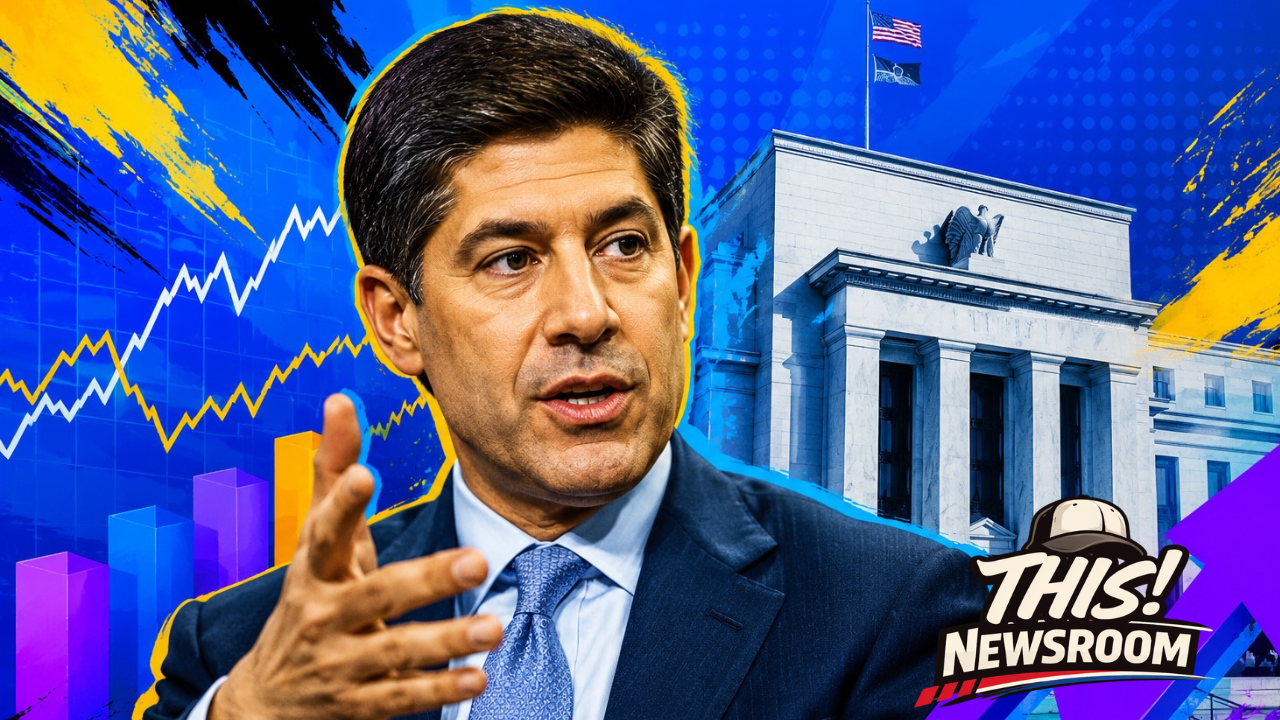
Former Fed Governor Kevin Warsh is challenging the central bank's strategy on inflation and interest rates, fueling a growing debate about the future of the U.S. economy.
The debate over the future of U.S. monetary policy just got a lot more interesting.
Former Federal Reserve Governor Kevin Warsh is making headlines after delivering a sharp critique of how the Federal Reserve has handled inflation, interest rates, and economic growth in recent years. His comments have reignited discussions about whether the central bank needs a major course correction as Americans continue to grapple with higher prices, elevated borrowing costs, and economic uncertainty.
Who Is Kevin Warsh?
Kevin Warsh served as a member of the Federal Reserve Board of Governors from 2006 to 2011, placing him at the center of decision-making during the 2008 financial crisis. Since leaving the Fed, Warsh has remained an influential voice in economic policy circles and is frequently mentioned as a potential candidate for future leadership roles within the central bank.
His views often attract attention because he combines insider knowledge of the Federal Reserve with a willingness to openly challenge its current direction.
A Criticism of the Fed’s Recent Strategy
Warsh has argued that the Federal Reserve’s response to inflation was too slow and that policymakers underestimated how persistent price pressures would become following the pandemic.
While the Fed eventually embarked on one of the most aggressive rate-hiking campaigns in decades, Warsh believes the institution damaged its credibility by initially describing inflation as “transitory.” According to his analysis, that misjudgment allowed inflation expectations to become more entrenched across the economy.
He has also expressed concerns that the central bank has expanded its role beyond its traditional responsibilities, arguing that the Fed should focus more narrowly on maintaining price stability and supporting long-term economic growth.
Why This Matters Now
The timing of Warsh’s comments is significant.
The Federal Reserve is navigating a difficult balancing act between controlling inflation and avoiding an economic slowdown. Although inflation has cooled from its peak levels, policymakers remain cautious about cutting rates too quickly.
Warsh’s remarks add pressure to an already intense debate among economists, investors, and political leaders about the future path of interest rates.
Many Americans continue to feel the impact of higher mortgage rates, increased credit card costs, and elevated prices for everyday goods. As a result, discussions about Federal Reserve policy have become increasingly important beyond Wall Street.
Potential Influence on Future Policy
While Warsh does not currently hold a position within the Federal Reserve, his influence remains substantial.
Market participants often pay close attention to comments from former Fed officials because they can shape public debate and offer clues about alternative policy approaches. If economic conditions worsen or inflation resurges, some of Warsh’s recommendations could gain additional support among policymakers.
His perspective also carries weight because discussions about future Federal Reserve leadership continue to circulate in Washington.
The Bigger Picture
At its core, Warsh’s criticism reflects a broader question facing central banks around the world: How should policymakers respond when inflation, economic growth, and financial stability goals appear to conflict?
Supporters of the Federal Reserve’s actions argue that officials successfully prevented a deeper recession and ultimately brought inflation down significantly. Critics, including Warsh, counter that earlier intervention could have reduced the economic pain felt by consumers and businesses.
As the Fed evaluates its next moves, voices like Kevin Warsh’s ensure that the debate over America’s economic future remains far from settled.
For investors, business owners, and everyday consumers, the conversation is more than academic. The decisions made by the Federal Reserve in the months ahead will influence borrowing costs, investment markets, job growth, and the overall health of the U.S. economy for years to come.
About the Author