Blue Origin Rocket Explosion During Launch Pad Test Sends Shockwaves Through Space Industry
Space exploration is never boring, and sometimes it is downright explosive.
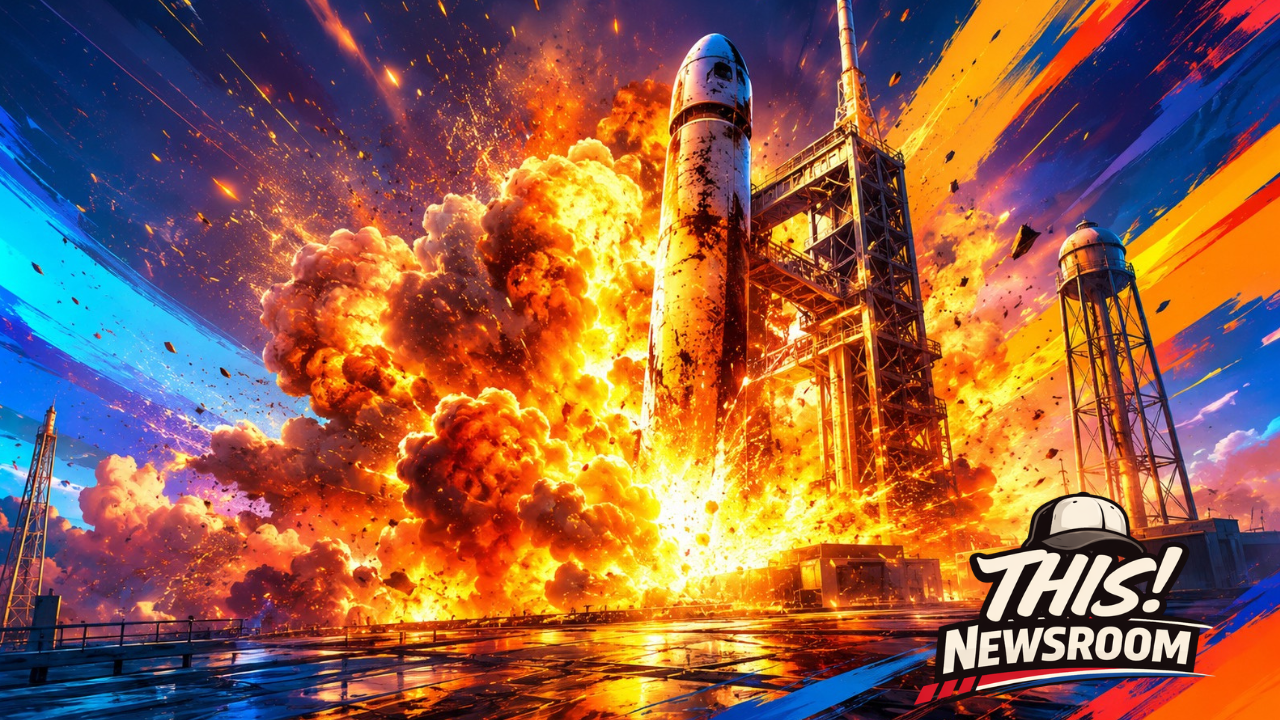
A Blue Origin rocket erupted into a massive fireball during an engine-firing test on a launch pad, creating dramatic scenes that quickly spread across social media and news outlets. The incident involved a vehicle operated by Jeff Bezos’ aerospace company and occurred during what was supposed to be a routine ground test.
Videos of the explosion show an enormous burst of flames lighting up the night sky as debris and sparks filled the air. The images immediately sparked comparisons to some of the most famous rocket failures in modern spaceflight history.
What Happened?
According to reports, the rocket was undergoing a pre-launch engine test when something went wrong. These tests are designed to verify systems before a vehicle ever leaves the ground. Engineers intentionally fire engines while the rocket remains secured to the pad.
Instead of a successful test, the vehicle experienced a catastrophic failure that resulted in a powerful explosion.
Initial reports indicate the incident happened before liftoff, meaning the rocket never left the launch pad. Emergency protocols were activated, and there have been no immediate reports of injuries.
Blue Origin has not yet released a full explanation of what caused the failure, but engineers are expected to conduct a detailed investigation.
Why Ground Tests Matter
Rocket launches receive all the attention, but some of the most critical moments happen long before countdown reaches zero.
Engine tests help engineers identify problems while the vehicle is still on the ground. While costly and highly visible, failures during testing can prevent even more dangerous incidents during an actual launch.
The aerospace industry often treats these setbacks as part of the development process.
As the old saying in rocketry goes: “Hardware teaches lessons that simulations never will.”
Of course, that lesson becomes significantly more expensive when the hardware turns into a giant fireball.
Blue Origin’s High-Stakes Competition
The timing is notable because Blue Origin has been aggressively working to expand its presence in the commercial space race.
The company faces intense competition from:
- SpaceX
- Rocket Lab
- United Launch Alliance
- Firefly Aerospace
While SpaceX has become known for rapidly testing and occasionally destroying prototypes in pursuit of innovation, every major launch provider has experienced setbacks at some point.
Rocket development remains one of the most difficult engineering challenges on Earth.
A vehicle must withstand extreme temperatures, violent vibrations, enormous fuel pressures, and the unforgiving realities of physics. Even a minor issue can quickly escalate into a mission-ending event.
Social Media Reacts
The explosion footage immediately generated reactions across social media platforms.
Some users expressed concern about the safety implications, while others pointed out that testing failures are a normal part of rocket development.
A few commenters joked that the event looked like a Hollywood disaster movie rather than a routine aerospace test.
One thing everyone seemed to agree on: the footage was impossible to ignore.
What Happens Next?
Blue Origin engineers will likely spend weeks or months analyzing telemetry, hardware damage, and test data to determine exactly what triggered the explosion.
Investigators will focus on several key areas:
- Engine performance
- Fuel system integrity
- Software controls
- Ground support equipment
- Structural components
Depending on the findings, the company could implement design changes before future tests resume.
The incident may delay certain development timelines, but industry experts note that spaceflight programs regularly encounter setbacks before achieving success.
The Bigger Picture
Rocket explosions make headlines because they are dramatic, expensive, and highly visible. However, they also highlight the reality of modern space exploration.
Every breakthrough in aerospace history has been built on thousands of tests, countless failures, and engineers willing to learn from both.
For Blue Origin, the latest setback is certainly frustrating. For the broader space industry, it serves as another reminder that reaching space remains one of humanity’s toughest challenges.
And while nobody wants to see a rocket explode, engineers would much rather discover a problem on the launch pad than several miles above Earth.
One thing is certain: investigators will be digging through every second of data from this test, trying to understand why a routine engine firing suddenly became one of the most talked-about explosions in the space industry this year.
About the Author