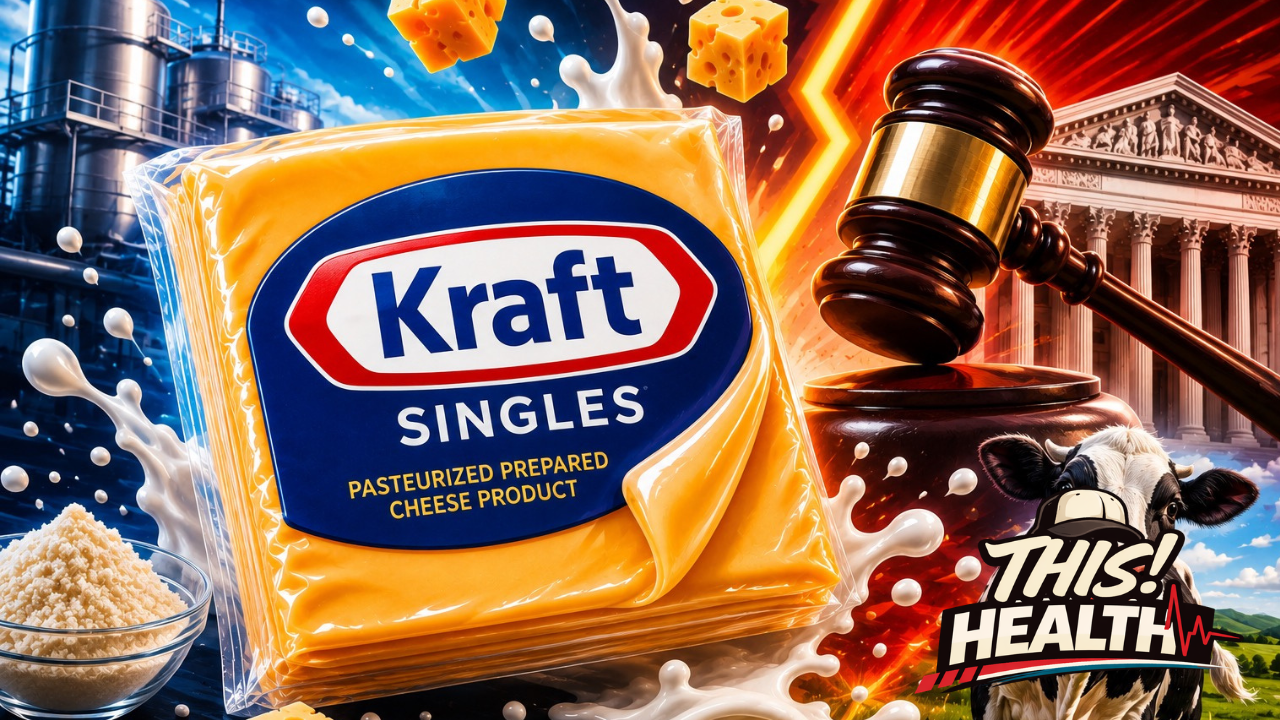
FDA labeling rules require Kraft Singles to use the term "Pasteurized Prepared Cheese Product" instead of simply "cheese."
A viral social media post is making the rounds claiming that Kraft Singles are legally banned from being called “cheese.” While the headline grabs attention, the reality is a little more nuanced—and it comes down to how the FDA defines cheese.
If you’ve ever looked closely at a package of Kraft Singles, you may have noticed it doesn’t simply say “American Cheese.” Instead, you’ll typically find wording like “Pasteurized Prepared Cheese Product.” That’s not just clever marketing—it reflects U.S. food labeling regulations.
Why Isn’t It Called Cheese?
The U.S. Food and Drug Administration (FDA) has standards of identity for many foods, including cheese. These standards define what ingredients and production methods manufacturers must use before they can legally market a product under a specific name.
Traditional American cheese is made primarily from cheese, along with a limited number of approved ingredients. Products that include additional dairy proteins, emulsifiers, stabilizers, or other ingredients beyond those standards must use a different label.
That doesn’t mean the product contains no cheese. Kraft Singles are made with cheese, but because of their formulation, they fall into a different regulatory category.
The 2002 Label Change
One part of the viral claim is based on a real event.
In 2002, Kraft changed the labeling on certain Kraft Singles products after the FDA determined the formula no longer met the requirements for the label “Pasteurized Process Cheese Food.” The company had modified the recipe by incorporating milk protein concentrate, an ingredient that wasn’t permitted under that particular standard of identity at the time.
As a result, the label changed to “Pasteurized Prepared Cheese Product.”
The change reflected compliance with FDA regulations—not a safety concern.
Does Kraft Singles Contain Real Cheese?
Yes.
Despite the internet claims, Kraft Singles are made using real cheese as one of the primary ingredients. They also include additional dairy ingredients and emulsifying salts that help create their signature texture, smooth melt, and longer shelf life.
Common ingredients include:
- Cheese
- Milk protein concentrate
- Whey
- Milkfat
- Emulsifying salts
- Preservatives and other approved ingredients
These added ingredients are what move the product into a different labeling category.
Is It Less Healthy?
That depends on your priorities.
Traditional natural cheeses typically contain fewer ingredients and undergo less processing. Kraft Singles, however, are designed for consistency, meltability, convenience, and longer storage.
Some consumers prefer natural cheddar, Swiss, or mozzarella because they contain simpler ingredient lists. Others appreciate processed cheese products for sandwiches, burgers, and recipes where a smooth melt is desired.
Nutrition experts generally recommend focusing on your overall diet rather than judging a food solely by whether it’s considered processed.
The Bottom Line
The viral claim contains a kernel of truth—but leaves out important context.
Kraft Singles aren’t “banned” because they’re fake cheese. Instead, FDA labeling rules require the product to use a different name because its recipe doesn’t meet the legal definition for certain standardized cheese products.
It’s a labeling issue rooted in food regulations—not evidence that the slices contain no real cheese.
As always, the ingredient list on the package provides the clearest picture of what’s actually inside.
Whether you choose traditional cheese or processed cheese products ultimately comes down to personal preference, taste, nutrition goals, and how you plan to use them.
About the Author