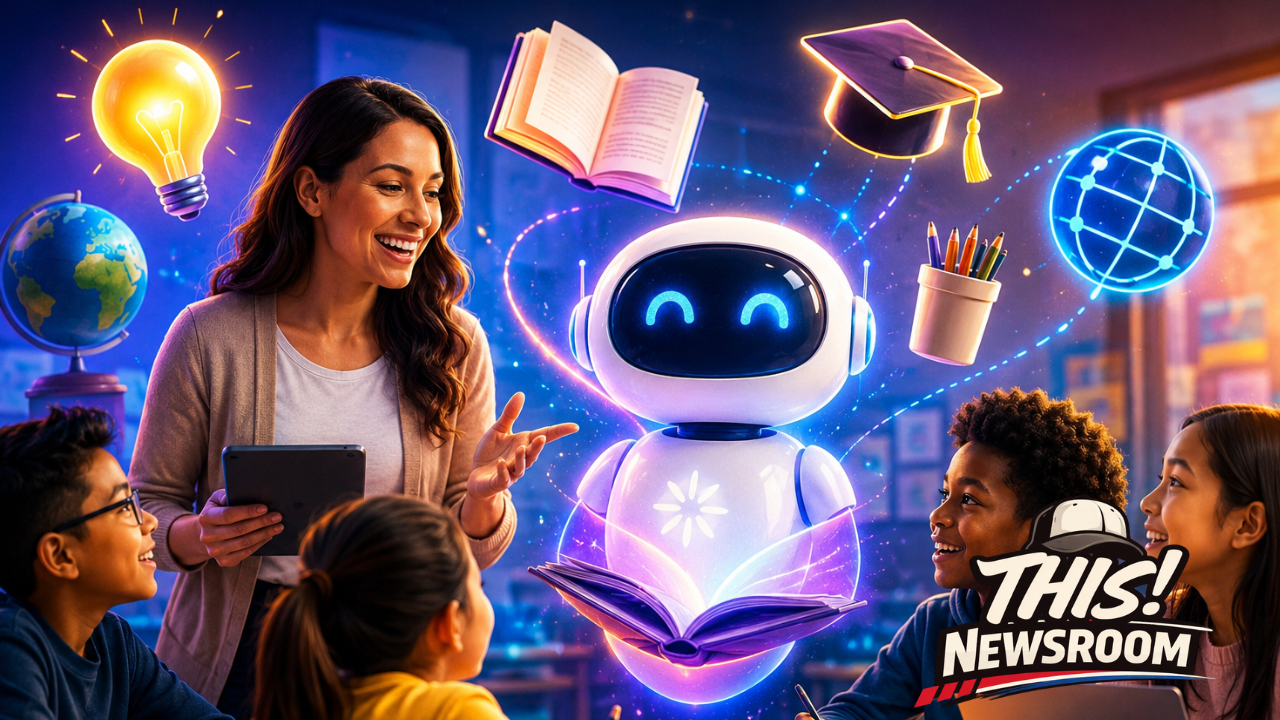
Anthropic Launches Claude for Teachers With Free AI Access
Artificial intelligence is rapidly becoming a staple in classrooms, and Anthropic is making a major push into education. The AI company behind Claude has announced Claude for Teachers, a new initiative that gives verified K-12 educators across the United States free premium access to its AI platform, along with education-focused tools designed specifically for teaching and learning.
The announcement positions Anthropic as one of the biggest players competing for the education market, where AI is increasingly being used to streamline lesson planning, personalize instruction, and reduce administrative workload.
What Is Claude for Teachers?
The new program provides eligible U.S. K-12 teachers with complimentary premium access to Claude, Anthropic’s flagship AI assistant.
Unlike standard AI chatbots, Claude for Teachers has been customized with features built specifically for educators, including:
- Lesson planning assistance
- Classroom activity creation
- Rubric and assessment generation
- Writing feedback for students
- Educational brainstorming
- Curriculum development support
- Coding assistance through Claude Code
Perhaps most notably, Anthropic says the platform includes Learning Commons, a library of educational resources aligned with academic standards from all 50 U.S. states. That means teachers can generate classroom materials that better match the requirements where they teach rather than relying on generic content.
Why This Matters
Teachers have increasingly embraced AI tools over the past two years, but adoption has often come with concerns about cost, privacy, and accuracy.
By removing the subscription fee for educators, Anthropic hopes to eliminate one of the biggest barriers while encouraging responsible classroom use.
For many teachers, AI has become less about replacing instruction and more about eliminating repetitive work.
Instead of spending hours creating worksheets, quizzes, or differentiated lesson plans, educators can generate first drafts in seconds and customize them for their students.
That frees up more time for what matters most—actually teaching.
Claude Code Comes to Education
Another significant addition is Claude Code, Anthropic’s AI-powered coding assistant.
Computer science teachers can use it to:
- Demonstrate programming concepts
- Help students debug code
- Explain complex programming logic
- Create coding exercises
- Build interactive classroom projects
As coding and computer science become more integrated into K-12 education, AI-assisted programming tools could become increasingly valuable inside the classroom.
AI in Schools Continues to Grow
Anthropic is entering a competitive landscape.
OpenAI, Google, Microsoft, and several education-focused startups have all introduced AI tools aimed at schools and universities.
The difference is that Anthropic is specifically targeting K-12 educators nationwide with free premium access rather than limiting its focus to higher education or enterprise customers.
The move reflects a broader trend: AI is transitioning from an experimental technology into an everyday classroom tool.
Teachers are already using AI to:
- Draft parent communications
- Create classroom presentations
- Differentiate assignments
- Generate practice tests
- Translate materials into multiple languages
- Support students with individualized learning needs
The Human Teacher Still Matters
Despite rapid advances in artificial intelligence, Anthropic emphasizes that Claude is designed to assist educators—not replace them.
AI can generate ideas, summarize information, and automate repetitive tasks, but effective teaching still depends on human judgment, creativity, empathy, and classroom relationships.
The goal is to give teachers another tool in their toolkit, allowing them to spend less time on paperwork and more time helping students succeed.
Looking Ahead
The launch of Claude for Teachers represents another milestone in the race to integrate AI into education.
As schools continue to explore how artificial intelligence fits into the classroom, programs like this could accelerate adoption by making advanced AI accessible to educators regardless of district budgets.
Whether teachers use Claude to build lesson plans, explain difficult concepts, or save hours of preparation time each week, one thing is becoming increasingly clear: AI is no longer the future of education—it is quickly becoming part of its present.
Have you used AI in the classroom? Let us know whether tools like Claude help teachers focus more on students—or if you think schools should be more cautious before embracing AI at scale.
About the Author