Meta, Claude AI, Anthropic, Meta Ads, Facebook Ads, Instagram Ads, AI Marketing, Digital Advertising, Artificial Intelligence, Advertising Technology, Social Media Marketing, AI Automation, Marketing Trends, Tech News, Business News
The AI wars just took another sharp turn.
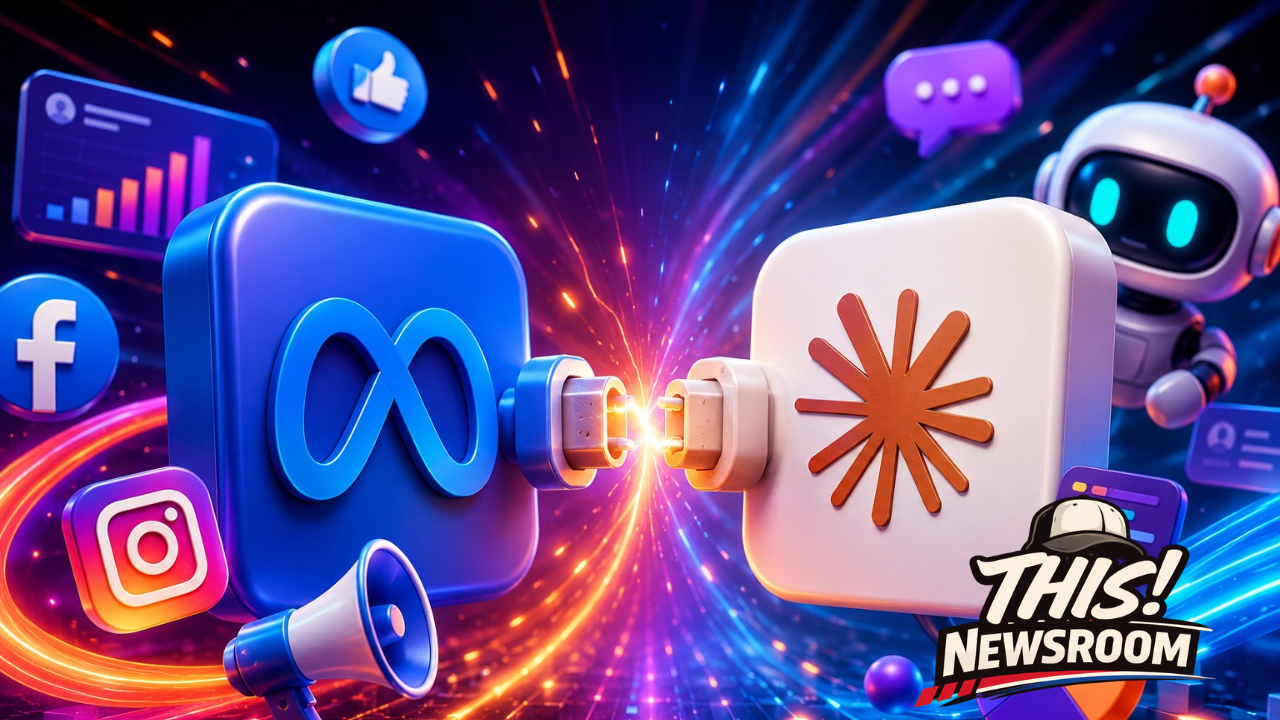
Meta Platforms has officially connected Meta Ads to Anthropic’s Claude AI platform, opening the door for advertisers, marketers, and businesses to use Claude directly inside Meta’s advertising ecosystem.
In plain English, businesses can now use Claude to help create, optimize, analyze, and potentially automate advertising campaigns across Facebook and Instagram using Meta’s ad infrastructure.
If that sounds like the beginning of something much bigger, that’s because it probably is.
AI Is No Longer Helping Marketing. It Is Marketing.
For years, AI tools sat on the sidelines helping marketers brainstorm captions, clean up emails, or generate ad copy that often felt generic. However, that era is fading quickly.
Meta connecting its massive advertising machine to Claude signals something much more important: major tech companies are building fully AI-powered advertising operating systems.
This is no longer:
- “Write me 5 Facebook headlines.”
Instead, it is quickly becoming:
- “Launch, test, optimize, retarget, analyze, and scale my campaign automatically.”
Clearly, that is an entirely different universe.
Why Claude Matters Here
Unlike some AI systems that focus heavily on speed or flashy outputs, Claude has built a reputation for:
- Longer context windows
- Strong reasoning
- Safer enterprise workflows
- Better conversational analysis
- More nuanced writing
Because modern ad campaigns have become incredibly complex, those strengths matter more than ever.
Today’s marketers juggle:
- Audience segmentation
- Compliance requirements
- Attribution modeling
- Creative testing
- Funnel optimization
- Landing page analysis
- Multi-channel messaging
As a result, Claude is particularly attractive for enterprise marketing teams managing large-scale campaigns and detailed customer journeys.
Meta clearly sees value in that capability.
Meta Wants Advertisers to Stay Inside Its Ecosystem
At the same time, this move is strategically brilliant for Meta.
The company no longer wants advertisers simply spending money on ads. Instead, it wants them building their entire workflow inside the Meta ecosystem.
That direction likely includes:
- AI-generated creatives
- AI-generated audience targeting
- AI-generated copy
- AI-driven budget allocation
- AI campaign reporting
- AI customer interaction
- AI media buying decisions
Consequently, the more Meta reduces friction between “idea” and “ad spend,” the more money flows through its platform.
From a business perspective, it is an incredibly smart play.
The Real Winner? Small Businesses
Ironically, this shift may benefit smaller companies the most.
A decade ago, sophisticated advertising required:
- Agencies
- Designers
- Copywriters
- Analysts
- Media buyers
- Data teams
Now, a small business owner with a strong product and clear vision can potentially compete at a much higher level using AI tools connected directly to advertising platforms.
That does not mean expertise disappears. Far from it.
Instead, the speed gap between large companies and small companies could shrink dramatically over the next few years.
Therefore, the businesses that adapt the fastest will likely gain a major advantage.
But There’s Also a Bigger Question
As AI systems begin managing:
- Creative
- Targeting
- Optimization
- Spend allocation
- Customer engagement
…the marketing industry faces a much larger question.
What exactly becomes the human role in marketing?
Right now, that question is quietly hanging over the entire industry.
Most likely, the best marketers will evolve into:
- Strategists
- Brand storytellers
- Systems architects
- Creative directors
- AI orchestrators
Meanwhile, repetitive execution work is increasingly becoming automated.
The AI Advertising Arms Race Is Officially On
Meta integrating with Claude is another sign that every major platform is racing toward the same destination:
- AI-native advertising
- Autonomous campaign management
- Conversational business tools
- Predictive marketing systems
OpenAI, Google, Microsoft, Meta, and Anthropic are all converging on the same battlefield.
Ultimately, the prize is massive.
Whoever controls AI-powered business workflows may control the future of digital commerce itself.
At this point, that no longer feels like hype. Instead, it looks increasingly like the direction the market is moving in real time.
Final Thoughts
For marketers, this shift feels incredibly exciting.
Meanwhile, agencies are staring at a wave of disruption that could completely reshape traditional service models.
Traditional advertising workflows, however, may face the biggest challenge of all.
At the same time, consumers are about to enter an era where ads become dramatically more personalized, conversational, and AI-generated than ever before.
Some experiences will likely feel incredibly useful. On the other hand, certain interactions may feel deeply strange or even unsettling.
Either way, the future of advertising just accelerated again.
About the Author