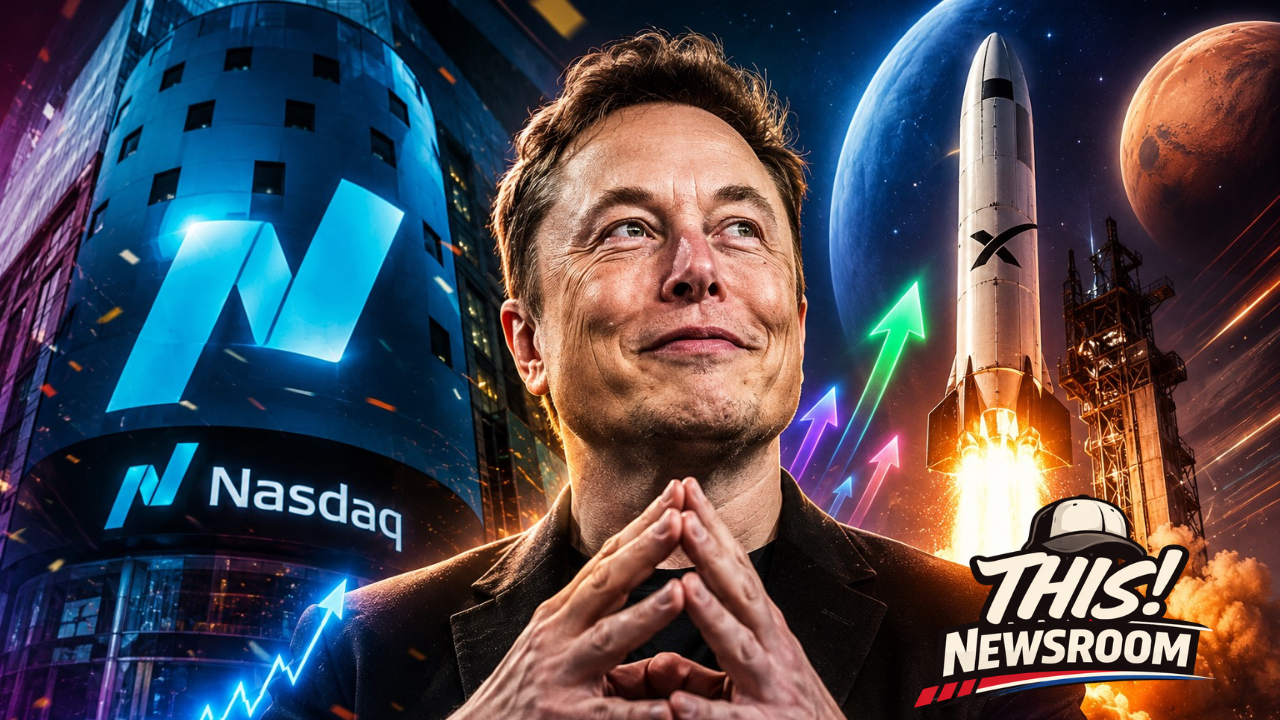
SpaceX IPO Rumors Ignite Wall Street With Massive Nasdaq Listing Speculation
The internet went into full rocket-launch mode this week after viral posts claimed that SpaceX had officially selected Nasdaq for a June 2026 IPO under the ticker symbol “$SPCX.” According to the circulating graphics, Elon Musk’s aerospace giant would begin trading on June 12 with a jaw-dropping valuation near $1.75 trillion and plans to raise as much as $75 billion.
There’s just one problem: none of it has been officially confirmed.
That has not stopped social media from absolutely losing its mind.
Across investing forums, finance TikTok, Threads, and X, retail investors are already treating the rumored SpaceX IPO like the financial equivalent of the Super Bowl, the moon landing, and Black Friday rolled into one giant candle chart. If SpaceX were ever to go public, it would instantly become one of the most anticipated public offerings in modern market history.
And honestly? It’s easy to see why.
Why Investors Are Obsessed With SpaceX
SpaceX has transformed from an ambitious private rocket startup into arguably the most important aerospace company on the planet. The company now dominates commercial launches, operates the rapidly growing Starlink satellite network, and continues developing Starship for future lunar and Mars missions.
Unlike many speculative tech companies, SpaceX already has real revenue, real infrastructure, government contracts, and global influence. That combination makes the company uniquely attractive to investors who see it as more than just another Silicon Valley growth story.
The hype surrounding a potential IPO also reflects something bigger: people want access to companies shaping the future before private investors capture all the upside.
For years, average investors watched massive private valuations explode while venture firms and insiders benefited long before public markets had a chance to participate. A SpaceX IPO would represent one of the rare opportunities for retail traders to buy into a company with both cultural relevance and enormous long-term ambition.
The Valuation Numbers Are Absolutely Massive
The rumored valuation making the rounds online — roughly $1.75 trillion — would place SpaceX among the most valuable companies in the world immediately after listing.
To put that into perspective, that valuation would rival or surpass some of the largest global technology giants. It would also likely become one of the largest IPO events ever recorded.
The reports also suggest a dual-class share structure designed to maintain Elon Musk’s control over the company after going public. That approach has become increasingly common among founder-led tech firms wanting to preserve strategic direction while still accessing public capital markets.
Of course, none of these figures have been verified by official SEC filings or direct statements from SpaceX.
Elon Musk’s IPO History Makes This Complicated
Here’s where things get interesting.
Elon Musk has historically shown little enthusiasm for taking SpaceX public. In past interviews and public comments, Musk repeatedly emphasized the dangers of short-term Wall Street pressure interfering with long-term missions like Mars colonization and deep-space development.
That skepticism toward public markets is one reason SpaceX remained private for so long while companies like Teslabecame public giants.
However, circumstances evolve. SpaceX is now significantly larger, more mature, and more financially influential than it was even a few years ago. Starlink alone has expanded into a global communications powerhouse. Meanwhile, investor demand for exposure to private AI, defense, and aerospace companies continues growing rapidly.
If Musk ever decided the timing was right, the appetite from Wall Street would likely be overwhelming.
The Internet Is Treating It Like a Sure Thing
The viral graphics circulating online present the IPO almost like a completed transaction. Dates, ticker symbols, valuation targets, and listing venues are all packaged with high confidence. The problem is that no official prospectus or regulatory filing has surfaced publicly.
That has created a strange environment where speculation is being repeated so frequently that some people are starting to treat rumor as confirmation.
Welcome to modern financial media.
One viral post becomes ten reposts. Ten reposts become headlines. Headlines become “market expectations.” Suddenly millions of people are discussing a multi-trillion-dollar IPO that technically does not exist — at least not publicly.
Still, the frenzy itself says something important: investors are starving for bold, future-facing companies that feel transformational rather than incremental.
And few companies embody that idea more than SpaceX.
The Bigger Picture
Whether the June 2026 timeline proves accurate or not, one thing is already clear: public interest in a SpaceX IPO is enormous.
The company sits at the center of multiple massive industries including aerospace, defense, satellite internet, AI infrastructure, communications, and space exploration. That combination creates a level of excitement rarely seen in modern markets.
If SpaceX eventually files for an IPO, expect financial media coverage to become relentless. Trading apps will light up. Meme accounts will go nuclear. Retail investors will try to pile in instantly. Analysts will throw around trillion-dollar projections like confetti.
And somewhere in the middle of all the chaos, Elon Musk will probably tweet something cryptic enough to send the stock flying another 18% before lunch.
Because of course he would.
About the Author