Japan Launches Real Quantum Computer Online for Worldwide Access
For years, quantum computing felt like one of those technologies that always seemed “ten years away.” Researchers talked about it. Tech CEOs hyped it. Hollywood turned it into science fiction. But most people never actually had access to it.
That may be starting to change.
Researchers at Osaka University have officially opened remote access to a real quantum computer through a cloud-based platform called OQTOPUS. That means users around the world can register online and run quantum operations on actual quantum hardware located in Japan.
This is not a simulation. It is a real machine using trapped-ion qubits, one of the most respected approaches in modern quantum computing research.
And while this is not the “end of encryption” moment social media posts are making it out to be, it is still a major milestone in the global race toward practical quantum computing.
What Japan Actually Released
The system comes from Osaka University’s Center for Quantum Information and Quantum Biology. Researchers built the platform so scientists, educators, and developers can remotely access and experiment with quantum hardware over the internet.
Users can submit operations to the quantum processor through the cloud, similar to how developers already access AI models or remote GPU clusters.
The machine reportedly achieves around 94% single-qubit gate fidelity. In simple terms, that measures how accurately the system performs quantum operations. Higher fidelity means fewer errors during calculations.
That number matters because error correction remains one of the biggest barriers in quantum computing today.
What Makes This Different
Most people hear “quantum computer” and imagine a machine instantly cracking passwords, solving impossible equations, or replacing modern supercomputers overnight.
That is not what this system is.
Japan’s platform uses what researchers call NISQ hardware, which stands for Noisy Intermediate-Scale Quantum. These systems are real quantum computers, but they still struggle with instability, noise, and scaling limitations.
Even so, this launch matters because it moves quantum computing from highly restricted research labs toward broader global experimentation.
That shift is important.
The internet changed when computing became accessible remotely through the cloud. AI exploded when developers gained public API access. Quantum computing may follow a similar path over the next decade.
Why Trapped-Ion Qubits Matter
Quantum computers work differently than traditional computers.
Instead of using bits that represent either a 0 or 1, quantum computers use qubits that can exist in multiple states simultaneously through quantum mechanics.
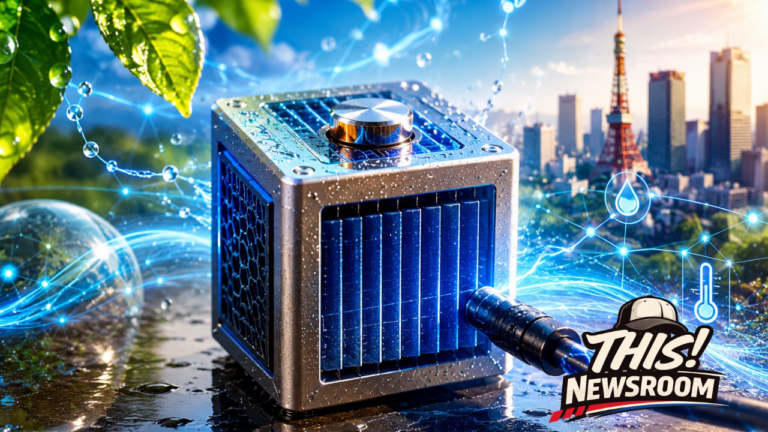
Japan’s system uses trapped ions as qubits. Researchers suspend electrically charged atoms using electromagnetic fields and manipulate them with lasers.
Many scientists consider trapped-ion systems one of the most promising quantum architectures because they offer:
- Longer coherence times
- Better operational stability
- Higher gate accuracy
- Strong scalability potential
Companies and research groups worldwide continue exploring competing approaches, including superconducting qubits, photonic systems, and neutral atoms.
Right now, nobody has definitively “won” the quantum race.
The Global Quantum Arms Race Is Accelerating
Countries and tech giants are pouring billions into quantum research.
IBM, Google, Microsoft, and Intel all continue pushing aggressively into the space.
Governments are doing the same.
The United States, China, Japan, and members of the European Union increasingly view quantum technology as both an economic and national security priority.
The reason is simple: whoever reaches fault-tolerant quantum computing first could dramatically reshape cybersecurity, pharmaceuticals, materials science, logistics, artificial intelligence, and financial modeling.
Could Quantum Computers Break Encryption?
Eventually, potentially yes.
But not yet.
Fully fault-tolerant quantum computers capable of breaking modern encryption standards still do not exist. Current systems remain far too limited and error-prone for that kind of large-scale capability.
Still, governments and cybersecurity experts already prepare for what many call the “post-quantum” era.
That future could force major upgrades across banking systems, military infrastructure, cloud computing, healthcare networks, and virtually every internet-connected platform.
The concern is not just immediate attacks. Some experts worry about “harvest now, decrypt later” strategies, where encrypted data gets collected today in hopes future quantum systems can unlock it years from now.
Why This Moment Feels Bigger Than It Looks
On paper, Japan launching cloud access to a quantum computer may sound niche or academic.
But culturally, this feels similar to the early internet era.
Most people did not understand how important early internet access would become. The same happened with smartphones, cloud computing, and artificial intelligence.
Opening public access changes the trajectory.
Once developers, students, startups, and researchers worldwide can experiment directly with quantum hardware, innovation tends to accelerate much faster.
That does not mean quantum laptops arrive next year.
But it does mean the technology is slowly moving out of theory and into reality.
And that is a very big deal.
About the Author