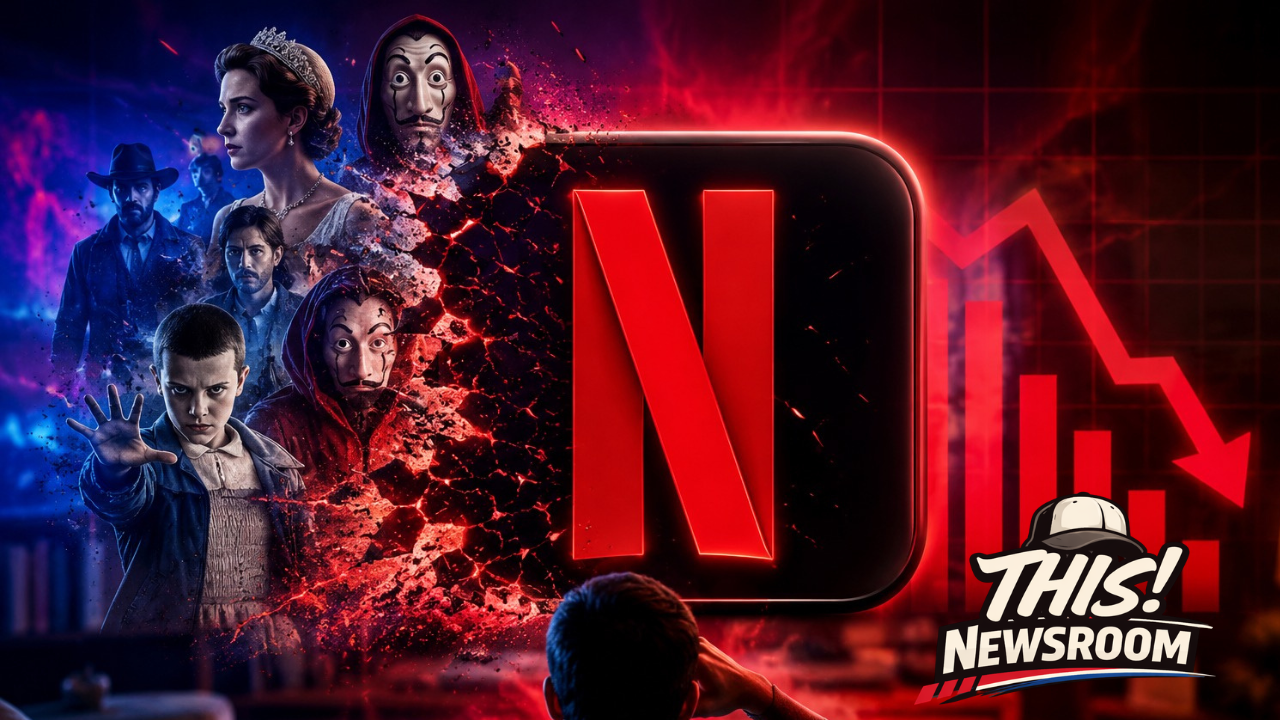
Why Netflix Shows Are Losing Viewers After Season 1: The Streaming Problem Explained
For years, Netflix mastered the art of creating binge-worthy television. A new show would drop on a Friday, social media would explode all weekend, and by Monday everyone at work was talking about it.
But something has changed.
According to a recent Bloomberg report, some of Netflix’s biggest original series are losing 30% to 70% of their audience by the time the second season arrives. While Netflix still dominates streaming, executives are reportedly digging into internal data to understand why viewers aren’t coming back.
The answer might be simpler than they think.
The Numbers Are Hard to Ignore
Several recent Netflix hits have experienced significant audience declines after their breakout first seasons.
Some examples include:
- One Piece reportedly lost more than 30% of its audience in Season 2.
- Beef saw viewership decline by more than 70%.
- The Night Agent reportedly lost roughly half of its original audience before dropping further in later seasons.
These aren’t obscure titles. These were some of Netflix’s biggest success stories.
So what happened?
The Two-Year Wait Is Killing Momentum
The biggest culprit may simply be time.
In traditional television, viewers often waited only a few months between seasons. Streaming has changed that.
Many Netflix originals now take 18 to 24 months—sometimes even longer—to return.
That’s an eternity in today’s entertainment landscape.
Think about it.
You binge eight episodes over one weekend.
Two years later Netflix tells you Season 2 is finally here.
By then you’ve:
- Forgotten half the characters.
- Forgotten the storyline.
- Started five new shows.
- Switched to another streaming service.
- Lost emotional investment.
Entertainment today moves faster than ever. Audiences do too.
Too Much Content, Not Enough Loyalty
Ironically, Netflix’s greatest strength has become one of its biggest challenges.
The platform releases hundreds of originals every year.
Every new show competes not only with Disney+, Max, Hulu, Prime Video and Apple TV+, but also with the previous Netflix sensation.
Last year’s obsession quickly becomes buried under this month’s shiny new release.
Streaming has created an endless cycle of “What’s next?”
Viewers Want Complete Stories
Another growing frustration is uncertainty.
Many Netflix series are greenlit for only one season.
Fans have been burned repeatedly after investing time in shows that were canceled before receiving proper endings.
As a result, some viewers now wait until a show has multiple confirmed seasons before starting it at all.
That’s a major shift in consumer behavior.
People aren’t just choosing what to watch—they’re deciding whether it’s worth becoming emotionally invested.
Binge Culture May Be Wearing Thin
Netflix built its empire on releasing entire seasons all at once.
It revolutionized television.
But the strategy may also shorten a show’s lifespan.
A series dominates headlines for one weekend before disappearing from conversation.
Compare that with weekly releases from competitors like HBO or Disney+, where discussions continue for months.
By the time Netflix releases Season 2, many fans have already mentally moved on.
Is Netflix Running Out of Must-Watch TV?
Bloomberg also noted that Netflix had relatively few breakout hits during the first half of 2026 outside of titles like Bridgerton Season 4 and His & Hers.
Overall viewing across the platform reportedly grew less than 2% last year.
That’s still growth.
But for a company that built its reputation on explosive expansion, it signals a more mature—and increasingly competitive—business.
The Good News for Netflix
Before declaring Netflix in trouble, it’s important to add perspective.
Despite these audience-retention issues, Netflix still controls roughly half of the most-watched streaming shows across all major platforms.
Its global subscriber base remains enormous, and it continues to produce cultural phenomena that competitors struggle to match.
The company isn’t losing the streaming war.
It’s trying to solve a retention problem.
Maybe Viewers Aren’t the Problem
Netflix executives are reportedly studying why audiences disappear after Season 1.
The better question might be whether viewers have actually changed.
Modern audiences have endless entertainment choices.
Attention spans are shorter.
Competition is fiercer.
Waiting two years for eight new episodes simply isn’t how many people consume entertainment anymore.
In today’s streaming world, momentum may be every bit as valuable as great writing.
Netflix taught us how to binge.
Now it has to figure out how to keep us coming back.
About the Author













Such a great article!